
How To
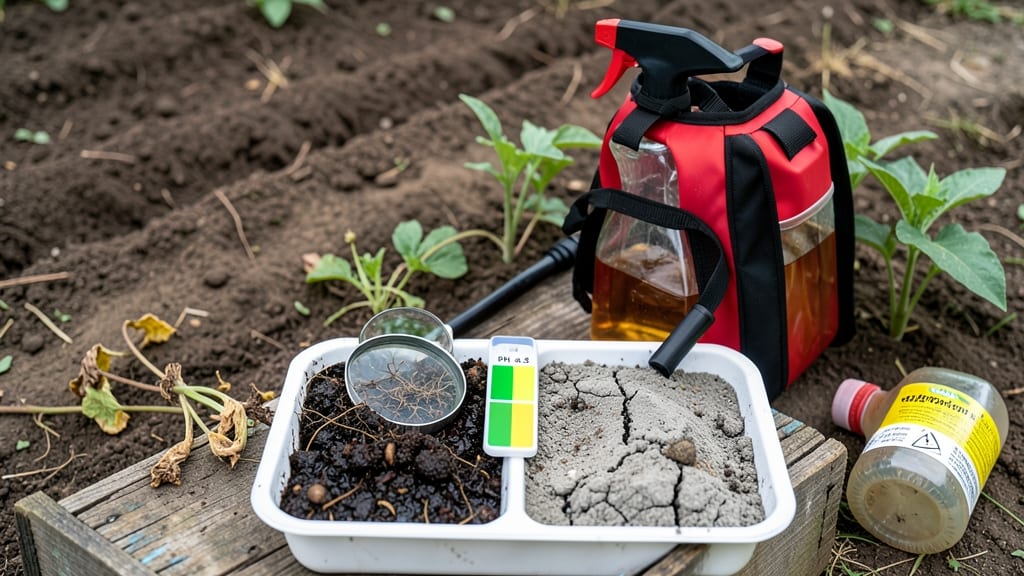
The effects of chemical weed control on soil and environment include severe soil degradation through microbial disruption, organic matter loss, and toxic residue buildup that slashes long-term fertility. These herbicides also pollute groundwater, threaten pollinators, and disrupt ecosystems by creating chemical runoff and fostering resistant weed strains while reducing biodiversity.
The damage starts at a microscopic level—herbicides like glyphosate and 2,4-D kill not just weeds but also beneficial soil bacteria and fungi that break down organic matter. 🌱 Over time, this weakens soil structure, making it harder for plants to access nutrients.
Studies show chemical runoff can linger in groundwater for years, while airborne residues harm bees and butterflies by disrupting their navigation systems. The irony? Many "solutions" create bigger problems, like superweeds that evolve resistance to the very chemicals meant to stop them.
What's worse is how these effects compound: soil that's been chemically treated often struggles to recover, even with organic amendments. The environmental cost extends beyond your yard—rural communities near agricultural fields face higher rates of water contamination, and wildlife populations decline in treated areas.
For gardeners, the trade-off between convenience and long-term damage isn't worth it when safer alternatives exist.
💡 In This Article
- How Herbicides Degrade Soil Health Over Time
- Safe Chemical-Free Weed Control Methods for Gardens
How herbicides degrade soil health over time
Herbicides like glyphosate and 2,4-D don't just kill unwanted plants—they systematically dismantle the soil's biological foundation.
These chemicals target specific biochemical pathways in plants, but their broad-spectrum action also disrupts beneficial microbes like mycorrhizal fungi and nitrogen-fixing bacteria. 🌱 A single application can reduce microbial populations by 30-50%, breaking down the complex food web that maintains soil fertility.
Without these microbes, organic matter decomposes 2-3 times slower, leading to a buildup of undecomposed plant material that suffocates roots.
The damage extends to soil structure through a process called "soil compaction." Herbicides weaken plant roots that naturally aerate the soil, causing it to become denser over time.
Studies show chemically treated soils can lose 15-25% of their porosity within 2-3 years, making water infiltration 40% slower and increasing erosion risk. The cumulative effect is like trying to grow plants in concrete—roots struggle to penetrate, and nutrients become locked away in compacted layers.
What makes this particularly insidious is how herbicides persist in the environment. Glyphosate, for example, can remain active in soil for 6 months to 2 years, depending on conditions, while its breakdown product AMPA has been detected in groundwater at concentrations up to 0.5 parts per billion.
This means every application you make today could be affecting your soil's health for years to come, creating a vicious cycle where each new planting season starts with a degraded foundation.
The impact on plant roots is equally damaging. Herbicides like 2,4-D mimic plant hormones, causing abnormal growth patterns that stunt root development by 30-40% in affected plants. This weakens their ability to access water and nutrients, making crops more susceptible to drought and disease.
Over time, this creates a feedback loop where soil fertility declines, plants grow weaker, and you need even more chemicals to compensate—exactly the opposite of what you're trying to achieve.
One often-overlooked consequence is the disruption of soil enzymes. These biological catalysts are essential for breaking down complex organic molecules into plant-available nutrients. Research shows herbicide-treated soils can experience 50% reductions in enzyme activity, particularly for dehydrogenase and phosphatase—key players in nitrogen and phosphorus cycling.
Without these enzymes, your soil becomes increasingly dependent on synthetic fertilizers, creating another cycle of chemical dependency.
Consider this: a single acre treated with glyphosate annually for 5 years can lose 1-2 tons of organic matter per acre, equivalent to losing 10-20 years of natural soil formation.
The visual difference is striking—healthy soil should be dark, crumbly, and teeming with life, while chemically treated soil often appears lighter, more compact, and lifeless, like powdered chalk compared to rich humus.