
How To
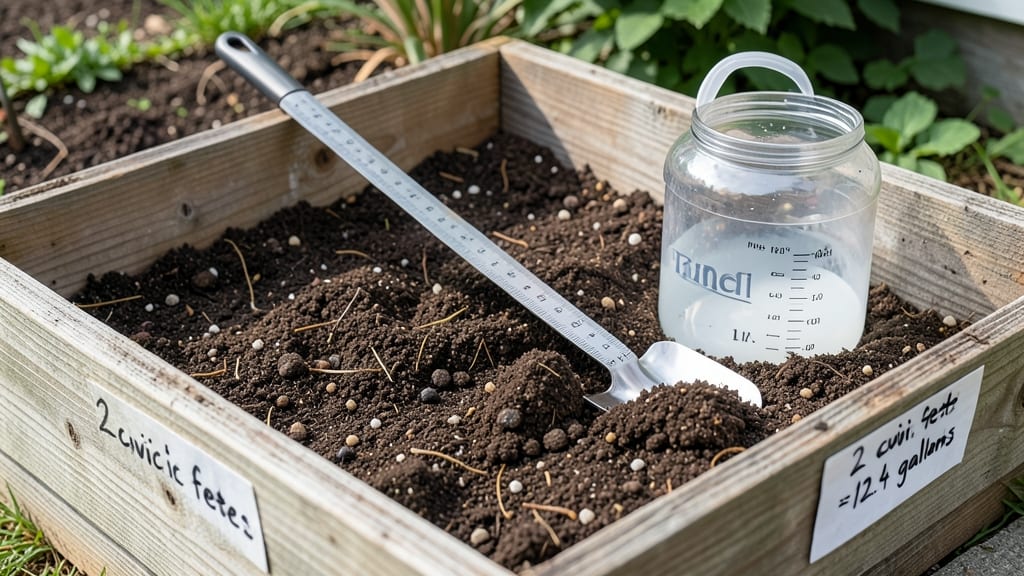
Two cubic feet of soil holds about 0.24 gallons, but this changes depending on how compact or loose the soil is—sandy soil may only hold 0.20 gallons, while clay-heavy soil can reach 0.28 gallons. For gardening, always double-check with a moisture test or conversion tool.
Understanding this conversion helps when mixing potting soil or calculating how much to fill raised garden beds. 🌱 The key factor is soil density: air pockets in loose soil reduce capacity, while tightly packed soil maximizes water retention.
For example, a standard 1-cubic-foot bag of potting mix typically converts to about 0.25 gallons—close enough for most gardening tasks but not precise enough for hydroponic systems where exact measurements matter.
Most gardeners use this rule of thumb: if you're filling a 2-cubic-foot container, plan for roughly half a gallon of soil. However, if you're working with heavy clay or adding perlite for aeration, you might need to adjust by 10-15%.
Always test your mix—wet soil weighs more and takes up less volume, which affects both drainage and nutrient distribution.
💡 In This Article
- Soil Volume Conversion Science: Cubic Feet to Gallons Explained
- Practical Uses: Measuring Soil for Containers and Garden Beds
Soil volume conversion science: cubic feet to gallons explained
The conversion from cubic feet to gallons for soil isn't just about simple math—it's about understanding soil's bulk density, which measures how much solid material fits in a given volume.
Most garden soils have a bulk density of 60-80 pounds per cubic foot, but this changes dramatically based on composition.
Sandy soil, with its larger particles and air gaps, might only hold 0.20 gallons in 2 cubic feet, while clay soil, packed tightly with tiny particles, can reach 0.28 gallons in the same space. 🌱
Moisture content plays a critical role too. Dry soil contains more air, reducing its effective volume, while moist soil compacts slightly, increasing its weight and density.
For instance, a cubic foot of dry potting mix might weigh 25-30 pounds, but when watered, it can swell to 35-40 pounds—yet still occupy the same cubic foot. This is why gardeners often see soil measurements shift after watering: the same volume holds more water but less air.
Organic matter like compost also affects this—adding it increases porosity, which can reduce the effective volume by 5-10%.
The science behind this involves porosity and particle size distribution. Sandy soils have 30-40% porosity, meaning only about 60-70% of the volume is solid particles. Clay soils, on the other hand, can have 40-50% porosity, but their tiny particles pack more tightly, increasing the solid volume.
This is why clay-heavy soil often feels heavier and holds more water per cubic foot, even though it might appear denser. For gardeners, this means adjusting watering schedules based on soil type—sandy soil drains faster, while clay retains moisture longer.
Another factor is compaction. Foot traffic or heavy machinery can reduce air pockets in soil, increasing its bulk density. For example, a freshly tilled garden bed might hold 0.22 gallons in 2 cubic feet, but after a few seasons of use, compaction could push that to 0.26 gallons.
This is why raised beds often require less frequent soil replacement—they stay looser and more aerated. Understanding these variations helps gardeners avoid over- or under-watering, ensuring plants get the right balance of air, water, and nutrients.
For precise calculations, gardeners can use a soil moisture meter or a simple bucket test. Fill a 1-gallon bucket with soil and weigh it—most garden soils will weigh between 10-12 pounds per gallon when dry.
Multiply this by the number of gallons in your container, and you’ll get a more accurate measurement than relying solely on cubic feet. This method is especially useful for hydroponic systems or container gardening, where exact measurements are critical. 💡
Finally, remember that organic amendments like perlite or vermiculite can drastically alter these measurements. Adding 20% perlite to soil, for example, can increase porosity by 15-20%, reducing the effective volume of solid material.
This is why many potting mixes include these additives—they improve drainage and aeration while keeping the soil lighter and fluffier. Always account for these changes when planning your garden or container setups.