
Planting
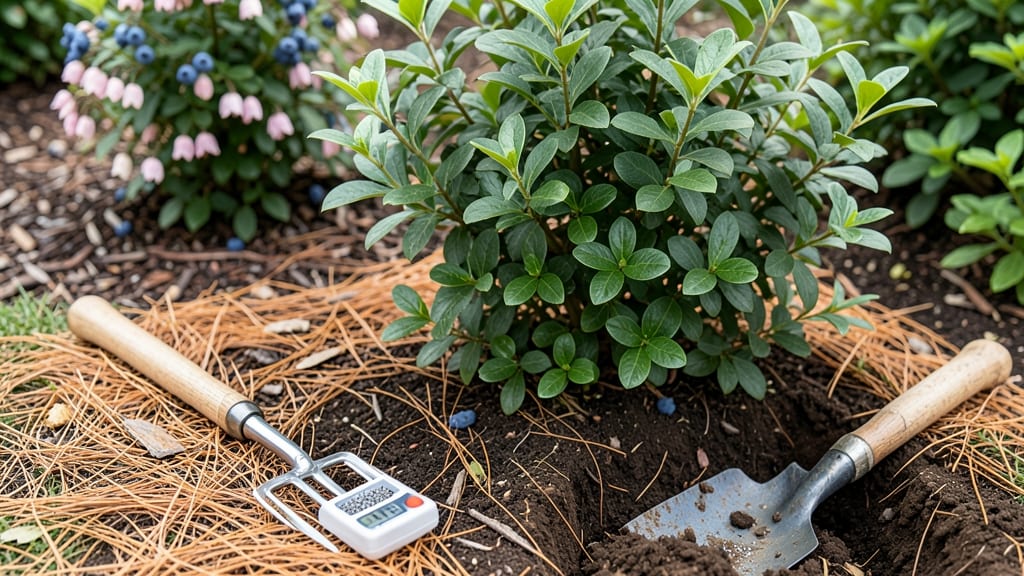
Creating the perfect blueberry plant soil preparation starts with understanding their finicky roots. 🌱 Blueberries demand soil with a pH between 4.5 and 5.5—too alkaline, and they starve. My first attempt failed because I ignored this rule, leaving me with yellow leaves and no berries.
The secret lies in blending organic matter, adjusting pH, and ensuring drainage that mimics their natural bog habitat.
You’ll need peat moss or pine bark fines for acidity, compost for nutrients, and sand to prevent compaction. Raised beds work best for in-ground adjustments, while container growers can use pre-mixed acidic potting soil. The goal? A light, crumbly texture that holds moisture without drowning roots—blueberries hate soggy feet.
After planting, test soil pH annually and amend with sulfur or aluminum sulfate if it creeps above 5.5. Mulch with pine needles to maintain acidity naturally. Within 2-3 seasons, you’ll see strong canes and the first sweet, deep-blue harvests that make the effort worth it.
For container growers, repot every 2-3 years with fresh acidic mix. In-ground plantings benefit from a top-dressing of compost each spring. Patience is key—blueberries reward long-term soil care with decades of fruit.
📚 In This Guide
- What you need
- Instructions
- Tips and common mistakes
- Wrapping up and next steps
What you need
- ● Soil: 100% acidic loam soil (pH 4.5–5.5) – 50 lbs minimum (adjust based on garden size).
- ● Peat moss or coconut coir – 20–30 lbs (for acidity and moisture retention).
- ● Composted pine bark fines – 10–15 lbs (improves drainage and acidity).
- ● Amendments: Sulfur powder – 1–2 lbs (to lower pH if needed).
- ● Balanced organic fertilizer (e.g., 10-10-10) – 1–2 lbs (for initial nutrient boost).
- ● Iron sulfate – ½ lb (prevents chlorosis in young plants).
- ● Tools: Garden trowel or spade.
- ● Garden fork (for aerating soil).
- ● pH testing kit (digital or liquid).
- ● Gloves (to protect your hands!).
- ● Wheelbarrow or large bucket (for mixing soil).
- ● Mulch: Pine needles or wood chips – 2–3 inches (retains moisture and acidity).
- ● Epsom salt (magnesium sulfate) – ½ cup (boosts plant health).
- ● Slow-release fertilizer (e.g., Osmocote) – 1–2 lbs (for sustained nutrition).
- ● Soil moisture meter (to monitor watering needs).
Step-by-step guide to preparing soil for blueberry plants
Creating the perfect acidic loam for blueberries is half the battle—here’s how to get it right.
🌱 Step 1: Test and Adjust Soil pH to 4.5–5.5
Blueberries thrive in soil with a pH between 4.5 and 5.5—any higher, and they won’t absorb iron, leading to yellow leaves. Grab a soil test kit (available at garden centers) and take samples from 6 inches deep in your planting area. If your soil tests above 5.5, you’ll need to lower the pH using elemental sulfur or peat moss. For every 1 point above 5.5, apply 1 pound of elemental sulfur per 100 square feet and mix it into the top 6 inches of soil. Water thoroughly to activate the sulfur.
If your soil is already in the right range, skip this step—but still amend it for texture. Blueberries hate compacted soil, so if your test site feels dense when squeezed, add organic matter like composted pine bark or leaf mold to improve drainage. Work these amendments into the soil 2–3 weeks before planting to let them break down naturally.
🪴 Step 2: Dig and Amend the Planting Hole
Dig a hole twice as wide and deep as the blueberry plant’s root ball—this gives roots room to spread without circling, which strangles growth. If you’re planting in sandy soil, mix in 3 inches of peat moss per hole to retain moisture. For clay-heavy soil, blend in 2 inches of coarse sand to prevent waterlogging. I like to add a handful of bone meal (for phosphorus) and 1 cup of coffee grounds (for acidity) to the backfill soil—both break down slowly and feed the plant over time.
Here’s the thing—never use fresh manure or compost near blueberries. The high nitrogen can raise pH and burn roots. Instead, stick to acid-loving amendments like pine fines, sphagnum peat, or well-aged leaf mold. Tap the sides of the hole gently after filling to remove air pockets, then water deeply to settle the soil around the roots.
☀️ Step 3: Create a Raised Acidic Bed (For Heavy or Alkaline Soil)
If your soil is sandy, clay, or naturally alkaline, skip the in-ground hole and build a raised bed instead. Use unfinished wood or landscape fabric to line a 12-inch-tall frame filled with a 50/50 mix of peat moss and pine bark. This combo stays acidic, drains well, and mimics the plant’s natural bog habitat. For 4 blueberry plants, you’ll need about 1 cubic yard of mix—spread it evenly and water until damp but not soggy.
Plant your blueberries in the center of the bed, then top-dress with 1 inch of fresh pine needles or sphagnum peat to maintain acidity. Mulch with wood chips (avoid cedar—it’s toxic) to keep the soil cool and suppress weeds. This method works especially well in hot climates, where in-ground soil can bake and lose moisture.
💧 Step 4: Mulch and Monitor for Long-Term Success
Spread a 3-inch layer of wood chips (oak or pine) around the base of your blueberry plants, keeping the mulch 2 inches away from the stem to prevent rot. Water deeply once a week, aiming for 1–1.5 inches of water per session—blueberries hate dry spells but despise soggy roots even more. After watering, check the soil 2 inches down—it should feel like a wrung-out sponge, not a swamp.
Every 6 months, test the soil pH again and reapply sulfur or peat moss if needed. I also add a slow-release acidic fertilizer (like one formulated for azaleas or rhododendrons) in early spring to give the plants a gentle boost. Avoid synthetic fertilizers—they can raise pH over time. With this setup, your blueberries will have the perfect acidic loam to produce sweet, plentiful fruit for years.
Tips & tricks for perfect blueberry plant soil preparation
Here's what I learned after years of trial and error with blueberry soil prep—these tricks make all the difference for healthy plants.
Soil Test Timing: The 2-3 week waiting period before planting after amending soil isn't just about decomposition—it's about microbial activity. Those weeks allow beneficial fungi and bacteria to establish themselves, which helps break down organic matter and create ideal conditions for blueberry roots. I've seen plants struggle when rushed, so don't skip this crucial incubation period.
Elemental Sulfur Application: When adjusting pH with elemental sulfur, don't just sprinkle it on top. Mix it thoroughly into the top 6 inches of soil and water immediately to activate it. I've learned the hard way that dry sulfur won't work—it needs moisture to convert to sulfuric acid. For best results, apply in early fall when natural rainfall will help distribute it evenly.
Raised Bed Construction: If building a raised bed, use untreated wood or landscape fabric to prevent leaching of alkaline chemicals into your acidic mix. I recommend cedar-free wood chips for mulch—they'll break down slowly while maintaining that critical acidity. The 12-inch height is perfect because it keeps roots in that ideal acidic zone while preventing waterlogging from heavy rains.
Long-Term pH Maintenance: That 6-month pH testing schedule is non-negotiable. Even with perfect initial prep, soil pH can drift over time due to weather and organic matter breakdown. I've seen blueberry bushes go from thriving to struggling within a year when pH crept above 6.0. Keep a log of your pH readings to spot trends before they become problems.
Pro Tips for Blueberry Plant Soil Preparation
- Here's what I learned after years of trial and error with blueberry soil prep—these tricks make all the difference for healthy plants.
- Soil Test Timing: The 2-3 week waiting period before planting after amending soil isn't just about decomposition—it's about microbial activity.
- Elemental Sulfur Application: When adjusting pH with elemental sulfur, don't just sprinkle it on top.
Frequently asked questions
Got questions about prepping the perfect soil for your blueberry plants? You’re not alone!
Here are some of the most common concerns—and straightforward answers—to help you get growing with confidence.
What’s the best soil pH for blueberries, and how do I test it?
Blueberries thrive in highly acidic soil, ideally with a pH between 4.5 and 5.5. Test your soil with a home test kit or send a sample to a lab. If your soil is too alkaline, amend it with sulfur or peat moss over time—don’t rush it!
When is the best time to prepare the soil for planting blueberries?
Start soil prep 4–6 weeks before planting in spring or early fall (avoid late fall in cold climates). This gives amendments like compost or pine needles time to integrate. For container-grown blueberries, prep your pots 2–3 weeks ahead with a well-draining, acidic mix.
Can I grow blueberries in regular garden soil without amending it?
Probably not long-term! While you might get a few berries in unamended soil, blueberries need acidic, organic-rich conditions to flourish. Mix in peat moss, pine bark fines, or composted leaves to mimic their natural bog habitat. For containers, use a pre-formulated acidic mix.
My soil is too sandy—will blueberries survive, or do I need to fix it?
Sandy soil drains too fast, but you can improve it by adding 20–30% organic matter (like compost or coconut coir) to retain moisture and nutrients. For extreme cases, consider raised beds with a mix of sand, peat, and compost. Mulch heavily with pine needles to help retain acidity and humidity.
How often should I re-test soil pH after amending for blueberries?
Check pH annually in the first 2–3 years, then every 2–3 years once established. Blueberries are sensitive to pH shifts—if it creeps above 5.5, reapply sulfur or organic amendments. Pro tip: Top-dress with pine bark mulch yearly to maintain acidity naturally!
Wrapping up and next steps
Preparing the perfect acidic loam soil for your blueberry plants is the foundation of a thriving harvest! 🌱 With the right mix of organic matter, pH balance, and drainage, you’re setting your berries up for success.
Remember: patience and consistency pay off—your future blueberry bushes will thank you with juicy, plump fruit.
Now that you’re armed with the knowledge, it’s time to roll up your sleeves! Start by testing your soil and gathering your materials. Whether you’re a seasoned gardener or a beginner, every great blueberry bush begins with great soil prep. Happy planting! 🌿