
Light Requirements
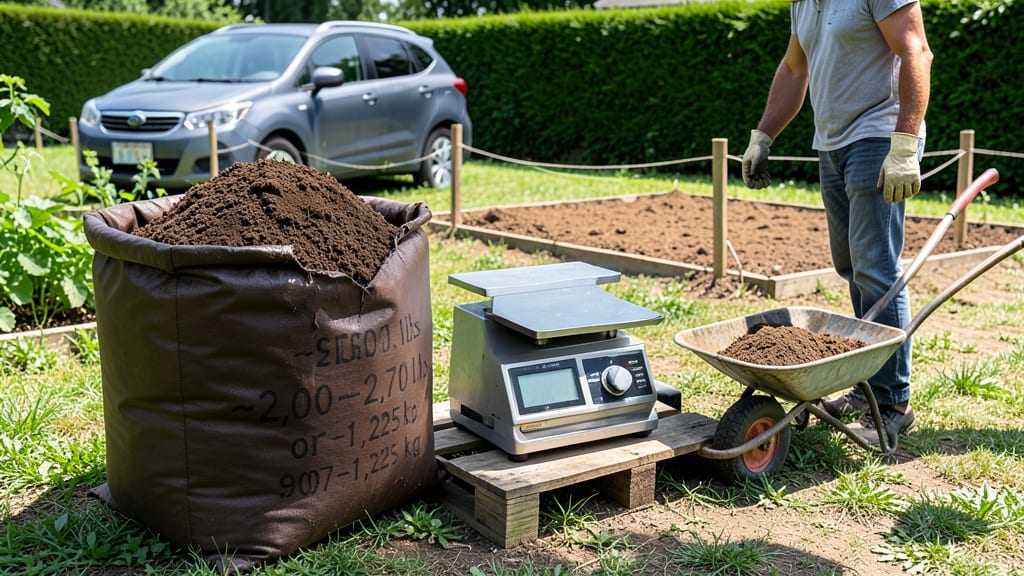
To determine how much 1 yard of topsoil weighs, expect between 1,800 to 2,200 pounds based on moisture levels and compaction. Dry, loose soil falls in the 1,800–2,000 lbs/yd³ range, while wet or tightly packed soil can exceed 2,200 lbs/yd³. Always verify with suppliers for project-specific accuracy.
Understanding topsoil weight is crucial because moisture plays a massive role—just a 10% increase in water content can add 100–200 lbs to your cubic yard. 🌱 For example, clay-heavy soils weigh more than sandy ones due to their higher density, while organic-rich topsoil may vary slightly lighter.
I recommend testing a small bag first if you're planning heavy loads, as some suppliers round estimates conservatively.
This weight variation directly impacts your project's feasibility, especially for raised beds or truck deliveries. A 2,000-lb load requires proper equipment, while lighter soil might need fewer trips. Always factor in compaction—foot traffic or machinery can increase weight by up to 15% after delivery.
💡 In This Article
- Factors Affecting Topsoil Weight Per Cubic Yard
- Calculating Topsoil Weight for Landscaping Projects
Factors affecting topsoil weight per cubic yard
Topsoil weight varies dramatically because it's not a uniform product—its composition changes based on natural elements. The three biggest factors are moisture content, organic matter percentage, and particle size distribution.
For example, clay particles pack tightly, creating dense soil that can weigh up to 2,500 lbs/yd³ when saturated, while sandy soils might only reach 1,500 lbs/yd³ in dry conditions. This explains why suppliers often provide ranges rather than fixed numbers.
Moisture alone can swing weights by hundreds of pounds.
A 10% moisture increase (from 5% to 15%) adds roughly 150–200 lbs to your cubic yard because water weighs 8.34 lbs/gallon and occupies space between soil particles. 🌧️ I've seen projects where freshly delivered soil weighed 2,100 lbs but dried down to 1,850 lbs within days—this shrinkage can affect your project's depth and coverage.
Organic matter (like decomposed leaves) also reduces density since it's less compact than minerals.
The compaction level changes everything—foot traffic, machinery, or even rain can compress soil by 10–20%, increasing weight.
Imagine a 3-inch layer of topsoil spread over 100 sq ft: when loose, it might weigh 1,200 lbs, but after being walked on or tilled, it could reach 1,400 lbs.
This is why professional landscapers always specify "loose" or "compacted" when ordering—it's not just about volume, but how that volume will behave in your space.
Temperature plays a subtle but real role too. In winter, frozen soil can appear heavier because ice crystals form between particles, increasing density. Conversely, summer heat can dry out soil, reducing weight by 5–10%**.
For precise projects, I recommend testing a small sample—dig a 1 ft³ hole, weigh the soil, then multiply by 27 (since 1 yd³ = 27 ft³) to estimate your actual load.
Here's a quick comparison of common soil types and their typical weights:
- Sandy soil: 1,500–1,800 lbs/yd³ (low organic matter, drains fast)
- Loamy soil: 1,800–2,100 lbs/yd³ (balanced mix, ideal for gardens)
- Clay soil: 2,000–2,500 lbs/yd³ (high density, holds moisture)
- Peat-based soil: 1,200–1,600 lbs/yd³ (lightweight, high organic content)
Most suppliers use loamy soil as their baseline because it's the most common for landscaping projects. If you're working with specialized soils (like cactus mix or hydroponic blends), weights can vary even more—always ask for a moisture-adjusted estimate to avoid surprises during delivery. 🚛