
Light Requirements
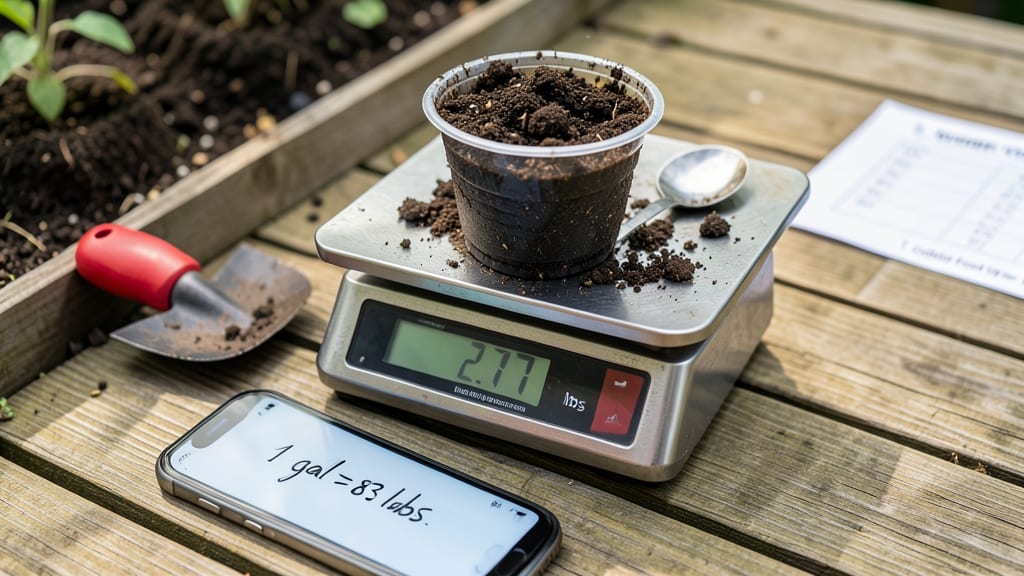
Soil weight varies by type and moisture: dry garden soil weighs about 100–120 pounds per cubic foot, while wet or clay-heavy soil can reach 130–150 pounds. Loose topsoil averages 70–90 pounds, and sand is the lightest at 90–110 pounds when dry.
Understanding soil weight helps with everything from garden planning to construction projects.
The variations you see—like the lighter weight of sand or the heavier clay—come from differences in particle size, moisture content, and how tightly the soil is packed. 🌱 For example, a cubic foot of moist clay can feel surprisingly heavy because its tiny particles trap water, while sandy soil drains quickly and stays lighter.
This matters whether you're filling a raised bed or calculating loads for hardscaping.
Here's a pro tip: if you're working with garden soil, adding organic matter like compost can actually reduce its overall weight by improving aeration and reducing compaction. That means less strain on your back when moving it around!
For precise measurements, using a standard shovel or bucket (like a 5-gallon version) lets you estimate weight per scoop—just multiply by the number of cubic feet you're handling.
💡 In This Article
- Soil Density and Weight Factors by Composition
- Practical Soil Weight Estimates for Gardening Projects
Soil density and weight factors by composition
Soil weight hinges on its bulk density, which measures how tightly particles pack together. Clay soil, with its microscopic particles, can compress to 130–150 pounds per cubic foot when wet because water fills the tiny gaps between particles, creating a dense matrix.
In contrast, sandy soil—made of larger, loosely packed grains—weighs just 90–110 pounds per cubic foot when dry, as its particles don’t bind as tightly. 🌍 The key difference lies in particle size: clay’s 0.002–0.004 mm particles trap water and air, while sand’s 0.05–2 mm grains allow drainage, reducing overall mass.
Organic matter plays a surprising role too. Compost-amended soil often weighs 10–20% less than pure mineral soil because organic particles are porous and lightweight. For example, peat moss—used in potting mixes—can reduce bulk density by up to 30% compared to clay.
This is why gardeners mix compost into heavy soils: it lightens the load while improving fertility. The science? Organic matter increases pore space, letting soil "breathe" and hold less water, which directly impacts weight.
Moisture content is the wild card. A cubic foot of dry loam might weigh 100 pounds, but when saturated, it can balloon to 140 pounds—water alone adds 2.34 pounds per pint! This explains why construction sites avoid clay soils after heavy rains.
The weight shift isn’t just about volume; it’s about how water replaces air in soil pores, drastically altering density. For gardeners, this means weighing soil after a rainstorm could double your expected load for moving or amending beds. 💧
Compaction further skews weight. Walked-on or machinery-compressed soil can increase density by 20–50%, making it heavier and harder to work with. Think of a golf course’s putting green versus a forest floor: the former is tightly packed, while the latter is loose and airy.
This is why aerating compacted soil isn’t just about roots—it’s about reducing the physical strain of moving or tilling heavy, compressed earth.
For a real-world comparison, consider a 4'x8' raised bed filled with 12 inches of soil. Dry garden soil would weigh roughly 640–768 pounds, while the same bed filled with wet clay could exceed 900 pounds.
That’s the difference between a manageable project and one requiring heavy machinery! Understanding these factors helps you plan for structural support, irrigation needs, and even ergonomic tools.
Here’s a quick breakdown of how particle size affects weight:
- Clay: Tiny particles (0.002 mm) trap water, increasing weight to 130–150 lbs/cu ft
- Silt: Medium particles (0.002–0.05 mm) average 100–120 lbs/cu ft
- Sand: Large particles (0.05–2 mm) stay light at 90–110 lbs/cu ft
- Organic: Peat/compost reduces weight by 10–30% due to porosity