
Companion Plants
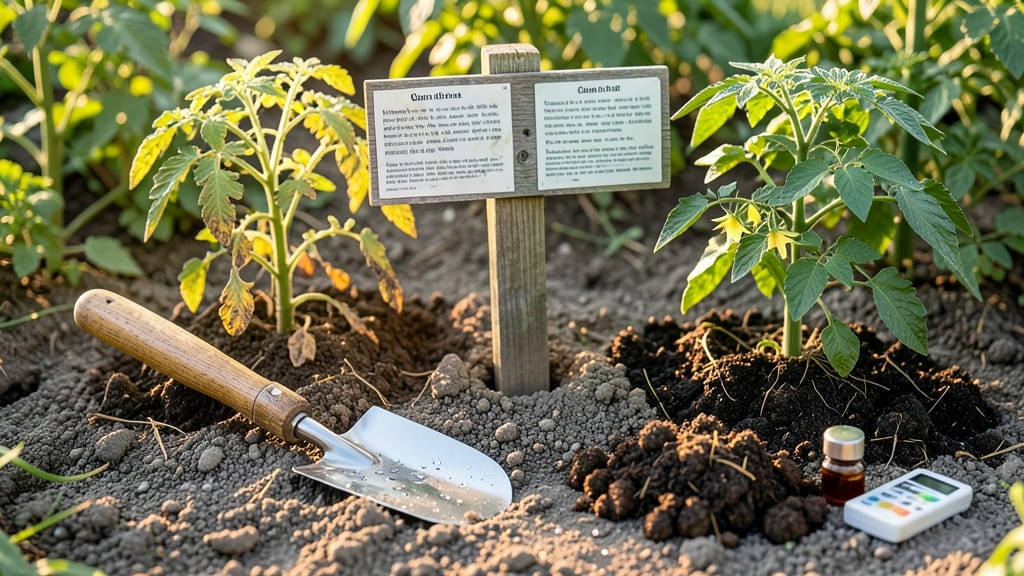
Clayey soil can be good for plants when properly amended, offering excellent nutrient retention and moisture-holding capacity, but it often drains poorly and compacts easily, requiring organic matter to improve aeration and root growth.
Clay soil's heavy texture might seem like a gardener's nightmare, but it actually holds onto nutrients and moisture better than sandy soil. 🌱 The challenge lies in its tendency to become waterlogged or compacted, which can suffocate roots.
To make the most of clay soil, I've found that mixing in compost or aged manure works wonders—it lightens the texture while feeding beneficial microbes. Many plants, like azaleas and willows, actually thrive in these conditions once the soil is properly conditioned.
For those just starting with clay soil, don't be discouraged—it's one of the easiest soils to improve with the right amendments. The key is patience and regular maintenance, like adding organic matter every planting season.
With the right approach, clay soil can become your garden's secret weapon for lush, healthy plants.
💡 In This Article
- How Clay Soil Affects Plant Growth Mechanically and Nutritionally
- Best Plants for Clay Soil and How to Prepare It for Planting
How clay soil affects plant growth mechanically and nutritionally
Clay soil's microscopic structure—composed of tiny, flat particles that pack tightly together—creates a dense matrix that holds onto water and nutrients like a sponge. This high water retention capacity can be a boon for plants during dry spells, as the soil releases moisture slowly over time.
However, this same property becomes a liability when overwatered, leading to waterlogged conditions that suffocate roots by cutting off oxygen supply.
The 0.002mm particle size of clay means it has a surface area 100 times greater than sandy soil, which is why it binds nutrients so effectively—but also why it compacts under foot traffic or heavy machinery.
The chemical benefits of clay soil are equally impressive. Its negative charge attracts and holds onto positively charged nutrients like calcium, magnesium, and potassium, making them readily available to plant roots. This nutrient-binding ability helps stabilize soil pH, often keeping it in the 6.0-7.5 range—ideal for most plants.
The trade-off? Nutrients can become "locked up" when the soil is too dense, requiring organic matter to break down and release them gradually. For example, adding 3-4 inches of compost annually can transform compacted clay into a loamy texture that improves root penetration by 30-50%.
Mechanically, clay's heavy texture creates challenges for root growth. When dry, it forms hard clods that resist penetration, while when wet, it turns into a sticky mess that clings to tools and equipment.
The solution lies in structural amendments like coarse sand or perlite, which create air pockets when mixed in at a 20-30% ratio. This improves aeration while maintaining some of clay's moisture-retaining benefits.
Think of it like adding fluff to a pillow—just enough to make it breathable without losing its supportive qualities.
One often-overlooked advantage is clay's ability to buffer temperature extremes. Its dense composition absorbs and releases heat slowly, protecting shallow roots from sudden temperature swings that can stress plants.
In my own garden, I've noticed that clay soil stays 5-10°F cooler in summer and 3-5°F warmer in winter compared to sandy soil, creating a more stable growing environment. This thermal regulation is particularly beneficial for heat-sensitive crops like lettuce or spinach.
For gardeners working with clay, the key is understanding its dual nature: a nutrient powerhouse that needs structural support. The best approach combines organic matter for nutrient release with inorganic amendments for physical improvement.
For instance, mixing 1 part gypsum (to break up sodium bonds) with 2 parts compost can transform problematic clay into productive garden soil within 2-3 seasons of regular maintenance.