
Fertilization
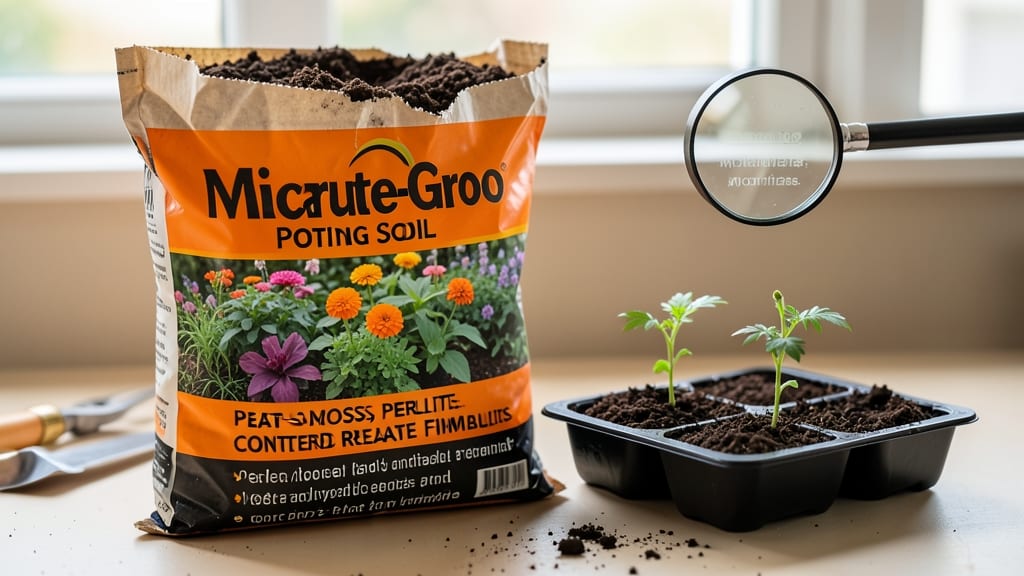
Miracle Gro Potting Soil ingredients include peat moss, perlite, vermiculite, dolomitic limestone, and a controlled-release fertilizer blend (like urea, potassium chloride, and sulfur-coated urea) to provide balanced nutrients for up to 3 months. The mix also contains water-absorbing polymers and wetting agents for moisture retention and aeration.
Understanding what's in Miracle Gro Potting Soil helps you use it effectively.
The peat moss acts as the base, holding moisture while preventing compaction, while perlite and vermiculite create air pockets for roots to breathe. Dolomitic limestone adjusts soil pH, making it ideal for acid-loving plants like azaleas, and the controlled-release fertilizer ensures nutrients last through the growing season. 🌱 The water-absorbing polymers are especially useful for container gardens, where moisture can evaporate quickly.
This blend stands out because it combines convenience with science. The sulfur-coated urea releases nitrogen gradually, reducing the risk of overfeeding, while the wetting agents help prevent clumping.
For gardeners who want to customize, mixing in compost can enhance organic matter, but the base formula already provides a balanced foundation for most plants.
💡 In This Article
- How Miracle Gro’s Nutrient Blend Supports Plant Growth
- Best Uses for Miracle Gro Potting Soil by Plant Type
How Miracle Gro’s nutrient blend supports plant growth
Miracle Gro’s formulation is engineered to mimic ideal growing conditions by combining organic and synthetic components. The peat moss base holds up to 6 times its weight in water while maintaining loose structure, preventing root suffocation.
This is critical because compacted soil restricts oxygen flow—roots need both water and air to function properly. 🌱 The perlite and vermiculite work together: perlite adds 5-10% air space for oxygen circulation, while vermiculite retains moisture near roots through capillary action, similar to how a sponge absorbs and releases water gradually.
The dolomitic limestone (typically 1-2% by weight) acts as a slow-release pH buffer, maintaining a neutral to slightly acidic range (pH 6.0-7.0). This is crucial because most plants thrive in this range—unlike garden soil which often fluctuates between 5.0-8.0.
The controlled-release fertilizer contains 15-16-8 N-P-K ratio, where nitrogen (from urea) fuels leaf growth, phosphorus (from potassium phosphate) supports root development, and sulfur-coated urea extends nutrient availability for 3 months without leaching.
What sets Miracle Gro apart is the inclusion of superabsorbent polymers (about 0.5-1% by volume) that can hold 200-300 times their weight in water. These gel-like beads expand when wet and shrink when dry, acting like a built-in irrigation system.
This is particularly valuable for container gardens where water evaporates 3-5 times faster than in-ground soil. The wetting agents further reduce surface tension, helping water penetrate hydrophobic soils more efficiently.
Comparing to organic mixes reveals key trade-offs. Organic soils often have lower initial nutrient levels (e.g., compost-based blends might provide 3-5% nitrogen vs. Miracle Gro’s 15%+ from urea sources) but release nutrients more slowly.
The synthetic polymers in Miracle Gro deliver consistent performance for high-demand plants like tomatoes or peppers, which require 0.5-1 lb of nitrogen per 100 sq ft per month during peak growth.
For sensitive plants like azaleas (which prefer pH 4.5-5.5), gardeners can amend the soil by adding elemental sulfur (0.5 lb per cubic yard) to lower pH. The dolomitic limestone can be partially neutralized through this process, though Miracle Gro’s base formula remains better suited for neutral-loving plants.
The controlled-release nature also prevents nutrient burn that can occur with quick-release fertilizers, where high salt concentrations (>500 ppm) can damage root tips.
Understanding these components helps explain why Miracle Gro performs well in both container gardens (where moisture control is critical) and in-ground planting (where aeration prevents compaction).
The blend’s ability to maintain optimal moisture and nutrient levels for extended periods makes it particularly valuable for urban gardeners or those with limited time for frequent soil maintenance.