
Fertilization
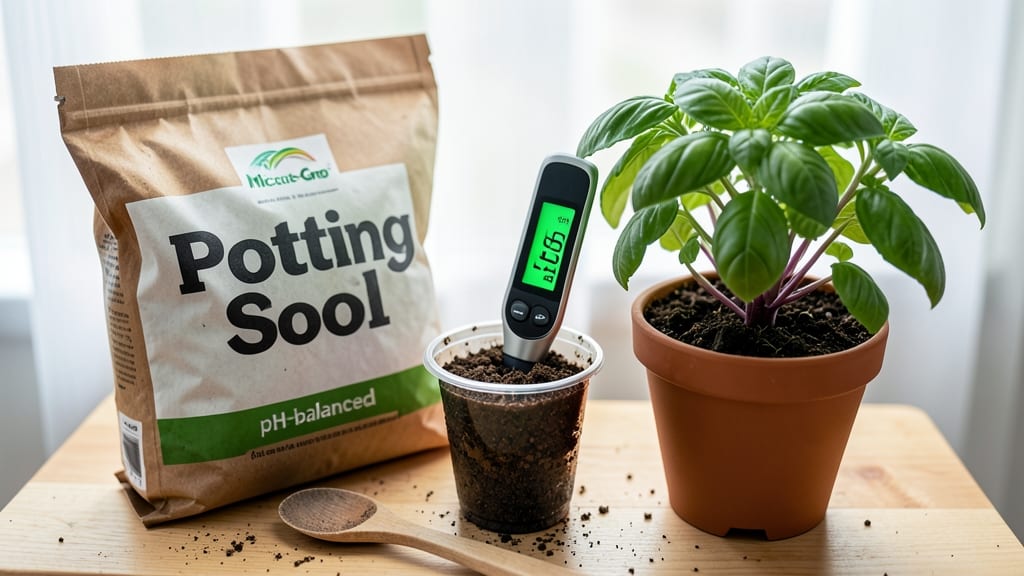
The Miracle-Grow Potting Soil pH range is 5.5 to 6.5, making it perfect for most container plants like tomatoes, peppers, and herbs. For acid-loving plants such as blueberries, you'll need to add sulfur to lower the pH, while alkaline-tolerant plants like succulents benefit from lime to raise it. Regular testing is key since pH can change over time due to watering and organic matter breakdown.
The pH balance of Miracle-Grow Potting Soil directly impacts how well your plants absorb essential nutrients. 🌱 For example, a pH above 7 can lock out iron, causing yellowing leaves, while a pH below 5.5 may limit phosphorus availability, slowing root development.
The soil's slightly acidic to neutral range (5.5-6.5) ensures most common container plants thrive, but specialized plants like azaleas or blueberries need adjustments to match their ideal growing conditions. Testing your soil every few months helps you catch shifts early and maintain optimal growing conditions.
Understanding your plants' needs is the first step to success.
Many gardeners find that even small pH adjustments—like adding a handful of crushed eggshells for alkaline plants or a bit of peat moss for acid-loving varieties—can make a big difference. 💡 The key is consistency: once you adjust the pH, monitor it regularly to ensure it stays within the ideal range for your specific plants.
💡 In This Article
- How Miracle-Grow Potting Soil pH Affects Nutrient Uptake
- Plant-Specific pH Adjustments for Miracle-Grow Soil
How Miracle-grow potting soil pH affects nutrient uptake
The pH level of Miracle-Grow Potting Soil isn't just a number—it's the invisible control center for how your plants access essential nutrients. 🌱 At its ideal range of 5.5 to 6.5, the soil chemistry creates the perfect balance where most nutrients exist in their most plant-available forms.
For instance, nitrogen (critical for leaf growth) thrives in this range, while phosphorus (root and flower development) becomes less available below pH 6.0—which is why you might see stunted growth if your soil drifts too acidic.
Iron is particularly sensitive to pH changes, becoming nearly inaccessible to plants when soil exceeds pH 7.0. This explains why you might see yellowing leaves (chlorosis) even when your plants appear healthy—iron deficiency is one of the most common pH-related issues.
The soil's slightly acidic nature also supports beneficial microbes that break down organic matter, releasing nutrients in forms plants can absorb. These microbes, like mycorrhizal fungi, become less active outside the 5.5-6.5 range, reducing your plants' ability to access nutrients through their roots.
Potassium availability also shifts with pH, becoming more limited as soil becomes more acidic (below 5.5) or alkaline (above 7.0). This is why plants may show signs of potassium deficiency—like weak stems or poor fruit quality—when pH drifts from the ideal range.
The soil's formulation includes balanced nutrients, but without the right pH, these nutrients essentially become "locked away" in forms plants can't utilize, even if they're present in the soil.
What makes this particularly interesting is how quickly pH changes can occur. When you water with tap water that's pH 8.0 or higher, you're gradually raising your soil's alkalinity over time. Similarly, organic matter like compost breaks down and can lower pH as it releases acidic compounds.
This is why regular testing—every 3-6 months—isn't just recommended; it's essential for maintaining optimal growing conditions. The slight acidity in Miracle-Grow soil creates a buffer zone that accommodates minor fluctuations, but it's not infinite.
Consider this: a 0.5 pH unit change can make a 10-20% difference in nutrient availability for some elements like zinc and manganese.
These micronutrients become increasingly scarce as pH moves away from the ideal range, which is why you might see subtle but telling signs like purple stems (phosphorus deficiency) or brown spots on leaves (manganese deficiency) long before other symptoms appear.
The soil's formulation works best when pH stays within that 5.5-6.5 window because it's where most nutrients exist in their most bioavailable forms.
For gardeners using Miracle-Grow, understanding this relationship means you're not just adding soil—you're creating a precise chemical environment where your plants can thrive. The slight acidity supports the soil's natural microbial activity while keeping most nutrients in their most accessible forms.
When you see plants struggling despite proper watering and sunlight, checking the pH is often the first step toward diagnosing hidden nutrient deficiencies. 💡