
How To
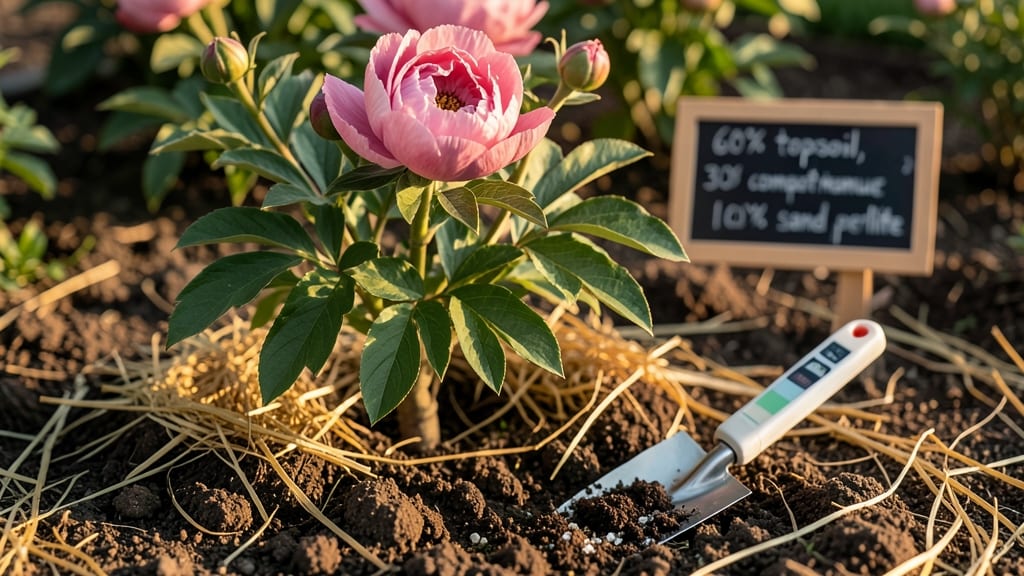
Peonies demand perfect peony soil requirements—rich, well-draining loam with a slightly acidic to neutral pH. 🌸 I’ve learned the hard way that heavy clay or sandy soil starves their roots, leaving you with weak stems and small blooms.
The ideal mix is 60% topsoil, 30% compost, and 10% coarse sand, creating a crumbly texture that holds moisture without drowning roots.
Most gardeners overlook pH, but peonies thrive between 6.5 and 7.5—too acidic, and nutrients lock up; too alkaline, and roots struggle. A simple soil test kit (under $10) reveals the truth before you dig.
Amend with lime for acidity or sulfur for alkalinity, but work it in gradually—peonies hate sudden changes.
Once established, your peonies will reward you with football-sized blooms by midseason, their scent lingering in the evening air. The key? Never disturb the roots after planting—they resent transplant shock for years. Mulch annually with 2-3 inches of compost to keep the soil loose and fertile.
This works for USDA zones 3-8, but southern gardeners need afternoon shade to prevent wilting. Northern growers? Embrace full sun—they’ll bloom for weeks. Let’s get your soil ready!
📚 In This Guide
- What you need
- Instructions
- Tips and common mistakes
- Wrapping up and next steps
What you need
- ● Garden soil (native or existing, well-draining—avoid heavy clay)
- ● Compost or aged manure (2–3 gallons per plant, well-rotted to avoid burning roots)
- ● Peat moss or coconut coir (1–2 gallons, for acidity and moisture retention)
- ● Perlite or coarse sand (1–2 cups, to improve aeration)
- ○ Lime (optional but helpful) (if soil pH is 1–2 lbs per 100 sq ft to adjust to 6.5–7.0)
- ● Balanced fertilizer (10-10-10 or 5-10-10) (1–2 tbsp per plant, low in nitrogen to prevent leafy growth over blooms)
- ● Garden trowel or spade (for digging and amending soil)
- ● Garden fork (to loosen compacted soil, 6–12 inches deep)
- ● pH testing kit (digital or liquid, to verify soil acidity)
- ● Gloves and knee pads (for comfort and hygiene)
- ● Watering can or hose with gentle spray (to avoid displacing soil)
- ○ Mulch (optional) (2–3 inches of wood chips or straw to retain moisture and regulate temperature)
How to prepare the ideal soil for peony blooms
Peonies reward you with lush blooms only when their soil is just right—here’s how to create the perfect foundation.
🌱 Step 1: Test and Amend Your Soil’s pH and Texture
Peonies thrive in soil with a pH between 6.5 and 7.5—slightly acidic to neutral. Grab a soil test kit or send a sample to your local extension office for precise readings. If your soil tests below 6.5, mix in 1-2 pounds of garden lime per 100 square feet and till it in 2-3 months before planting. For clay-heavy soil, add 3-4 inches of compost to improve drainage and aeration.
Dig a hole 2 feet wide and 18 inches deep—that’s how peony roots spread. The deeper you amend, the better the roots will establish. If your soil is sandy, incorporate 2-3 inches of peat moss to retain moisture without suffocating roots. I always do this step first because it’s the backbone of peony success.
💧 Step 2: Build a Well-Draining Loam Base
Peonies despise soggy roots, so blend equal parts garden soil, compost, and coarse sand (or perlite) to create a loose, crumbly loam. This mix mimics their natural woodland habitat while preventing waterlogging. Fill the bottom 6 inches of the hole with this amended soil, then mound the rest around the peony root ball when you plant.
Here’s the thing—peony roots are sensitive. If your native soil is too dense, the roots will struggle to push through. I like to sift the amended mix through a ½-inch mesh screen to remove clumps. The goal is a texture that holds moisture but drains freely—like a damp sponge.
☀️ Step 3: Position and Plant for Long-Term Stability
Peonies need full sun (6-8 hours daily) but appreciate afternoon shade in hot climates. Plant the root crown 1-2 inches below soil level—this ensures stability and prevents future crown rot. Space plants 3-4 feet apart to allow airflow and reduce disease risk. Gently firm the amended soil around the roots, but don’t compact it.
Water deeply after planting to settle the soil, then let it dry slightly before watering again. Overwatering now will drown the roots before they establish. You’ll know it’s right when the soil surface feels slightly damp but not muddy. Mulch with 2-3 inches of shredded bark to retain moisture and regulate temperature.
✂️ Step 4: Maintain Soil Health Year-Round
In spring, top-dress with 1-2 inches of compost to replenish nutrients without disturbing the roots. Peonies are heavy feeders, but too much fertilizer causes floppy stems. I use a balanced 10-10-10 fertilizer at half-strength in early spring—just enough to encourage blooms without stressing the plant.
Monitor drainage after heavy rains. If water pools around the base, dig a shallow trench 6 inches from the plant to redirect excess moisture. Peonies in poorly draining soil develop root rot, and once that happens, the plant declines quickly. A quick check after storms saves a world of trouble later.
⏰ Step 5: Adjust Over Time for Peak Performance
Every 3-4 years, test the soil again—pH drifts over time, especially in acidic climates. If blooms fade or stems weaken, it’s often a sign of nutrient depletion or compacted soil. I like to aerate the top 6 inches in late summer with a garden fork to loosen the soil without damaging roots.
Peonies reward patience. The first year focuses on root establishment, so don’t expect showy blooms. By year three, with consistent soil care, you’ll see lush, repeat-flowering blooms that last weeks. That’s the payoff for getting the soil right from the start.
Tips & tricks for perfect peony soil preparation
These pro insights will help you create the ideal growing environment for your peonies—because the right soil foundation makes all the difference.
Soil pH Precision: The 6.5-7.5 pH range is non-negotiable for peonies. I've seen gardeners add lime too late and end up with stunted growth. If you're adjusting pH, apply the 1-2 pounds of garden lime per 100 square feet at least 2-3 months before planting—this gives the soil time to buffer properly. For quick verification, use a simple pH meter that costs around $10; it's far more accurate than guesswork.
Root Zone Texture: When creating your equal parts garden soil, compost, and coarse sand mix in Step 2, think "fluffy cake batter" rather than dense mud. The ½-inch mesh screen trick removes clumps that would restrict root growth. I've found that adding 10% perlite to this mix (optional) improves aeration even more—just don't exceed 10% or you'll lose moisture retention.
Planting Depth Secret: The 1-2 inches below soil level planting depth for the root crown might seem subtle, but it's critical. Too shallow and you risk crown rot; too deep and stems won't emerge properly. Here's my trick: Use a pencil to mark the crown level before planting, then verify it's properly positioned when backfilling. This simple step prevents years of frustration with weak stems.
Drainage Check: After heavy rains, perform this quick test: Dig a 6-inch-deep hole near your peony and fill it with water. If it drains completely within 30 minutes, your soil is perfect. If water remains after an hour, you need more sand or perlite in your mix. This simple check catches drainage issues before they cause root rot—something I learned the hard way after losing two peony bushes to waterlogged soil.
Pro Tips for Peony Soil Requirements
- These pro insights will help you create the ideal growing environment for your peonies—because the right soil foundation makes all the difference.
- Soil pH Precision: The 6.5-7.5 pH range is non-negotiable for peonies.
- Root Zone Texture: When creating your equal parts garden soil, compost, and coarse sand mix in Step 2, think "fluffy cake batter" rather than dense mud.
Frequently asked questions
Got questions about peony soil? You’re not alone! Here are some of the most common concerns—and their answers—to help you grow stunning blooms with ease.
What’s the ideal pH range for peony soil?
Peonies thrive in slightly acidic to neutral soil, with a pH between 6.5 and 7.5. Test your soil with a kit—if it’s too acidic (below 6.5), amend with lime; if alkaline (above 7.5), add sulfur or peat moss. Pro tip: Aim for consistency, as sudden pH shifts stress roots.
How often should I water peonies, and do they need special drainage?
Peonies need moderate watering—about 1 inch per week—but never soggy soil. Their roots rot in waterlogged conditions! Ensure your garden bed has well-draining loam (sandy loam is ideal). If your soil is heavy clay, mix in compost or perlite to improve airflow. Pro tip: Mulch with organic matter to retain moisture without suffocating roots.
Can I grow peonies in containers, or do they need in-ground planting?
Peonies can thrive in containers, but choose a large pot (at least 18–24 inches deep) with drainage holes. Use a mix of 50% garden soil, 30% compost, and 20% perlite or sand for optimal drainage. Warning: Container-grown peonies may need more frequent watering and winter protection in cold climates.
Why aren’t my peonies blooming, even though the soil seems right?
Peonies need full sun (6–8 hours daily) and 3–5 years of establishment before blooming reliably. Other culprits? Over-fertilizing (especially nitrogen) or crowded roots. Prune back foliage in fall to redirect energy to next year’s blooms. Pro tip: If blooms fail, check for aphids or fungal diseases—treat with neem oil if needed.
Do peonies need winter care, and how cold can they tolerate?
Peonies are hardy in USDA Zones 3–8 and tolerate down to -30°F (-34°C). However, newly planted peonies benefit from a 3-inch layer of mulch (straw or leaves) to insulate roots. In extreme cold, cover the crown with burlap or a thick blanket—just remove it in early spring to avoid rot.
Still stumped? Drop your soil or climate specifics in the comments—we’re happy to help troubleshoot!
Wrapping up and next steps
Growing peonies is all about getting the soil right—think well-draining, slightly acidic loam rich in organic matter.
With the perfect mix of nutrients, sunlight, and care, your peonies will reward you with lush, vibrant blooms year after year! 🌸 Now that you know their soil secrets, grab your gloves and get ready to transform your garden into a peony paradise.
Your next step? Check out our planting guide to learn how to plant peonies for maximum success!