
How To
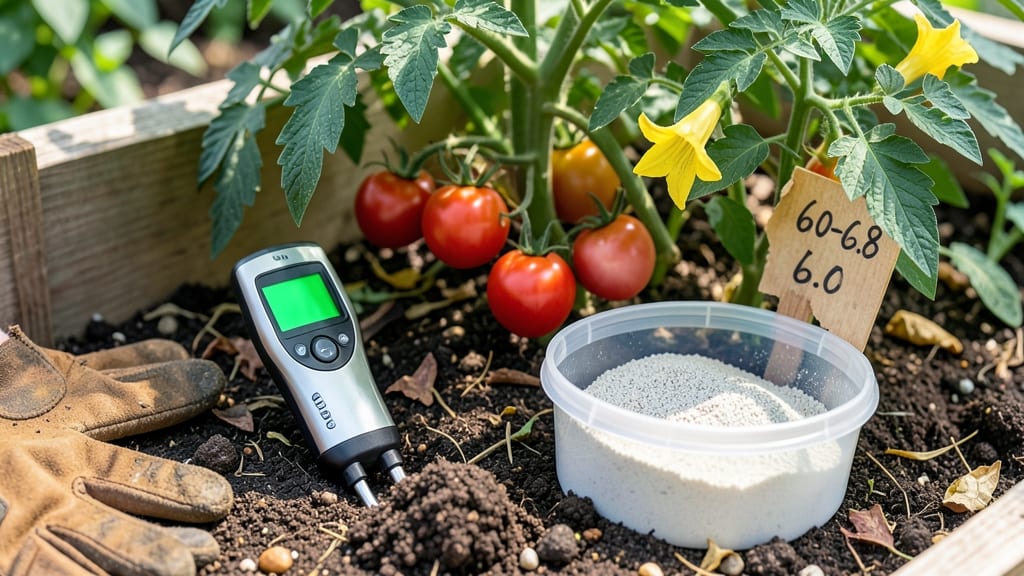
For tomatoes, soil acidity should stay between 6.2 and 6.8—slightly acidic to neutral—for the best growth and fruit production. When pH drifts too low or high, plants struggle to absorb essential nutrients, leading to weak vines or blossom-end rot. Regular soil testing helps you adjust with lime or sulfur before problems start.
Tomatoes are particularly sensitive to soil chemistry because their nutrient needs are precise. 🌱 At the ideal 6.2–6.8 pH, roots can efficiently access nitrogen for leafy growth, phosphorus for strong roots, and potassium for fruit development.
If your soil tests outside this range, you might see yellowing leaves (too acidic) or stunted growth (too alkaline). I’ve found that even small pH shifts can trigger deficiencies like calcium or magnesium, which show up as spots on leaves or cracked fruit.
To keep your tomatoes thriving, test your soil every year—especially if you’ve never grown them before. Home test kits are affordable and easy, but lab tests give more precise results.
Once you know your pH, you can amend it organically: crushed eggshells or wood ash raise pH, while sulfur or pine needles lower it. The key is patience—changes take time, so start adjusting in early spring for a full growing season of happy plants.
💡 In This Article
- How Soil pH Affects Tomato Growth and Nutrition
- Step-by-Step Guide to Testing and Adjusting Soil pH for Tomatoes
How soil pH affects tomato growth and nutrition
The ideal 6.2–6.8 pH range for tomatoes isn't just arbitrary—it's where essential nutrients become most available to their roots. At this slightly acidic level, nitrogen (critical for leafy growth) exists primarily as nitrate, which tomato roots absorb efficiently.
Below 6.0, aluminum and manganese become toxic, while above 7.0, phosphorus and iron lock up, causing yellowing leaves despite healthy-looking soil. 🌱 This is why plants in perfectly fertile soil can still fail if the pH is off.
Root health suffers dramatically outside this range. In acidic soil (5.5 or lower), hydrogen ions block nutrient uptake, while alkaline soil (> 7.5) causes calcium and magnesium deficiencies—commonly seen as brown spots on leaves or blossom-end rot.
I've noticed that even a 0.5 pH shift can reduce nutrient absorption by 10-20%, directly impacting fruit quality. The roots' ability to extend and explore soil decreases when pH extremes stress them.
Calcium disorders like blossom-end rot occur most frequently when soil pH prevents proper calcium uptake, even if you're adding calcium supplements. This is because calcium exists as calcium carbonate in alkaline soils, making it unavailable.
The same happens with iron—tomatoes need it for chlorophyll production, but iron binds tightly in alkaline conditions, leading to pale leaves. 💫 What's fascinating is how these deficiencies often appear identical to nutrient deficiencies caused by poor soil structure, making pH testing essential.
Micronutrient availability also varies dramatically. Zinc, copper, and boron—needed in tiny amounts—become scarce in alkaline soils, while manganese toxicity becomes an issue in acidic conditions. For example, manganese toxicity shows up as brown spots between leaf veins, mimicking disease symptoms.
This is why soil test reports include pH alongside nutrient levels: without the right pH, even balanced fertilizer won't help.
Consider this comparison: A soil with 100 ppm available phosphorus at pH 6.5 might have only 20 ppm at pH 7.5. That fivefold difference explains why tomatoes in "fertile" alkaline soil often underperform despite regular feeding.
The solution lies in maintaining that delicate balance where roots can access what they need without toxic interference.
What most gardeners don't realize is how quickly pH can change. Organic matter decomposition naturally lowers pH over time, while irrigation with alkaline water raises it.
That's why annual testing is crucial—even established tomato beds can drift outside the optimal range without visible symptoms until it's too late for the growing season. 🔥