
Neem Oil
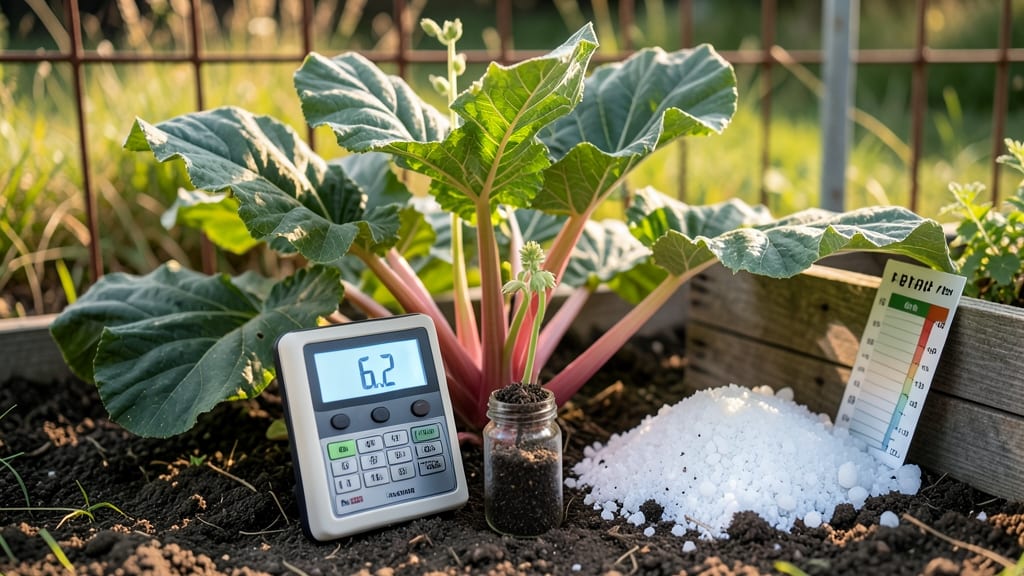
Growing rhubarb with the right soil pH makes the difference between a bountiful harvest and a struggle 🍃—and most gardeners don’t realize how critical this is until it’s too late.
Picture this: you’ve planted your rhubarb crowns in early spring, eager for those bright red stalks by summer, only to watch them wilt or produce tiny, bland shoots. The culprit? Soil that’s either too acidic or alkaline, locking out the nutrients your rhubarb craves.
Here’s the good news: rhubarb thrives in a specific pH range, and adjusting it isn’t as complicated as it sounds.
I’ll walk you through testing your soil, natural ways to tweak the pH, and how to keep it balanced so your plants reward you with juicy, tender stalks year after year.
Skip the guesswork—by the end, you’ll know exactly what your rhubarb’s soil needs to flourish, even if you’re starting from scratch.
Optimal soil pH range for rhubarb growth and how to test it
Rhubarb is one of those perennial garden workhorses that rewards patience with bold, tangy stalks for years. But here's the secret: it’s picky about soil pH.
Too acidic or alkaline, and your rhubarb will struggle to absorb essential nutrients, leading to yellowing leaves, weak stems, or even plant decline.
The ideal soil pH for rhubarb sits between 5.0 and 6.5, a slightly acidic to neutral range where nutrients like phosphorus, calcium, and magnesium become readily available.
Why does pH matter so much? Rhubarb’s roots rely on specific nutrient availability tied to soil acidity. Outside the 5.0–6.5 range, critical minerals lock up—like iron and manganese in alkaline soils—or become toxic in overly acidic conditions.
Even a 0.5 pH shift can reduce nutrient uptake by 20–30%, directly impacting stalk size and sweetness. Testing your soil isn’t just a suggestion; it’s the first step to maximizing your harvest.
Testing soil pH is simpler than you think. You can use DIY test kits (like liquid or probe meters) for quick results or send samples to a soil lab for precise analysis. Both methods provide actionable data, but labs offer deeper insights, including nutrient deficiencies and organic matter levels.
For most home gardeners, a $10–$20 kit from a garden center delivers accurate enough readings to guide adjustments. The key is acting on the results—whether you need to lower or raise pH depends entirely on what your test reveals.
If your soil tests below 5.0, rhubarb’s roots will struggle to access phosphorus and calcium, even if you’re fertilizing. The fix?
Add garden lime or wood ash to incrementally raise pH. For every 0.5 pH unit you need to shift, apply 5–10 pounds of lime per 100 sq ft and retest in 2–3 months. Overcorrecting can harm soil microbes, so start small and monitor progress.
On the flip side, soils above 6.5 create iron and manganese deficiencies, causing yellowing between leaf veins (a classic sign of chlorosis). To lower pH, mix in sulfur or peat moss—these release acids over time.
For a 1.0 pH drop, use 20–30 pounds of sulfur per 100 sq ft, tilled into the top 6 inches of soil. Pair this with compost or pine needles to buffer the change and protect roots.
Testing soil pH at planting sets your rhubarb up for success, but don’t stop there. Retest annually, especially if you’ve amended the soil recently. Organic matter—like compost or leaf mold—naturally stabilizes pH over time, so adding 2–3 inches of mulch yearly helps maintain that 5.0–6.5 sweet spot.
Think of it as an insurance policy against nutrient deficiencies and poor yields.
Pro tip: Test soil in multiple spots if your garden has varied conditions. A 10-foot difference in location can mean a 0.5–1.0 pH swing, so adjust amendments zone by zone.
For container-grown rhubarb, use a pH-adjusted growing mix (like 60% peat moss, 30% compost, 10% perlite) to control pH entirely. Containers dry out faster, so monitor moisture levels too—dry soil can temporarily skew pH readings.
Remember, rhubarb is a long-term investment. A well-balanced pH today means bigger, sweeter
How to lower or raise soil pH for rhubarb: natural and chemical methods
Rhubarb loves slightly acidic to neutral soil with a pH range of 5.0–6.5. If your soil tests outside this range, your plants may struggle with nutrient uptake, leading to weak growth or poor harvests.
The good news? Adjusting soil pH for rhubarb is straightforward with the right amendments and timing.
Before making changes, test your soil’s current pH using a home test kit or send a sample to a local extension office. Once you know your starting point, you can choose between natural amendments (like sulfur or lime) or synthetic solutions for faster results.
Both methods have pros and cons, depending on your garden’s needs.
Natural vs. Chemical pH Adjustments for Rhubarb
Natural Methods
- Pros: Slow-release, improves soil health, no harsh chemicals
- Cons: Takes longer (weeks to months), requires frequent monitoring
Chemical Methods
- Pros: Fast results (days to weeks), precise pH control
- Cons: Can disrupt soil microbes, risk of overcorrection
To raise soil pH (make it less acidic), add pelletized lime or wood ash. For every 1.0 pH unit increase, apply 50–100 lbs of lime per 100 sq ft, working it into the top 6 inches of soil.
Re-test in 2–3 months and reapply if needed. For organic gardens, try crushed eggshells or wood ash, but use sparingly to avoid over-alkalizing.
Lowering pH requires elemental sulfur or peat moss. Sulfur is the most effective: apply 2–4 lbs per 100 sq ft for every 1.0 pH unit drop. Mix it into the soil and water thoroughly.
For a slower approach, pine bark or sphagnum peat moss can acidify soil over time. Avoid overdoing it—pH below 5.0 can harm rhubarb roots.
Timing matters! Adjust pH in early spring or fall, giving amendments time to integrate before planting or dormancy. Avoid mid-summer adjustments, as rapid pH shifts can stress plants. After making changes, re-test soil pH annually and top-dress with amendments as needed to maintain the 5.0–6.5 range.
For long-term stability, combine pH adjustments with compost and organic matter. Healthy soil buffers pH fluctuations naturally. Mulch with pine needles or oak leaves to gradually acidify soil, or use calcitic lime for gradual alkalinity. Monitor your rhubarb’s health—vibrant green leaves and sturdy stalks signal success!