
Companion Plants
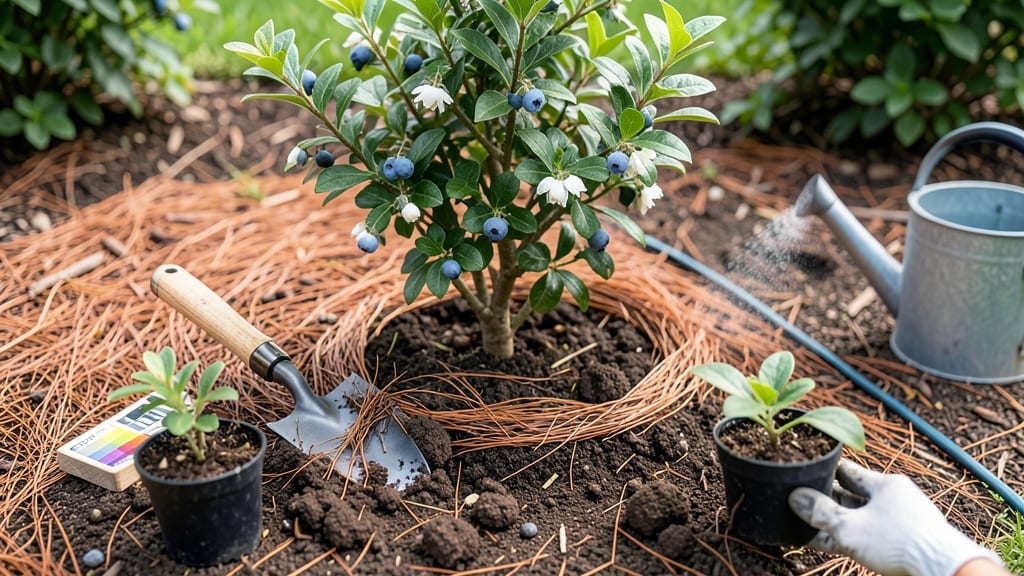
Soil prep for blueberry plants demands acidic conditions—ignore that, and you’ll get bitter fruit and stunted growth. 🌱 I’ve learned the hard way that even the hardiest varieties need pH between 4.5 and 5.5, and most garden soil starts too alkaline to support them. The key isn’t just adding sulfur; it’s building a well-draining, organic-rich loam that mimics their natural bog habitat. You’ll need sphagnum peat moss, pine bark fines, and elemental sulfur (or organic alternatives like coffee grounds) to adjust pH, plus compost to feed the roots. A soil test kit ($20) removes the guesswork—test before and after amending. For heavy clay soils, mix in 1-2 inches of coarse sand to prevent waterlogging, which blueberries hate almost as much as alkaline soil. Once prepped, your bushes will reward you with juicy, sweet berries by their second year. The secret? Top-dress annually with acidic compost to maintain that perfect pH. I’ve seen plants double their yield just by keeping the soil happy—no fancy fertilizers needed. This works for container growing too: use a 50/50 mix of peat moss and pine fines in pots, and check pH every 6 months. The effort pays off in bold green leaves and buckets of berries—trust me, your taste buds will thank you.
📚 In This Guide
- What you need
- Instructions
- Tips and common mistakes
- Wrapping up and next steps
What you need
- ● Soil amendments: Peat moss or coconut coir (5–10 gallons per 10 sq ft)
- ● Sulfur (1–2 lbs per 100 sq ft) – for acidity adjustment
- ● Composted pine bark fines (2–3 inches mixed into soil)
- ● Organic matter (e.g., leaf mold or well-rotted compost, 2–3 inches)
- ● Testing & prep tools: Soil pH test kit (digital or liquid)
- ● Garden fork or tiller (for aeration)
- ● Gloves & knee pads (because comfort matters!)
- ● Wheelbarrow or bucket (for mixing amendments)
- ● Planting supplies: Blueberry bushes (choose varieties like Duke or Bluecrop for acid-loving roots)
- ● Mulch (pine needles or wood chips, 2–3 inches)
- ● Lime alternative (e.g., elemental sulfur for fine-tuning pH)
- ● Slow-release organic fertilizer (e.g., fish emulsion or blood meal)
- ● Epsom salt (1 tbsp per plant annually for magnesium boost)
- ● Drip irrigation system (to maintain consistent moisture)
- ● Mulch fabric (to suppress weeds in the first year)
Step-by-step guide to preparing soil for blueberry plants
Blueberries demand precise soil conditions—here's how to create the perfect acidic loam for thriving bushes.
🌱 Step 1: Test and Adjust Soil pH to Acidic Levels
Blueberries thrive in soil with a pH between 4.5 and 5.5—any higher, and they won't absorb essential nutrients. Grab a soil test kit from your local garden center and take samples from multiple spots in your planting area. I like to test in spring before planting, when soil is most stable. If your soil tests above 5.5, you'll need to lower the pH using elemental sulfur or peat moss. For every 0.5 pH points above 5.5, apply 1 pound of elemental sulfur per 100 square feet and mix it into the top 6 inches of soil.
If your soil is already acidic but lacks organic matter, blend in 2-3 inches of compost to improve structure while maintaining that critical acidity. You'll know you're on the right track when your test results fall between 4.5 and 5.5—this is non-negotiable for blueberries. I've seen gardeners skip this step and end up with stunted bushes that never fruit properly, so don't skip it.
🌿 Step 2: Amend Soil with Organic Matter for Drainage and Nutrients
Blueberries prefer well-draining, slightly sandy soil that holds moisture without becoming waterlogged. Start by removing any grass or weeds from your planting area, then loosen the top 12 inches of soil with a garden fork. This aeration helps roots penetrate easily. Next, mix in 3 inches of peat moss or pine bark fines—these materials naturally acidify the soil while improving drainage. I like to spread them evenly over the area first, then work them into the soil with my fork.
For nutrient-rich growth, add 2-3 inches of compost or well-rotted leaf mold. This provides the organic matter blueberries crave without raising the pH too much. The ideal blend should feel light and crumbly, like a mix of sand and humus. You'll notice the soil holds moisture better but doesn't stay soggy—this balance is key for healthy root development.
💧 Step 3: Create a Raised Bed or Mounded Planting Area
Blueberries hate "wet feet," so if your native soil drains poorly, create a 12-inch-high mound or raised bed. This elevation prevents water from pooling around roots, which can lead to root rot. For a mound, simply pile the amended soil into a 3-foot-wide circle—this gives roots room to spread while keeping the center slightly elevated. If you're building a raised bed, use untreated lumber or landscape fabric to contain the soil mix, then fill it with your prepared acidic blend.
For 4 blueberry bushes, you'll need about 1 cubic yard of amended soil—that's roughly 36 12-inch-deep bags. I like to mound the soil into a gentle slope so water runs off easily during heavy rains. After shaping, water the area deeply to settle everything. You'll see the soil hold moisture at the surface but drain freely after a few hours—that's the perfect texture for blueberries.
☀️ Step 4: Mulch to Maintain Acidic Conditions and Moisture
Spread 3-4 inches of pine needles, wood chips, or shredded bark over the amended soil. These organic mulches slowly acidify the soil as they break down, keeping the pH in that critical range. I prefer pine needles because they're free if you have pine trees nearby, and they create a natural, acidic environment. Avoid using cedar mulch—it can be too acidic and may inhibit growth over time.
Keep the mulch 2-3 inches away from the stems of your blueberry bushes to prevent rot. Water the mulch layer lightly after spreading to help it settle. You'll notice the mulch stays moist longer and suppresses weeds naturally—both huge benefits for low-maintenance blueberry care. Replenish the mulch layer annually to maintain its benefits.
⏰ Step 5: Plant and Monitor Soil Conditions
Dig a hole twice as wide as the root ball but no deeper than the container's depth. Gently remove the blueberry bush from its container and place it in the hole, ensuring the top of the root ball sits 1 inch above soil level. This prevents water from pooling around the stem. Backfill with your amended soil, pressing lightly to remove air pockets but not compacting too tightly.
Water deeply after planting to settle the soil around roots. Over the next 2-3 weeks, monitor the soil moisture—it should stay consistently damp but not soggy. If you notice the mulch drying out quickly, add a 1-inch layer of pine needles to retain moisture. Blueberries are sensitive to soil changes, so avoid fertilizing for the first 6-8 weeks to let roots establish. You'll see new growth within 4-6 weeks if the soil prep was done correctly—that's your sign everything is on track.
Tips & tricks for perfect acidic loam for blueberry bushes
Here's what nobody tells you about creating the ideal environment for your blueberry plants.
Soil Test Timing: Test your soil in spring before planting when temperatures are stable and moisture levels are consistent. I’ve seen gardeners test in summer and get misleading results because heat can temporarily alter pH readings. If you must test later, do it on an overcast day when soil is evenly moist. The 4.5-5.5 pH range is your target—anything outside this window means your bushes will struggle to absorb nutrients, no matter how much compost you add.
Elemental Sulfur Application: When adjusting pH with elemental sulfur, spread it evenly over the soil and work it into the top 6 inches using a garden fork. Don’t just sprinkle it on top—this prevents proper contact with the soil microbes that help lower pH. For every 0.5 pH points above 5.5, use 1 pound per 100 square feet. I’ve found that sulfur works best when mixed with peat moss—this combo ensures both acidification and improved drainage. If you’re unsure about your calculations, test again after 2-3 weeks to confirm the pH adjustment.
Organic Matter Layering: The key to the perfect soil blend is layering 3 inches of peat moss or pine bark fines followed by 2-3 inches of compost. Spread the peat moss first to create a slightly sandy base that improves drainage, then add compost on top to introduce nutrients. Work these into the top 12 inches of loosened soil—but don’t overmix. You want a light, crumbly texture that holds moisture without becoming compacted. Think of it like creating a sponge: firm enough to support roots, but porous enough to breathe.
Mulch Placement: When you spread 3-4 inches of pine needles or wood chips, keep it 2-3 inches away from the stems of your blueberry bushes. This prevents rot while still maintaining moisture and acidity. I’ve seen gardeners pile mulch right against the stems, which leads to fungal issues. For extra acidity, use pine needles—they’re free if you have pine trees nearby and break down slowly to keep the pH in check. Avoid cedar mulch, as it can become too acidic over time and may stunt growth.
Pro Tips for Soil Prep For Blueberry Plants
- Here's what nobody tells you about creating the ideal environment for your blueberry plants.
- Soil Test Timing: Test your soil in spring before planting when temperatures are stable and moisture levels are consi...
- Elemental Sulfur Application: When adjusting pH with elemental sulfur, spread it evenly over the soil and work it int...
Frequently asked questions
Got questions about prepping soil for blueberry plants? You’re not alone! Here are answers to the most common queries to help you get started on the right foot.
How acidic should my soil be for blueberries?
Blueberries thrive in acidic soil with a pH between 4.5 and 5.5. Test your soil first—kits are affordable and easy to use. If it’s too alkaline, amend it with sulfur or peat moss over time. Avoid quick fixes like vinegar, which can harm soil microbes.
When is the best time to prep soil for blueberries?
Start soil prep 3–6 months before planting—ideally in late summer or early fall. This gives amendments (like compost or pine bark fines) time to integrate. If planting in spring, prep the soil in winter to avoid disturbing roots later. Patience pays off!
Can I grow blueberries in containers? What’s the soil mix?
Yes! Use a well-draining, acidic mix like 50% peat moss or coconut coir, 30% pine bark fines, and 20% perlite/sand. Add slow-release fertilizer (like cottonseed meal) and check pH regularly. Containers dry faster, so water consistently and mulch the surface to retain moisture.
My soil is already acidic, but blueberries aren’t thriving. What could be wrong?
Check for these red flags:
- Poor drainage: Blueberries hate soggy roots. Amend with sand or compost if soil is clay-heavy.
- Nutrient deficiencies: Yellow leaves? Add iron sulfate or a balanced organic fertilizer (low in nitrogen).
- Competition: Remove weeds or grass within a 3-foot radius—blueberries need space and nutrients.
Are there any plants I should avoid near blueberries?
Blueberries are competitive rooters, so keep them away from:
- Raspberries or blackberries (they attract pests like aphids).
- Vegetables (e.g., potatoes, tomatoes)—they deplete soil nutrients.
- Grass or clover (they raise pH and steal moisture).
Wrapping up and next steps
Prepping your soil for blueberry plants is the secret ingredient to a bountiful, thriving harvest! 🌱 By focusing on acidic loam, proper drainage, and organic matter, you’ve set the stage for healthy bushes that’ll reward you with juicy berries for years.
Now that you’re armed with the right knowledge, it’s time to roll up your sleeves and get growing—your future blueberry patch is waiting!
Ready to take the next step? Mark your calendar for planting day and watch your blueberries flourish! 🌿