
Propagation
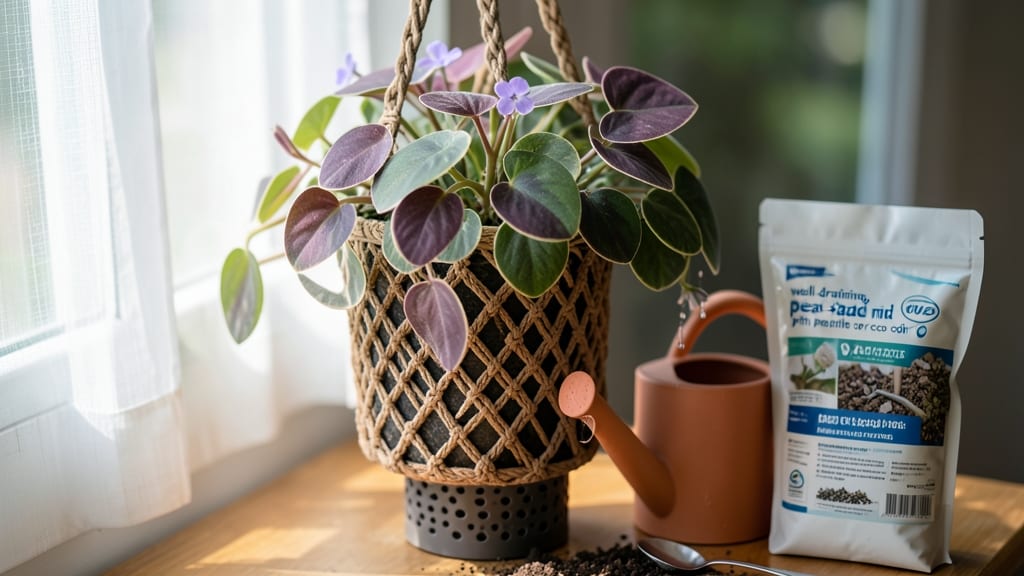
The right wandering jew soil mix makes all the difference between straggly stems and vibrant, trailing foliage that spills over containers all year. 🌿 My first attempt with regular potting mix left the plants leggy and sparse—until I switched to an acidic loam blend that mimics their natural tropical habitat.
The secret isn’t expensive ingredients but the right balance of moisture retention and airflow.
This mix combines equal parts peat moss, perlite, and compost with a pinch of worm castings for extra nutrients. The peat keeps roots happily moist (but not soggy), while perlite prevents compaction—critical for preventing root rot in these fast-growing plants.
For outdoor containers, add a handful of coarse sand to improve drainage during summer downpours.
You’ll notice the difference within weeks: deep purple leaves, compact growth, and stems that cascade beautifully. The key is keeping the mix slightly acidic (pH 5.5-6.5) and never letting it dry out completely. Wandering Jew thrives in humidity, so misting or a pebble tray helps recreate its jungle home.
Indoor plants appreciate a lighter mix (more perlite), while outdoor varieties can handle slightly more compost. Avoid garden soil—it’s too dense and lacks the airiness these plants crave. Once you master this blend, your Wandering Jew will grow thicker, fuller, and more vigorous than you’ve ever seen.
📚 In This Guide
- What you need
- Instructions
- Tips and common mistakes
- Wrapping up and next steps
What you need
- ● Peat moss or coconut coir: 4 parts (ensures acidity & moisture retention)
- ● Perlite or vermiculite: 1 part (boosts drainage & aeration)
- ● Pine bark fines or orchid bark: 1 part (adds structure & mimics natural forest floors)
- ○ Sphagnum peat moss (optional but recommended): 1 part (enhances acidity & moisture-holding)
- ● Slow-release fertilizer (14-14-14 or similar): 1 tbsp per 5 gallons (feeds nutrients gradually)
- ○ Lime (optional, for fine-tuning pH): A pinch (if your mix leans too acidic)
- ● Large mixing container or wheelbarrow (sterilized to avoid contaminants)
- ● Garden gloves (to protect your hands from sharp bark or peat)
- ● pH testing kit (to verify acidity levels, ideal range: 5.0–6.5)
- ● Trowel or shovel (for blending & transferring soil)
- ● Spray bottle with water (to moisten dry ingredients before mixing)
- ● 🌡️ Sterilize your tools with rubbing alcohol or boiling water to prevent fungal issues.
- ● ✨ Adjust ratios if your Wandering Jew prefers looser or denser soil—observe drainage!
- ● 🎯 Pre-moisten components for a smoother, clump-free mix.
How to create the perfect soil mix for wandering jew plants
This blend keeps wandering jew thriving year-round with vibrant foliage and steady growth.
🪴 Step 1: Combine the Base Components
Start with 2 parts peat moss—this creates acidity and retains moisture without compacting. I always sift it first to break up any clumps, because wandering jew roots need loose, airy soil to spread properly. Next, add 1 part perlite for drainage and 1 part coarse sand to prevent gunkiness. Mix these dry ingredients thoroughly in a large bin, breaking up any remaining clumps with your hands.
Here's the thing—wandering jew is sensitive to soggy roots. The sand and perlite combo ensures excess water drains quickly, but don't overdo it. If you feel the mix is too gritty after mixing, add a handful of coco coir to improve moisture retention slightly. The goal is a blend that feels like damp sandpaper when squeezed—firm but not compacted.
🌱 Step 2: Add Organic Matter for Nutrients
Now incorporate 1 part worm castings for gentle, long-lasting nutrients. I like to distribute them evenly throughout the mix rather than piling them in one spot, because wandering jew absorbs nutrients through its sprawling root system. Next, stir in ½ part composted pine bark fines—this adds structure and maintains that slightly acidic pH wandering jew craves.
For extra insurance, I sprinkle in 1 tablespoon of balanced organic fertilizer (10-10-10) per gallon of mix. This gives the plants a nutrient boost right from planting. Mix everything together until the color is uniform—you should see dark browns from the peat and worm castings, with flecks of lighter sand and perlite. The texture should resemble crumbly loam rather than dense garden soil.
💧 Step 3: Adjust Moisture and pH for Ideal Conditions
Gradually add warm water while mixing until the blend reaches a damp sponge consistency. It should hold together when pressed but not drip water. Wandering jew roots rot quickly in waterlogged conditions, so this moisture level is critical. I test by squeezing a handful—if water beads appear on the surface, it's too wet. If it crumbles completely, add a little more water.
Check the pH with a meter—wandering jew thrives in acidic soil (pH 5.5-6.5). If your mix tests higher, add a pinch of sulfur and remix. For lower pH, a small amount of peat moss will help. The mix should feel cool to the touch, not warm, indicating proper moisture balance. Store any unused mix in a sealed container until planting.
✂️ Step 4: Prepare the Planting Environment
Fill your 6-inch containers with the finished mix, leaving 1 inch of space at the top for watering. Wandering jew spreads aggressively, so I always use containers with drainage holes—no exceptions. Gently press the mix down to eliminate air pockets, but don't compact it. The roots need room to expand horizontally, so avoid heavy tamping.
Here's where it gets fun—wandering jew grows best when slightly crowded. For a 4-inch pot, plant 2-3 cuttings per container. Space them evenly, about 2 inches apart, and press the stems lightly into the soil. The first true leaves should appear within 2-3 weeks if the mix is right. Keep the soil lightly moist (not soggy) during this period, and watch for those vibrant new shoots.
Tips & tricks for perfect wandering jew soil mix
Mastering this blend transforms your wandering jew into a lush, year-round showstopper—here's how to nail every detail.
Texture is Everything: The damp sponge consistency in Step 3 isn't just a suggestion—it's critical. Wandering jew roots need that perfect balance of moisture retention and aeration. If your mix feels like wet sandpaper (just firm enough to hold together but not compact), you've hit the mark. Too gritty? Add a splash of water and remix. Too wet? Sprinkle in more perlite and let it absorb moisture overnight before using.
Organic Matter Distribution: When adding worm castings and composted pine bark fines in Step 2, think "even snowfall" rather than "dusting." Uneven distribution creates nutrient hotspots that can burn delicate wandering jew roots. I use a small hand shovel to create thin layers between mixing, then fold them in gently. This ensures every inch of the mix supports growth, not just pockets.
pH Precision Matters: That pH 5.5-6.5 range in Step 3 isn't arbitrary—wandering jew's vibrant foliage depends on it. If your meter shows 6.8, don't panic. A pinch of sulfur (about ¼ teaspoon per gallon) will lower it by 0.5-1.0 points. For higher pH adjustments, peat moss works best—it's already in your mix! Test after each addition and remix thoroughly. The goal is consistency throughout the entire blend.
Container Prep Secret: Before filling your 6-inch containers in Step 4, give them a pre-treatment. Rinse with a vinegar-water solution (1:3 ratio) to kill any lingering bacteria or fungi. Let dry completely before adding your mix. This prevents mold issues that can appear within weeks, especially in crowded plantings. Also, pre-wetting the containers helps prevent air pockets when you press the mix down.
Pro Tips for Wandering Jew Soil Mix
- Mastering this blend transforms your wandering jew into a lush, year-round showstopper—here's how to nail every detail.
- Texture is Everything: The damp sponge consistency in Step 3 isn't just a suggestion—it's critical.
- Organic Matter Distribution: When adding worm castings and composted pine bark fines in Step 2, think "even snowfall" rather than "dusting."
Frequently asked questions
Got questions about the perfect Wandering Jew soil mix? You’re not alone! Here are some of the most common queries—plus straightforward answers to keep your plant thriving.
What’s the ideal pH for Wandering Jew soil?
Wandering Jew (also called Tradescantia) thrives in slightly acidic to neutral soil, with a pH range of 6.0–7.0. Test your mix with a pH meter or kit—adjust with lime (to raise pH) or sulfur (to lower it) if needed. A well-draining, airy blend naturally supports this balance!
How often should I repot my Wandering Jew?
Repot every 1–2 years or when roots outgrow the container. Signs it’s time: roots circling the pot’s bottom or soil drying out too fast. Spring is ideal! Use a fresh Wandering Jew soil mix (like your acidic loam blend) to refresh nutrients and prevent root rot.
Can I reuse old soil for Wandering Jew?
Not ideal! Old soil loses nutrients and may harbor pests or fungi. Refresh at least 50% of the mix with new potting soil, or fully replace it. For a budget-friendly twist, amend with compost or worm castings to revive depleted soil—just avoid heavy garden soil (it compacts).
Why are my Wandering Jew leaves turning yellow?
Yellowing leaves often signal overwatering, poor drainage, or nutrient deficiency. Check the soil mix: if it’s too dense, add perlite or orchid bark (20–30%) to improve airflow. Water only when the top inch feels dry, and ensure the pot has drainage holes. Yellow edges? It might need more light!
What’s a quick fix for compacted Wandering Jew soil?
Fluff up compacted soil by gently forking it with a chopstick or small trowel to aerate roots. Mix in 1 part perlite or coarse sand to 3 parts soil, then water lightly. For a no-fuss hack, top-dress with orchid bark chunks—they break down slowly, keeping the mix light and breathable.
Still stumped? Drop your question in the comments—we’re happy to help your Wandering Jew flourish!
Wrapping up and next steps
Mastering the Wandering Jew soil mix is your ticket to vibrant, year-round foliage that’ll turn heads! 🌿 This acidic loam blend—packed with perlite, peat, and a dash of compost—gives your plants the perfect home to thrive.
Whether you’re a seasoned gardener or just starting, this mix simplifies care and boosts growth, ensuring lush, healthy plants with minimal fuss.
Ready to take the next step? Grab your supplies, mix with confidence, and watch your Wandering Jew flourish! 🌱 Start experimenting with variations (like adding orchid bark) to tailor the mix to your plant’s unique needs—happy growing!