
Propagation
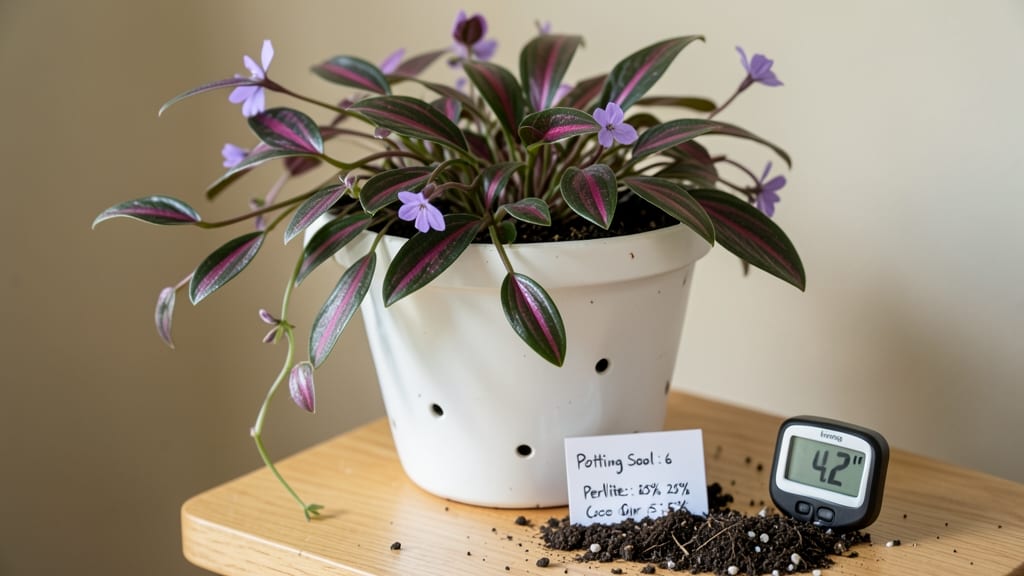
The Wandering Jew soil type you choose makes or breaks its vibrant growth 🌿 — this trailing beauty craves a well-draining, slightly acidic mix that mimics its native forest floor.
Struggling to keep your Wandering Jew thriving? The secret lies in its soil—this fast-growing ground cover demands a specific mix to prevent yellowing leaves and stunted growth. Too much clay or alkaline pH, and you’ll watch it fight for survival.
This plant loves a loose, airy blend with organic matter like compost or peat moss, plus perlite for drainage. Aim for a pH between 5.0 and 6.5—any higher, and nutrients lock up, leaving your plant weak and leggy.
Below, I’ll break down the exact soil ratios, DIY fixes for common mistakes, and whether your Wandering Jew prefers pots or garden beds. Ready to give it the perfect foundation?
Ideal soil composition for Wandering Jew plants (acidic loam breakdown)
Your Wandering Jew (Tradescantia spp.) thrives when its soil mimics its natural forest floor habitat. This means a light, airy, and acidic mix that holds moisture without suffocating roots.
The perfect blend combines organic matter, mineral content, and proper drainage to prevent root rot while supporting vibrant foliage. Let’s break down the science behind this acidic loam composition.
At the core of your Wandering Jew’s soil needs is a pH range of 5.0–6.5. This slightly acidic environment mimics the decaying leaf litter where these plants naturally grow. Testing your soil’s pH with a digital meter or litmus test kit ensures you’re in the ideal range.
If your soil tests higher (alkaline), peat moss or pine bark fines can safely lower the pH over time.
| Component | Ratio | Purpose |
|---|---|---|
| Peat Moss | 40% | Retains moisture, lowers pH |
| Coco Coir | 30% | Improves aeration, mimics forest floor |
| Perlite or Pumice | 20% | Enhances drainage, prevents compaction |
| Composted Pine Bark | 10% | Adds organic matter, maintains acidity |
The organic matter in your mix—like peat moss and composted bark—should make up 70–80% of the total volume. These components break down slowly, feeding your plant’s roots while improving soil structure. Coco coir is a sustainable alternative to peat moss, offering similar moisture retention without the environmental drawbacks.
For outdoor gardens, amending native soil with leaf mold or well-rotted compost can replicate these benefits naturally.
Drainage is non-negotiable for Wandering Jew roots, which rot quickly in soggy conditions. Aim for a mix where water drains within 10–15 minutes after watering. Perlite or pumice creates air pockets, while sand (sparingly) prevents clumping.
If your soil feels dense when squeezed, add 10–20% more perlite to improve airflow. For container gardening, ensure pots have drainage holes to avoid waterlogging.
To mimic the natural forest floor, top your soil with a 1-inch layer of mulch, such as pine needles or orchid bark. This mulch layer conserves moisture, regulates temperature, and slowly releases nutrients as it decomposes.
Avoid synthetic mulches, which can disrupt the soil’s microbial activity—the tiny organisms that break down organic matter and feed your plant.
If you’re repotting your Wandering Jew, choose a container 20–30% larger than its current root ball to allow growth without overwhelming the soil volume. Over-potting leads to excess moisture retention, which can cause root rot.
For indoor plants, a terracotta pot is ideal—its porous material wicks away excess moisture, while plastic pots retain humidity better for tropical varieties.
One common mistake is assuming store-bought potting soil is perfect for Wandering Jew. Many blends are too alkaline or lack organic matter. Instead, blend 50% premium potting mix with 50% custom amendments (like the ratios above) for a balanced medium.
For outdoor beds, dig in 3–4 inches of compost before planting to improve soil structure over time.
Monitor your soil’s health by observing your plant’s leaf color and growth rate. Yellowing leaves often signal overwatering or poor drainage, while brown tips may indicate underwatering or low humidity.
Adjust your soil mix or watering routine accordingly. With the right acidic loam foundation, your Wandering Jew will reward you with lush, trailing vines and vibrant foliage all season long.
For indoor growers, consider adding a slow-release fertilizer like osmocote to your soil mix at planting time. This ensures a steady supply of nitrogen, phosphorus, and potassium without the risk of over-fertilizing. Outdoor plants benefit from a light top-dressing of compost every 3–4 months to replenish nutrients.
Common soil mistakes that kill Wandering Jew growth (and how to fix them)
Your Wandering Jew plant may look vibrant at first, but hidden soil problems often stunt its growth. Compacted soil suffocates roots, while alkaline pH blocks nutrient absorption.
Even poor drainage can drown roots in just days. These mistakes cause yellowing leaves, slow growth, and eventual decline—but they're all fixable with simple adjustments.
First, check your soil's drainage. Wandering Jew hates soggy conditions. If water pools on top after watering, your mix is too dense. Amend with perlite or coarse sand to improve airflow. For indoor pots, ensure drainage holes are present—this is non-negotiable for healthy roots.
🚨 Soil Warning
Wandering Jew thrives in acidic loam with a pH of 5.0-6.5. Alkaline soil (pH 7+) locks out essential nutrients like iron and manganese, causing yellow leaves even with proper watering. Test your soil—if it's above 6.5, amend immediately with pine needles or coffee grounds.
Next, tackle compacted soil by adding organic matter. Mix in compost or coconut coir to loosen the texture. For outdoor beds, fork in leaf mold or well-rotted manure to mimic the forest floor where Wandering Jew naturally grows. Avoid heavy clay soils—these trap moisture and cut off oxygen to roots.
If your plant's leaves turn yellow with brown edges, it’s likely suffering from nutrient deficiencies caused by poor soil structure. DIY fix: Sprinkle used coffee grounds (1 part grounds to 3 parts soil) around the base—they lower pH and add nitrogen.
For a quick boost, dilute apple cider vinegar (1 tbsp per gallon of water) and water lightly once a month.
For indoor pots, refresh the soil every 12-18 months. Over time, nutrients deplete, and salts build up. Repot with a fresh mix of 50% peat moss, 30% perlite, and 20% worm castings.
This lightweight blend prevents root rot while retaining enough moisture for Wandering Jew’s shallow roots.
Finally, watch for white mold or fungus on soil surfaces—this signals overwatering or poor airflow. Let the top 1-2 inches of soil dry between waterings. If mold appears, remove affected soil, repot with fresh mix, and avoid watering until the surface is dry.
A thin layer of orchid bark on top helps prevent future issues.
With these fixes, your Wandering Jew will bounce back in 4-6 weeks. Monitor soil moisture and pH regularly—consistency is key to keeping this hardy plant thriving year-round. 🌱