
Plants
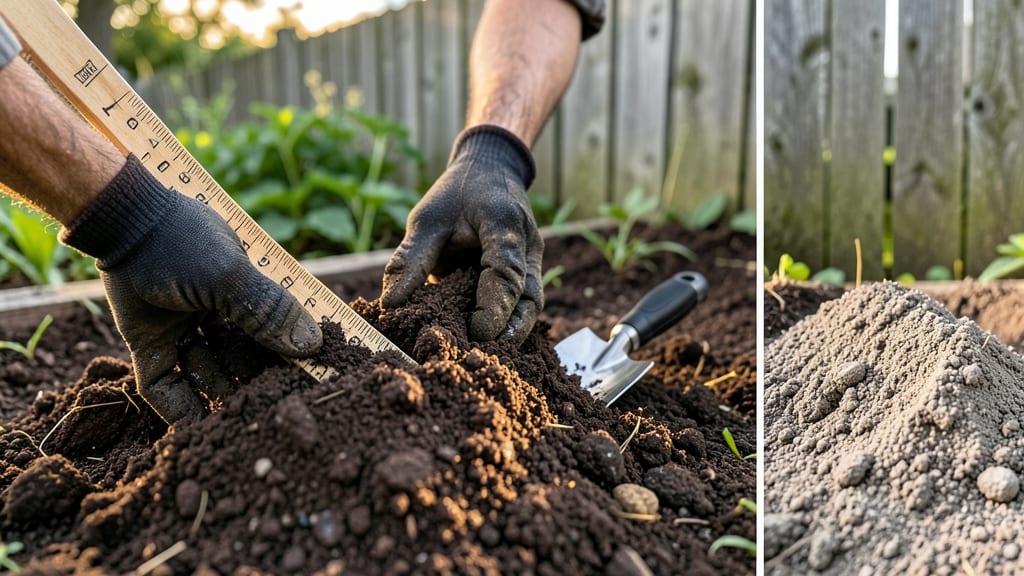
A yard of soil looks like a solid cube measuring 3 feet in all directions—about the size of a large washing machine or small refrigerator—packed tightly rather than a loose mound. This compact shape reflects soil's natural density when measured in cubic yards.
A yard of soil's appearance changes dramatically when you see it in real-world contexts.
Unlike a fluffy pile, this volume is tightly packed—think of a dense block that weighs around 2,000 pounds when dry. 🌱 Gardeners often compare it to a full wheelbarrow's capacity (which holds about 2 cubic feet), meaning you'd need roughly 13 wheelbarrow loads to visualize one yard.
The moisture content also alters its look: wet soil appears darker and heavier, while dry soil looks lighter but still maintains that compact structure.
This dense measurement explains why landscapers use cubic yards instead of pounds—volume accounts for soil's natural compression. For example, a 10'x10' garden bed filled to 6 inches deep would need about 0.5 cubic yards, not a loose mountain of dirt.
Understanding this helps prevent over-purchasing while ensuring proper coverage for projects.
💡 In This Article
- Understanding Soil Volume: Cubic Yards vs Loose Piles
- Practical Ways to Visualize a Yard of Soil in Your Garden
Understanding soil volume: cubic yards vs loose piles
Soil's natural compaction explains why a cubic yard looks like a solid block rather than a fluffy pile. When loose, soil particles (sand, silt, clay) occupy about 50% air space, but when packed—like in a delivery truck—they compress to 30-40% air space.
This density difference means a loose pile of 1 cubic yard would actually measure about 1.5 cubic yards when expanded. 🌱 The moisture content also plays a role: wet soil weighs up to 2,700 pounds per cubic yard, while dry soil drops to 2,000 pounds, altering its visual weight and texture.
Think of soil density like packing a suitcase: loose soil is like clothes stuffed loosely, while compacted soil is tightly pressed. This explains why gardeners need 30% more loose soil than the cubic yard measurement suggests when filling raised beds.
For example, a 4'x8' garden bed 12 inches deep requires 2.67 cubic yards of loose soil—but only 2 cubic yards when compacted in delivery. The key is understanding how soil settles during transport and installation.
Moisture content dramatically changes soil's appearance. Dry soil looks lighter and crumbles easily, while damp soil appears darker and sticks together like wet sand at the beach. This moisture variation can make a cubic yard look 20% larger when freshly delivered (due to water content) but shrink 10-15% after drying.
Gardeners often see this when topsoil deliveries arrive damp but settle into a tighter volume after a few days.
Professionals use soil density measurements to avoid over-purchasing. A standard 10-ton dump truck holds about 12-14 cubic yards of compacted soil, but only 8-10 cubic yards when loose. This 30% difference highlights why visual estimation fails—always calculate based on compacted volume.
For DIY projects, a simple rule is to order 10% more than your calculated need to account for settling and moisture loss.
Soil type affects compaction too. Sandy soil compresses less (1.3 cubic yards loose = 1 cubic yard compacted), while clay soil compresses more (1.6 cubic yards loose = 1 cubic yard compacted).
This explains why clay-heavy yards need precise measurements—underestimating by even 0.5 cubic yards could leave your garden bed half-filled. Always check soil composition before ordering to adjust your volume calculations accordingly.
For gardeners working with limited space, this density science means creative solutions. Instead of buying a full cubic yard, consider half-yard bags (about 1.5 cubic feet) or renting a soil screener to reduce bulk.
The key takeaway: what looks like a small pile when loose becomes a substantial block when compacted—always plan for the settled volume, not the loose appearance.