
Companion Plants
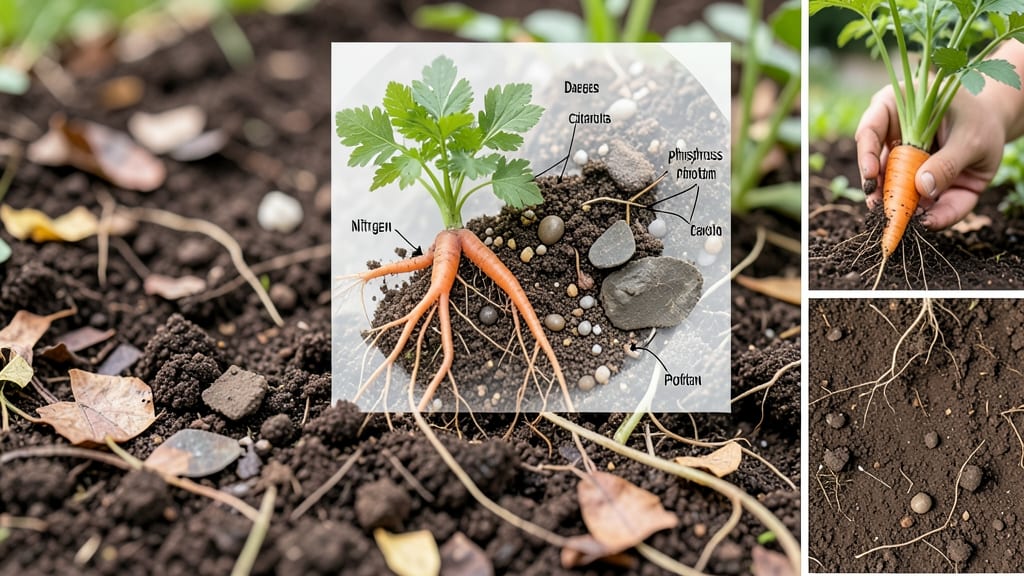
Soil gives plants essential nutrients like nitrogen, phosphorus, and potassium, provides water for hydration and nutrient transport, and supplies oxygen to roots for respiration and growth. Healthy soil also anchors plants and regulates temperature.
Soil isn't just dirt—it's a dynamic ecosystem that acts like a plant's all-in-one life support system. 🌱 The nutrients it provides, especially nitrogen for leaf growth and phosphorus for root development, directly impact how well your plants thrive.
Beyond that, soil structure affects everything from water retention to root stability, making it the foundation of healthy plant life. I've seen firsthand how amending soil with compost can transform struggling plants into vibrant, productive specimens.
What many gardeners overlook is how soil temperature and aeration play roles too. Well-drained soil prevents root rot while maintaining enough moisture for consistent growth. The microbial life in healthy soil actually breaks down organic matter into usable nutrients, creating a self-sustaining cycle that benefits your plants year after year.
This is why I always recommend testing your soil before planting—it's the first step toward creating the perfect growing environment.
💡 In This Article
- How Soil Nutrients Fuel Plant Growth and Development
- Choosing and Maintaining Soil for Optimal Plant Health
How soil nutrients fuel plant growth and development
Soil acts like a natural fertilizer factory, supplying plants with three primary macronutrients that act like a growth triad. Nitrogen (N) is the building block for chlorophyll and amino acids—without it, leaves turn pale yellow (a condition called chlorosis) and growth stalls. Phosphorus (P) powers energy transfer within cells, particularly during root development and flowering, while potassium (K) regulates water balance and strengthens cell walls against disease.
Think of these as the plant's fuel, structural support, and immune system combined.
The magic happens at the microscopic level. Soil microbes break down organic matter into these nutrients through processes like decomposition and nitrogen fixation. For example, legumes form symbiotic relationships with bacteria called rhizobia that convert atmospheric nitrogen into a plant-usable form.
Meanwhile, phosphorus becomes available when soil fungi dissolve rock minerals. Even micronutrients like iron (essential for chlorophyll production) and zinc (critical for enzyme function) play starring roles—deficiencies often show as stunted growth or distorted leaves.
A well-balanced soil typically contains these in ratios like 10:5:5 (N:P:K), though exact needs vary by plant species.
Organic matter—think decomposed leaves, compost, or manure—serves as both a nutrient reservoir and a soil conditioner. It improves water retention while creating porous spaces that allow roots to breathe.
When you add compost, you're not just feeding plants; you're feeding the soil ecosystem that will continue nourishing them long after the compost breaks down. This is why healthy garden soil often has a spongy texture and earthy aroma—it's teeming with life working to support your plants.
What's fascinating is how these nutrients work together. For instance, while nitrogen promotes leafy growth, too much without phosphorus can lead to lush but weak plants that fall over. The key is balance—like a well-composed orchestra where each instrument (nutrient) plays its part without overpowering the others.
Soil tests reveal these ratios, showing you exactly what your plants are hungry for and what they're getting too much of.
Let's talk about the unseen benefits: healthy soil also produces growth hormones like auxins and cytokines through microbial activity. These hormones stimulate root elongation and cell division, helping plants establish themselves quickly. Even disease resistance gets a boost—certain soil microbes produce antibiotics that protect roots from pathogens.
This is why plants grown in rich, living soil often show fewer signs of stress and recover faster from damage.
Consider this: a single gram of healthy soil can contain billions of bacteria, fungi, and protozoa. These microorganisms don't just break down nutrients—they create an environment where roots can thrive.
The mycorrhizal fungi, for example, form symbiotic relationships with plant roots, extending their reach by up to 100 times their original length to access more water and nutrients. Without this underground network, many plants would struggle to survive.
Here's what you can observe in your own garden: plants growing in nutrient-rich soil develop deeper root systems, stronger stems, and more vibrant foliage.
The difference between struggling plants and thriving ones often comes down to soil quality—it's not just about what you put in the ground, but what's already living there working to support your plants. 🌿