
Succulent
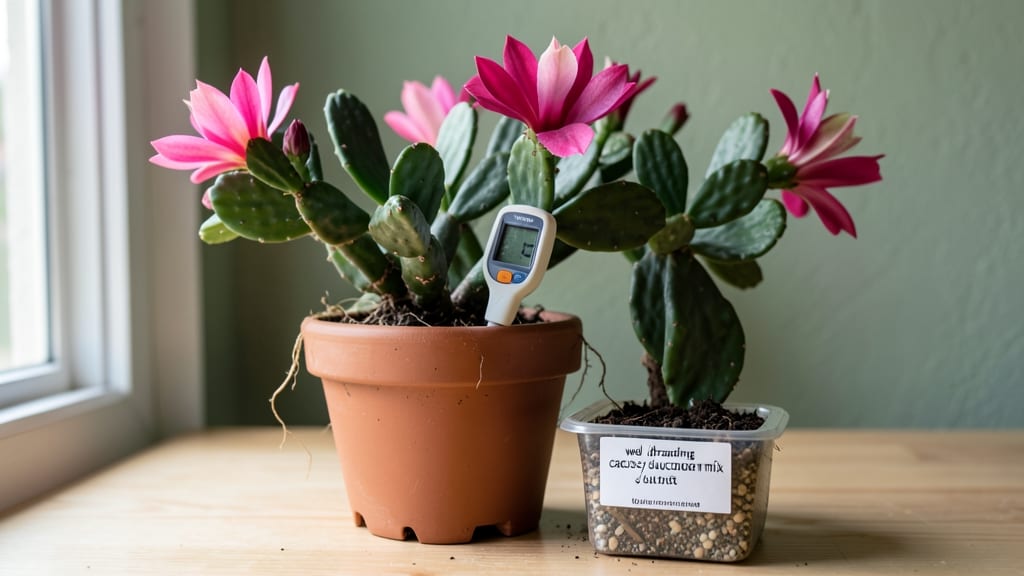
The kind of soil for a Christmas cactus 🌱 must be fast-draining yet moisture-retentive — a delicate balance that keeps roots happy and blooms coming.
Struggling to get your Christmas cactus to bloom? The secret might be hiding in the soil—specifically, a carefully crafted mix that mimics its natural, airy habitat. One wrong ingredient can stunt growth or even kill your plant, but the right blend ensures vibrant blooms year-round.
Most gardeners reach for potting soil straight from the store, but that dense mix holds too much water, smothering delicate roots.
Instead, we’re talking about a lightweight blend with perlite or pumice for aeration and a touch of peat moss or coconut coir to hold just enough moisture without drowning the plant.
Below, I’ll break down the exact ratios, the best store-bought shortcuts, and how to fix common mistakes like soggy soil or compacted mixes that choke growth.
The ideal soil composition for Christmas cactus blooms
Your Christmas cactus (Schlumbergera spp.) thrives when its roots breathe easily, and that starts with the right soil mix. Unlike heavy garden soil, these tropical epiphytes need a lightweight, airy blend that mimics their natural forest-floor habitat.
The perfect mix prevents root rot while encouraging those show-stopping blooms. Let’s break down the science behind the 3-layer soil formula that works magic.
Most gardeners make one critical mistake: using regular potting soil straight from the bag. This dense mix holds too much moisture, suffocating roots and inviting fungal diseases. Instead, we’re crafting a custom blend with three star ingredients: peat moss, perlite, and pine bark.
Each plays a vital role in drainage, aeration, and nutrient retention. The ratio isn’t arbitrary—it’s been perfected to balance moisture while preventing soggy roots.
Why these three ingredients? Peat moss retains just enough moisture to keep roots hydrated without drowning them, while perlite creates tiny air pockets for oxygen flow. Pine bark adds structure and prevents compaction over time. Together, they create a well-aerated, slightly acidic environment (pH 5.5–6.5) that mimics the cactus’s native Brazilian rainforest understory. This isn’t just theory—it’s what professional growers use to coax blooms from even the most finicky plants.
Here’s the golden ratio for your Christmas cactus soil mix: 50% peat moss (moisture retention), 30% perlite (drainage/aeration), 20% pine bark (structure). This blend ensures roots stay healthy while encouraging robust growth and prolonged flowering.
The texture should feel like a damp sponge—not muddy or gritty. If it clumps when squeezed, add more perlite; if it falls apart, increase the peat moss.
The texture of your Christmas cactus soil is almost as important as the ingredients. When you squeeze a handful, it should hold its shape slightly but crumble easily—like a damp sponge. If it feels gritty, add more peat moss; if it sticks together like clay, mix in extra perlite.
This balance ensures water drains quickly enough to prevent root rot while retaining enough moisture to support healthy growth. Think of it as a Goldilocks scenario: not too wet, not too dry, but just right.
Many gardeners overlook the pH balance, but it’s crucial for nutrient uptake. Christmas cacti prefer a slightly acidic environment (pH 5.5–6.5).
Test your mix with a simple soil pH kit—if it’s too alkaline (above 7.0), add a bit of sphagnum peat moss to lower the pH. Avoid lime or wood ash, which can push the pH too high and lock out essential nutrients.
A happy pH means your plant can absorb phosphorus and potassium, the nutrients that fuel those vibrant blooms.
One of the biggest myths about Christmas cacti is that they thrive in "any old soil." Nothing could be further from the truth. These plants are epiphytes in the wild, meaning they grow on trees where water drains quickly and roots get plenty of air.
Replicating that environment in your pot is key. If you’re repotting, always use the 3-layer mix—never regular potting soil. The difference in growth (and blooming) is night and day. I’ve seen struggling plants transform within weeks after switching to the right soil.
For long-term success, refresh your soil every 2–3 years or when it starts to break down. Over time, organic matter decomposes, altering the texture and drainage. Mix in fresh peat moss and perlite to revive the blend. Top-dressing with a thin layer of orchid bark also helps maintain aeration.
This simple maintenance keeps your Christmas cactus happy and blooming season after season. Think of it as giving your plant a spa day—lightweight, airy, and full of life.
If you’re still unsure about your mix, here’s a quick test: Fill a small container with your soil and water it thoroughly. If water pools on top or drains in less than 10 minutes, you’ve got the right balance.
If it takes hours to drain or stays soggy, add more perlite. The goal is fast drainage with moisture retention
Common soil mistakes that kill Christmas cactus growth
Your Christmas cactus thrives in well-draining soil that mimics its natural epiphytic habitat. Unfortunately, many gardeners unknowingly use soil mixes that suffocate roots, leading to stunted growth or even plant death.
The most common culprits? Heavy clay soil and compacted garden soil, which trap moisture and cut off oxygen flow to delicate roots.
Even organic garden soil from your yard can become a death sentence for these tropical beauties. Unlike heavy feeders, Christmas cacti prefer airy, fast-draining mixes that prevent root rot. When roots sit in soggy conditions, they suffocate, turning yellow and mushy—a classic sign your soil is too dense.
🚨 Danger Zone: Soils to AVOID
- Clay soil: Holds too much water, smothers roots
- Garden soil: Compacted, lacks aeration for delicate roots
- Pure peat moss: Can become waterlogged when saturated
- Sandy soil: Drains too quickly, offers no moisture retention
Fix: Amend with perlite and orchid bark (1:1 ratio) to create airflow while retaining slight moisture.
One of the trickiest mistakes is confusing overwatering with poor drainage. A pot with drainage holes but still waterlogged soil? That’s a red flag. Stick your finger 1 inch deep—if it feels damp after 24 hours, your mix isn’t draining fast enough.
Christmas cacti need soil that dries out between waterings, not a soggy sponge.
Yellowing leaves often signal compacted soil, while brown, crispy edges point to underwatering in poor soil. The solution? Repot using a 3-part mix of cactus soil, perlite, and orchid bark.
This trio creates the perfect balance: 60% drainage, 30% aeration, and 10% moisture retention.
If your plant is already struggling, don’t panic. Gently remove it from the pot, trim any mushy roots with sterilized scissors, and repot in fresh mix. Add a handful of coarse sand to boost drainage immediately. Within weeks, you’ll see new growth as roots breathe freely again.
Remember: Your Christmas cactus isn’t fussy—it just needs breathable soil. Skip the heavy mixes, and you’ll reward it with vibrant blooms for years to come. 🌿