
Vegetables
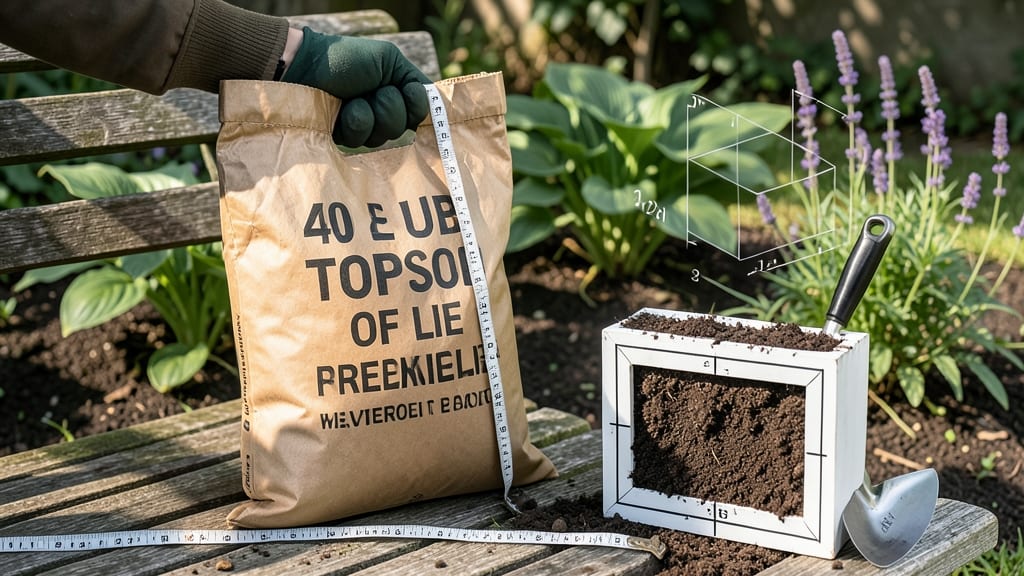
A 40 lb bag of topsoil converts to roughly 1.1 to 1.3 cubic feet, with variations based on how compacted or moist the soil is. Looser, drier mixes expand more, while heavier, wetter blends shrink the volume. For precise planning, always verify the manufacturer's bulk density rating.
Understanding this conversion helps avoid overbuying or running short for projects. 🌱 The difference between 1.1 and 1.3 cubic feet per bag means a 40 lb bag of standard topsoil might yield anywhere from 44 to 50 cubic feet in a full cubic yard (27 bags).
I always recommend testing a small batch first—especially for raised beds or container gardens—since soil composition can shift dramatically between brands or even batches from the same supplier.
For example, a 4-foot by 8-foot raised bed filled to a 12-inch depth requires about 2.67 cubic feet, meaning you'd need roughly 3 bags of topsoil. But if your soil is particularly dense, you might need an extra bag to account for compaction.
Always factor in a 10% buffer for settling and uneven settling during watering.
💡 In This Article
- How Topsoil Density Affects Cubic Feet Conversion
- Calculating Topsoil Needs for Garden Projects
How topsoil density affects cubic feet conversion
Topsoil's conversion from pounds to cubic feet hinges on its bulk density, which measures how tightly packed the soil particles are. This density varies wildly based on moisture content, organic matter, and mineral composition.
For instance, sandy topsoil typically has a bulk density of 70-80 lbs per cubic foot, meaning a 40 lb bag would expand to about 1.3 cubic feet—the higher end of the range.
In contrast, clay-heavy topsoil can reach 90-100 lbs per cubic foot, shrinking that same 40 lb bag to just 1.1 cubic feet or less.
The science behind this lies in how water and organic materials fill the spaces between soil particles. When topsoil is dry, air occupies these voids, creating a lighter, fluffier structure that expands volume.
But add moisture, and capillary action pulls water into these gaps, while organic matter like decomposed leaves or compost acts like a glue, binding particles closer together. This compaction reduces air pockets and increases density.
For example, a bag of loam-based topsoil (a balanced mix of sand, silt, and clay) might start at 85 lbs per cubic foot when dry but swell to 75 lbs per cubic foot when saturated, altering its cubic feet yield by nearly 15%.
What most gardeners overlook is how organic matter content further complicates this. Compost-amended topsoil contains more porous, fibrous materials that resist compaction, often yielding 1.2-1.3 cubic feet per 40 lb bag. Meanwhile, pure mineral topsoil with little organic material can drop to 1.0-1.1 cubic feet.
This is why two bags labeled "topsoil" from different suppliers might behave entirely differently in your wheelbarrow—one could feel like sand, while the other clumps like wet clay. Always check the product label for bulk density or ask for a sample before committing to a large purchase.
Here's a practical way to test density at home: Fill a 1-gallon bucket (which holds 0.134 cubic feet) with topsoil from your bag and weigh it. Divide the weight by 0.134 to calculate your soil's bulk density.
For example, if the bucket weighs 11 lbs, your topsoil's bulk density is 82 lbs per cubic foot, meaning a 40 lb bag would yield about 1.2 cubic feet.
This simple test saves money and prevents shortages for projects like filling a 4x8-foot raised bed, which needs roughly 2.67 cubic feet of topsoil.
Seasonal changes also play a role. Topsoil stored outdoors during winter absorbs moisture from snow or rain, increasing its density by up to 10% compared to summer-stored bags. This is why spring gardeners often find their topsoil yields less volume than expected.
If you're buying in bulk, store bags in a dry, covered area to maintain optimal density. For large projects, consider purchasing topsoil in cubic yard quantities, where suppliers often provide more consistent density measurements than bagged products.
Understanding these variables helps explain why some gardeners end up with mountains of soil while others struggle to fill a modest container. The key takeaway? Density isn't static—it's a dynamic property influenced by everything from storage conditions to the soil's natural composition.
By accounting for these factors, you'll transform guesswork into precise calculations, ensuring your garden projects get exactly what they need without waste.