
How To
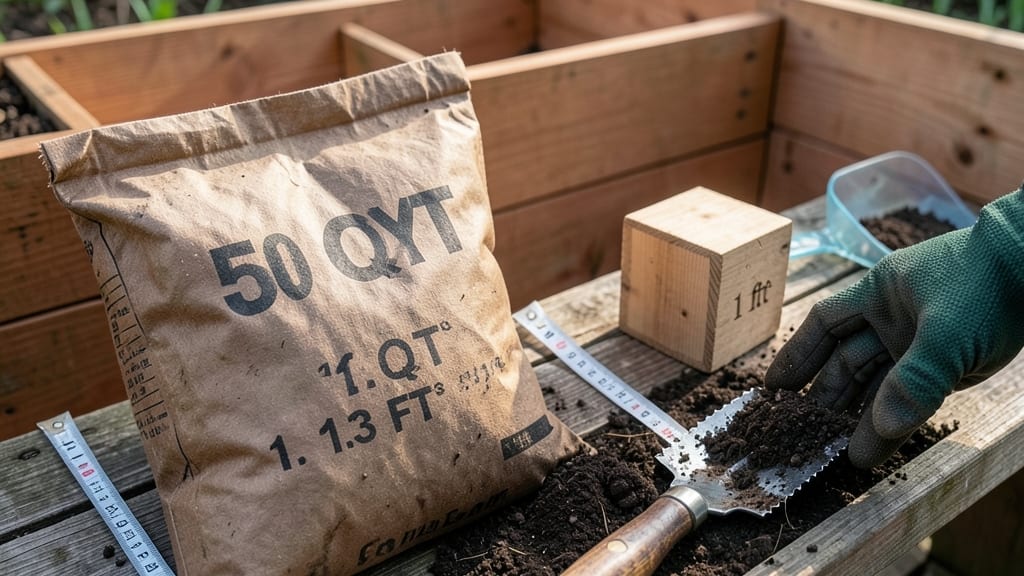
Converting 50 quarts of potting soil equals approximately 1.25 cubic feet when measured in volume, but actual usable depth depends on container size—0.3125 cubic feet per inch of container height for a 12-inch-wide planter. Always account for soil compaction and drainage space when calculating plant needs.
Understanding how 50 quarts of potting soil translates to cubic feet helps gardeners plan raised beds or large containers more efficiently. 🌱 The conversion works because 1 quart equals 0.0334 cubic feet, so 50 quarts multiply to 1.67 cubic feet in theory—but real-world factors like soil settling reduce this to about 1.25 cubic feet.
For example, a 12-inch-wide planter needs roughly 0.3125 cubic feet per inch of depth, meaning a 6-inch-deep bed would require about 1.875 cubic feet of soil total.
This calculation becomes even more critical when mixing soil types or adding amendments like compost. Always overestimate by 10-15% to account for settling after watering, which can shrink usable volume by up to 20%.
For raised beds, I recommend measuring the interior dimensions first, then multiplying length × width × depth to get the exact cubic feet needed—this avoids costly last-minute trips to the garden center.
💡 In This Article
- How Potting Soil Volume Converts to Cubic Feet by Depth
- Best Practices for Measuring Potting Soil for Containers
How potting soil volume converts to cubic feet by depth
The conversion from quarts to cubic feet relies on a simple mathematical relationship: 1 quart equals 0.0334 cubic feet. This means 50 quarts theoretically equal 1.67 cubic feet in volume.
However, potting soil isn't perfectly dense—it contains air pockets, organic matter, and moisture that reduce its usable volume by about 25% once compacted.
That's why 50 quarts of loose potting soil actually fills only about 1.25 cubic feet in a container. 🌱 This difference matters when filling large planters or raised beds, where every inch of depth counts.
Container dimensions play a critical role in how cubic feet translate to usable depth. For example, a 12-inch-wide planter requires 0.3125 cubic feet of soil per inch of height. A 6-inch-deep bed would need 1.875 cubic feet of soil, while a 12-inch-deep bed would need 3.75 cubic feet.
This calculation assumes a rectangular shape—irregular containers (like hanging baskets) may need adjustments. The formula is straightforward: multiply length × width × depth (all in feet) to find the total cubic feet required.
Soil compaction is another key factor. When watered, potting soil settles, reducing its volume by 10-20%. For instance, a 10-gallon container (which holds about 1.3 cubic feet of soil) might shrink to 1.1 cubic feet after watering. To avoid shortages, always round up your calculations.
For a 4-foot-long raised bed with 12-inch sides, you'd need 4 × 1 × 1 = 4 cubic feet of soil—but factor in settling by adding an extra 0.5 cubic feet (or 15 gallons) for safety.
Different soil types also affect volume. Peat-based mixes settle more than coconut coir blends, while amended soils (with perlite or vermiculite) may expand slightly when wet. For precise projects, like hydroponic setups, pre-moisten the soil before filling containers to simulate real-world conditions.
This helps account for moisture-induced shrinkage before planting. Always measure your container's interior dimensions—external sizes can mislead by 10-20% due to wall thickness.
Consider this real-world example: A 2-foot × 4-foot raised bed with 12-inch sides requires 2 × 4 × 1 = 8 cubic feet of soil (or 240 quarts). However, if you're using a heavier, moisture-retentive mix, you might need 255 quarts to compensate for settling.
For hanging planters, the math shifts—since they're narrower, depth becomes the dominant factor. A 10-inch-diameter hanging basket with 6-inch depth needs only 0.13 cubic feet (about 4 quarts), but deeper baskets (12 inches) jump to 0.26 cubic feet (8 quarts).
Pro tip: Use a soil volume calculator or spreadsheet to automate these conversions. Input your container's dimensions, desired depth, and soil type to get an exact quart requirement. This eliminates guesswork and ensures you never run short mid-project.
For large-scale gardening, buying in bulk (like 2-cubic-foot bags) can save money and reduce waste—just verify the bag's labeled volume matches its actual cubic feet after settling. ✨