
Light Requirements
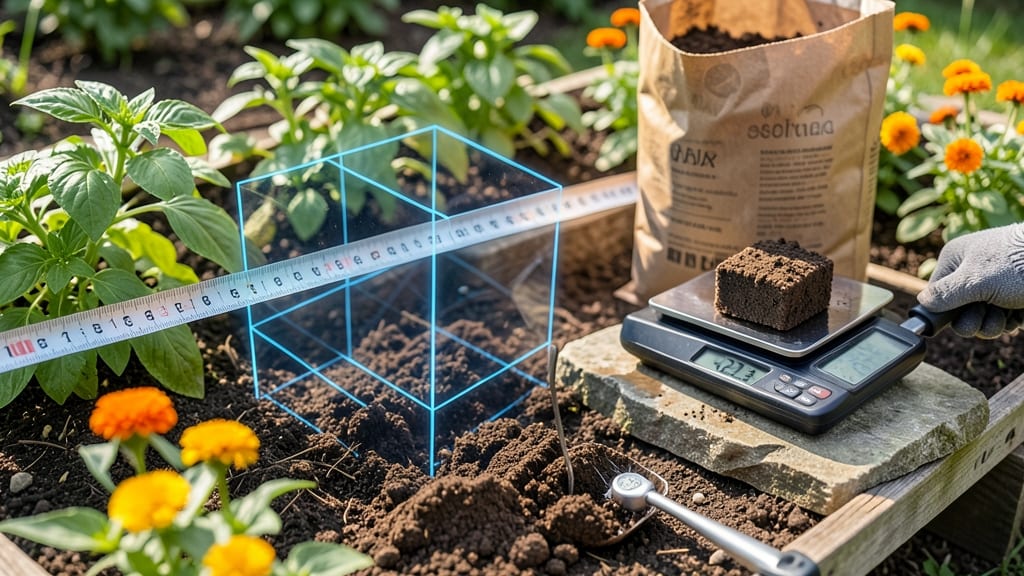
To determine how much a cubic foot of topsoil weighs, expect 40 to 60 pounds—this range shifts based on moisture levels and how tightly the soil is packed. Drier, looser soil falls closer to 40 pounds, while saturated or compacted soil can reach 60 pounds or more. Always double-check with your supplier for exact figures before purchasing.
Understanding this weight helps with everything from garden planning to delivery logistics. 🌱 The moisture content plays a huge role—wet soil can weigh nearly 20% more than dry soil due to water absorption.
For example, a 10-cubic-foot bag might tip the scales at 400 pounds when soaked versus 350 pounds when bone-dry. Soil density also matters: clay-heavy mixes pack heavier than sandy or peat-based blends, which can be 30% lighter in the same volume.
This variation is why many suppliers quote weights per cubic yard (27 cubic feet) rather than per cubic foot—it gives you a more accurate total for large projects.
For instance, a 10-cubic-yard delivery could swing between 1,080 and 1,620 pounds depending on conditions. Always ask for a moisture-adjusted estimate if you're planning heavy lifting or precise calculations.
💡 In This Article
- Factors Affecting Topsoil Weight per Cubic Foot
- Calculating Topsoil Weight for Garden Projects
Factors affecting topsoil weight per cubic foot
The weight of topsoil varies dramatically due to its composition and physical state. At its core, topsoil is a mix of mineral particles, organic matter, water, and air—each component contributing differently to the final weight.
Mineral particles like sand, silt, and clay dominate the volume but vary in density: clay particles are tiny and pack tightly, creating heavier soil (up to 60 pounds per cubic foot), while sandy soils have larger particles with more air pockets, weighing closer to 40 pounds.
Organic matter, like decomposed leaves or compost, adds bulk but remains lighter than minerals—pure peat moss, for example, can weigh just 15-20 pounds per cubic foot when dry.
Moisture content is the wild card in topsoil weight calculations. Dry topsoil absorbs water like a sponge, and even a 10% increase in moisture can add 4-6 pounds per cubic foot.
This is why freshly tilled soil often feels deceptively light—it’s packed with air—but after rain, the same volume can become 20% heavier. For perspective, a 10-cubic-foot bag might weigh 350 pounds dry but swell to 450 pounds when saturated.
Compaction further squeezes out air, increasing density and weight—think of how a shovel full of loose soil suddenly feels heavier when pressed into a wheelbarrow.
The science behind these variations lies in porosity and particle arrangement. Loose, aerated soil has more air gaps (up to 50% of its volume), reducing weight, while compacted soil has fewer gaps and more direct particle contact.
This is why gardeners often fluff soil before planting—it lightens the load and improves root penetration. 🌱 The organic matter in topsoil also plays a role: well-decomposed compost adds structure without excessive weight, whereas fresh, bulky mulch can skew calculations by adding 10-15% extra volume before breaking down.
To put it into real-world terms, imagine comparing three common soil types in a 1-cubic-foot container:
- Clay-heavy topsoil: Weighs 55-60 pounds due to dense packing and high mineral content
- Loamy garden soil: Balanced mix weighing 45-50 pounds with ideal air-water-mineral balance
- Peat-based potting mix: Lightweight at 20-25 pounds but holds moisture poorly for outdoor use
Another critical factor is soil amendments. Adding compost or perlite lightens the mix, while sand or gravel increases weight. For instance, blending 20% compost into clay soil can reduce its weight by 5-10 pounds per cubic foot while improving drainage.
This is why custom soil blends often come with weight-per-volume guarantees—suppliers account for these variables to ensure accuracy for large projects like landscaping or agriculture.
Understanding these factors helps avoid surprises during delivery or project planning. For example, a 100-cubic-foot raised bed filled with dry loam might weigh 4,500 pounds, but after rain, that same bed could tip the scales at 5,500 pounds.
Knowing these ranges lets you adjust for structural support, irrigation needs, and even vehicle capacity when transporting soil. 💡