
Container Gardens
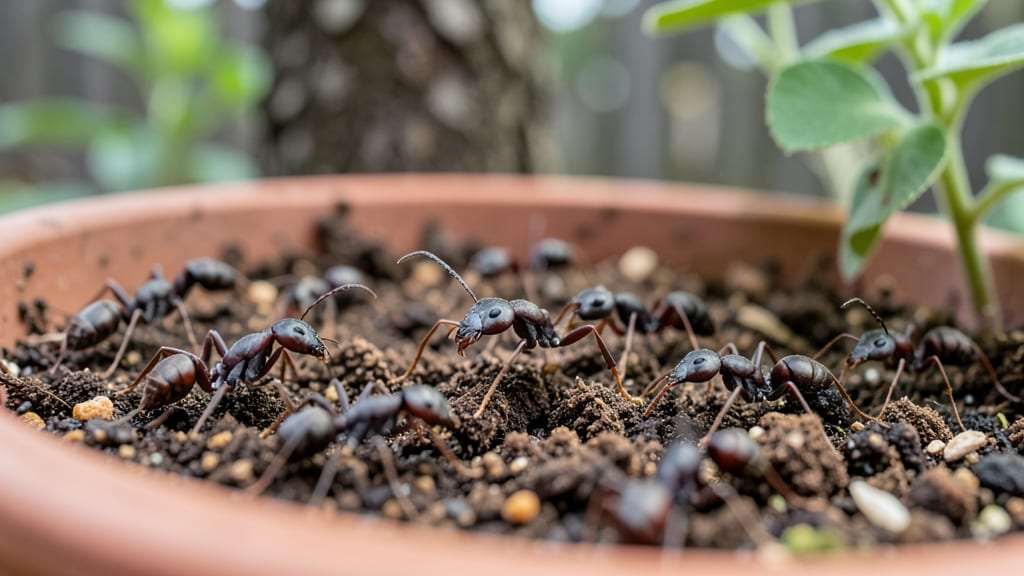
Ants in potted plant soil aren't just annoying—they're a sign your little ecosystem needs a quick tune-up. 🐜 I've wrestled with these tiny invaders in my own containers, and I learned the hard way that ignoring them can turn a thriving plant into a pest magnet.
The good news? You can stop them in their tracks without harsh chemicals, and most solutions take less than 10 minutes to set up.
These ants usually show up because your soil is too moist or there's hidden sugar from fallen leaves or plant debris. They don't directly harm roots, but they'll bring along aphids and other pests that will.
The key is cutting off their access—think of it like installing a tiny moat around your plant fortress. Simple fixes like citrus peels or a sprinkle of diatomaceous earth create barriers they can't cross, while adjusting your watering routine makes your pots less appealing.
What you'll end up with is ant-free containers where your plants can focus on growing instead of fending off visitors. The soil stays healthy, your plants thrive, and you avoid the frustration of watching tiny marching lines invade your green space.
Best of all, these methods work whether you're dealing with a single pot or a whole patio garden.
Here's where it gets interesting—some ant species actually help aerate soil, but when they're swarming your pots, it's time to intervene. The solutions I'll share work for both decorative and edible plants, and they're safe for pets and kids once properly applied.
Let's get those containers back to being plant paradises, not ant highways.
Root Causes of Soil Ants
Understanding why ants invade your potted plants starts with recognizing their motivations—ants aren’t just random pests; they’re problem-solvers on the hunt for food, shelter, or a way to expand their colonies.
Here’s a breakdown of the most common reasons ants show up in your soil, along with the science behind their behavior.
Ants are opportunistic foragers, and your potted plants might be offering a buffet they can’t resist. Here’s what draws them in:
- Sweet Nectar & Honeydew: Many houseplants (like ferns, ivy, or citrus trees) produce sugary secretions called honeydew, which ants love. These secretions attract ants that farm aphids—tiny pests that feed on plant sap and excrete honeydew as waste.
If your plant has aphids, ants will follow the trail to harvest this free sugar source. - Decaying Organic Matter: Overwatered or poorly drained pots create soggy, anaerobic conditions where organic material (like dead roots, fallen leaves, or old mulch) decomposes.
This decay releases volatile organic compounds (VOCs) and sugars that ants detect from meters away.
Think of it as a scent-based "eat here" sign. - Spilled or Sticky Substances: Accidental sugar spills, sticky plant food residues, or even pet food left near pots can create invisible trails that ants use to navigate.
A single drop of syrup near your windowsill can turn your fern into an ant highway overnight.
Actionable Insight: 🔍 Check for sticky residues on leaves or soil—if you wipe the soil surface and see ants lingering, they’re likely after food, not shelter.
Ants prefer environments that are humid, dark, and stable—exactly what a potted plant with damp soil provides. Here’s why your pots become their real estate:
- Moisture Retention: Ants need water to survive, and potted soil often stays damp longer than outdoor soil. If your plant’s soil is consistently moist (either from overwatering or poor drainage), it mimics the ideal conditions of a leaf litter nest—their natural habitat.
Some species, like fire ants or pavement ants, actively seek out these microclimates. - Lack of Natural Predators: Unlike outdoor soil, which has predators like birds, spiders, or other insects, potted soil offers ants a safe zone with minimal threats.
This makes your containers a prime spot to establish satellite colonies or temporary foraging stations. - Structural Gaps: Pots with cracks, loose soil, or gaps between the pot and saucer create easy entry points.
Even small holes (like those from drainage trays) can serve as highway tunnels for ant trails. Some ants, like pharaoh ants, are so small they can squeeze through gaps as thin as a credit card.
Actionable Insight: 🌡️ Test your soil’s moisture by sticking your finger in—if it’s damp past 1 inch deep, ants see it as an all-you-can-eat buffet and nesting spot.
Ants don’t wander aimlessly—they use pheromone trails to communicate and recruit nestmates. If your potted plants are near an infestation, here’s how they get lured in:
- Outdoor Colonies Expanding: Ants from nearby gardens, sidewalks, or even other pots will scout for new resources. If your plant is near a crack in the pavement, a tree root, or another infested pot, they’ll treat it as an extension of their territory.
Some species, like Argentine ants, form supercolonies that share trails across entire neighborhoods. - Human Activity as a Bridge: Moving potted plants from infested areas (like a garden center or patio) or placing them near ant trails (like under a leaky faucet or near a pet’s food bowl) can accidentally transport scout ants.
Once a few ants find your pot, they’ll lay pheromone trails to bring reinforcements. - Shared Water Sources: If your plant’s saucer or pot sits on a damp surface (like a concrete slab or a tray with standing water), ants from outside will follow the moisture gradient right to your soil.
This is especially true for carpenter ants, which are drawn to water-damaged wood and damp soil.
Actionable Insight: 🚫 Isolate new plants for 48 hours before placing them near other pots—this gives any hitchhiking ants time to leave without establishing a trail.
Some plants are ant magnets due to their natural chemistry or ecosystem relationships. If you’re growing these, ants are more likely to visit:
| Plant Type | Why Ants Love It | Common Offenders |
|---|---|---|
| Aphid-Host Plants | Ants farm aphids for honeydew; these plants are aphid favorites. | Roses, ferns, citrus, hibiscus |
| Sap-Rich Plants | High sugar content in sap = easy ant snack. | Maple trees, sycamore, ivy |
| Moisture-Loving Plants | Retain water, creating ideal nesting conditions. | Calatheas, peace lilies, ferns |
| Citrus & Fruiting Plants | Sweet fruits and sticky residues attract foragers. | Lemon trees, oranges, strawberries |
Actionable Insight: 🌿 Rotate your pots seasonally—ants are less likely to target plants that aren’t their usual "menu" items.
Quick Fixes for Unwanted Soil Ants
Ants in your potted plants aren’t just a nuisance—they can disrupt your garden’s health by disturbing roots, stealing nutrients, or even attracting pests. But don’t stress! With the right approach, you can evict these tiny invaders fast and keep them from coming back.
Below, we’ve mapped practical solutions to common causes, from quick fixes to long-term prevention.
Ants are often lured by sticky substances like honeydew (from aphids), spilled sugary drinks, or pet food. If your soil smells sweet or has organic buildup, they’ll treat it like an all-you-can-eat buffet.
🔥 Clean Up the Attraction
- Wipe down pots and saucers with a mix of 1 part vinegar and 1 part water to remove sticky residues. Ants lose their scent trails on vinegar—it’s like erasing their GPS.
- Check for aphids or mealybugs (common ant magnets).
Spray infested leaves with soapy water (1 tsp mild dish soap per quart of water) or introduce ladybugs as natural predators.
🍳 Block Their Path with Natural Barriers
- Cinnamon or cayenne pepper: Sprinkle a thin layer around the pot’s base—ants hate the spicy scent. Reapply after rain.
- Diatomaceous earth (food-grade): Dust a 1-inch band around the pot’s edge.
It’s harmless to plants but dehydrates ants on contact. Pro tip: Avoid overapplying—it can dry out soil if used heavily.
Some ants tunnel into potted soil to build colonies, especially in loose, moist mixes. If you spot tiny mounds or trails inside the pot, they’ve already moved in.
👨🍳 Relocate or Disrupt the Colony
- The "drown and drown" method: 1. Water the pot thoroughly to force ants to the surface (they’ll follow moisture).
- Add a capful of dish soap to the water—it breaks their exoskeletons.
- Let sit for 24 hours, then drain and refresh the soil if needed.
- Repot with a barrier:
- Line the new pot with copper mesh or aluminum foil (ants dislike metal). Place a coffee filter over the drainage hole to block tiny invaders.
- Use coarse sand or gravel in the bottom layer—ants avoid sharp, gritty textures.
🔪 Prevent Reinvasion
- Add orange or lemon peels to the soil. The citrus oils repel ants naturally. Refresh every few weeks.
- Plant ant-repelling herbs like mint, basil, or lavender around the pot. Ants avoid their strong scents.
Ants often march through pots to reach food sources outside (like your kitchen or compost bin). If they’re just passing through, the goal is to break their trail without harming them.
🥘 Create a Physical Barrier
- Petroleum jelly or beeswax: Apply a thin, sticky band around the pot’s rim. Ants can’t climb through it, and it’s safe for plants.
- Crushed eggshells or chalk: Create a 1-inch ring at the base.
Ants avoid the rough texture and sharp edges.
🌡️ Disrupt Their Scent Trails
- Vinegar spray: Mix equal parts water and white vinegar in a spray bottle.
Lightly mist the soil and pot edges—ants lose their scent markers. - Essential oil deterrents: Add 5 drops of peppermint or tea tree oil to 1 cup of water, then spray around the pot. Reapply every 3–4 days.
Once you’ve kicked the ants out, keep them from crashing the party again with these low-effort habits:
- 💡 Keep your space clean: Wipe up spills, store pet food securely, and avoid overwatering (ants love damp soil).
- 🎯 Inspect new plants: Before bringing home a new potted plant, rinse the soil and check for ant trails or tiny mounds.
- 🔥 Rotate pots: Move plants occasionally so ants don’t establish permanent trails near their favorite food sources.
- 🌿 Use ant-proof containers: For high-value plants, try hanging pots or elevated planters—ants are less likely to climb vertical surfaces.
Remember: Ants are more of a pest when they’re organized. Disrupt their food, trails, or nesting sites, and they’ll move on—no chemicals needed! For stubborn infestations, combine two methods (e.g., cinnamon + vinegar spray) for faster results.
Frequently asked questions
Are ants in my potted plants actually harmful to my plants?
Directly, no—they rarely damage roots or leaves. However, they often bring along aphids and other sap-sucking pests that do harm plants by draining nutrients. The real issue is that ants create tunnels in soil, which can disrupt root systems over time, especially in delicate plants like ferns or orchids.
How quickly can I expect to see results from natural ant repellents?
Most natural methods like citrus peels or diatomaceous earth show noticeable results within 24-48 hours if applied correctly. For persistent trails, combine two methods (like cinnamon + vinegar spray) to disrupt their scent and physical paths faster. Remember, ants need time to detect and avoid new barriers.
Will these solutions work for ants that are already nesting inside my potted soil?
For established colonies, you'll need a two-step approach: drown the colony by thoroughly watering with soapy water (ants surface following moisture), then repot with barriers like copper mesh or coarse sand. This prevents them from re-establishing. The "drown and drown" method typically eliminates 90% of nest ants within 48 hours.
Can I use these ant control methods on edible plants like herbs or vegetables?
All the methods mentioned—vinegar, citrus peels, cinnamon, and diatomaceous earth—are 100% safe for edible plants. Just avoid overapplying diatomaceous earth directly to leaves (it can dry them out). The same solutions work for both decorative and food-producing containers.
What's the best way to prevent ants from returning to my potted plants?
Focus on three key habits: cleanliness (wipe up spills, remove fallen leaves), proper drainage (never let soil stay soggy), and regular inspections (check new plants before bringing them home). Rotating your pots seasonally also helps break established ant trails near food sources.