
Plants
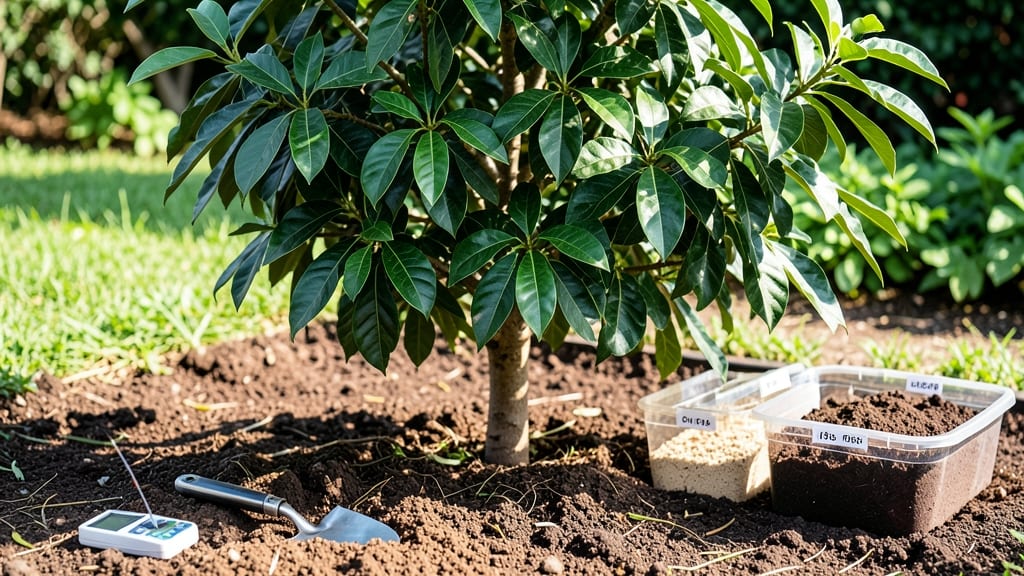
The right avocado plant soil type is the foundation of a thriving 🥑 tree—one that’s loose, chunky, and full of organic matter to keep roots breathing.
Struggling with your avocado plant’s stunted growth or yellowing leaves? The secret might be hiding in the soil—avocados are finicky about their root environment, and the wrong mix can kill them faster than overwatering.
Most garden soils are too dense, holding moisture against roots and inviting rot. Avocados need something airy, slightly acidic to neutral, and packed with compost to feed those hungry roots.
In Zone 6a, this means amending clay-heavy soil with sand and perlite, while Zone 9b growers can lean into coconut coir for moisture control.
Below, I’ll break down the exact ratios for a DIY mix, how to test your soil’s pH, and the quick fixes for common problems like compaction or nutrient deficiencies.

Best soil mix for avocado plants: ideal composition and pH balance
Avocado plants thrive when their roots breathe easily in a well-aerated, chunky soil mix. Unlike many tropical plants, they hate soggy roots—waterlogged soil leads to root rot and stunted growth.
The ideal blend combines organic matter, sand, and perlite to create a loose, crumbly texture that mimics their native well-draining volcanic soils.
A pH range of 6.0–7.0 is critical for nutrient absorption. Avocados prefer slightly acidic to neutral soil, but too-low pH (<5.5) locks out essential minerals like calcium and magnesium, causing leaf yellowing. Test your soil with a pH meter or kit before planting—amendments like lime or sulfur can adjust levels as needed.
| Soil Component | Ratio (by Volume) | Purpose |
|---|---|---|
| Garden soil (base) | 50% | Provides structure and nutrients |
| Coarse sand or perlite | 20% | Prevents compaction, improves drainage |
| Compost or aged manure | 20% | Adds organic matter, retains moisture |
| Peat moss or coconut coir | 10% | Holds moisture, balances pH slightly |
Start with a 50% garden soil base to anchor the mix, then add 20% coarse sand or perlite to prevent compaction. This chunky texture mimics avocado’s native volcanic soil, which drains rapidly after rain.
Without this, roots suffocate, leading to yellow leaves and poor growth. I’ve seen avocados in heavy clay soil struggle until I amended it—never skip the sand.
Add 20% compost or aged manure to feed microbes and retain moisture without suffocating roots. Avoid fresh manure—it burns roots and raises soil nitrogen levels too high, causing leaf scorch. For organic matter, worm castings are my top pick—they’re gentler than compost and improve soil structure over time.
Peat moss or coconut coir makes up the final 10% of the mix, helping retain moisture while keeping the blend light and airy. In Zone 6a, I swap peat for coconut coir to reduce acidity—avocados prefer neutral pH, and peat can push soil too low.
Test your mix’s pH after blending; aim for 6.0–7.0.
For container-grown avocados, adjust the mix to 40% soil, 30% perlite/sand, and 20% compost. Containers dry out faster, so the extra perlite prevents root rot from overwatering.
I’ve repotted my 3-year-old avocado into a 15-gallon pot with this blend, and it’s thrived—no more drooping leaves from soggy roots.
If your soil is too dense or clay-heavy, mix in 50% sand or grit to improve drainage.
I once had an avocado in heavy Texas clay—after adding equal parts sand and compost, the roots finally got the air they needed. Never force avocados into poor soil; they’ll protest with yellowing leaves or leaf drop.
For newly planted avocados, top the soil with a 2-inch layer of mulch (wood chips or straw) to retain moisture and regulate temperature. Mulch also prevents soil-borne diseases by keeping foliage dry. Just keep it 2–3 inches away from the trunk to avoid rot.
Monitor your avocado’s soil regularly. If leaves yellow between veins, it’s often iron deficiency from alkaline soil—add chelated iron or sulfur to lower pH. For brown leaf tips, flush the soil with water to leach excess salts from tap water or fertilizer.
Remember: Avocados hate wet feet. If your mix feels compacted or holds water after 30 minutes, add more perlite or coarse sand. A quick finger test—press soil lightly; it should crumble, not stick. With the right mix, your avocado will grow strong roots and lush foliage.
How to fix common soil problems in avocado plants (and save your tree)
If your avocado tree is struggling with yellowing leaves or stunted growth, the issue often starts below the surface—in the soil. Avocados thrive in well-draining, slightly acidic soil, but common problems like root rot or nutrient deficiencies can quickly turn your tree’s health south.
The good news? Most soil issues are fixable with the right approach.
Before diving into fixes, diagnose the problem by checking your soil’s texture, moisture, and pH. Compacted soil, poor drainage, or a pH imbalance (outside 6.0–7.0) are red flags.
For example, soggy soil signals overwatering or clay-heavy mix, while crusty soil means it’s too dry or lacks organic matter. Let’s tackle these issues step by step.
Avoid these soil mistakes that kill avocado roots:
- Clay-heavy soil → Traps moisture, causing root rot.
- Pure sand → Drains too fast, starving roots of nutrients.
- High pH (>7.0) → Locks out iron and zinc, causing yellowing.
- No organic matter → Leads to poor structure and weak growth.
Fix it now: Test your soil’s pH and drainage before making changes.
Start with soil aeration if your avocado’s roots are suffocating. Use a garden fork to loosen compacted soil around the root zone (12–18 inches deep). For potted avocados, repot into fresh mix with perlite or orchid bark to improve airflow.
If your soil drains poorly, amend it with coarse sand or grit—aim for a chunky texture that mimics avocado’s native habitat.
For nutrient deficiencies, like yellow leaves (often iron or zinc), apply a chelated fertilizer (e.g., iron sulfate) or compost tea. Work it into the top 6 inches of soil and water deeply.
If your avocado’s leaves are curling or brown, it may need magnesium—sprinkle Epsom salt (1 tbsp per gallon of water) around the base. Always water after applying amendments to activate them.
Mulching is a game-changer for avocado soil health. Spread 2–3 inches of organic mulch (like wood chips or straw) around the tree’s base, keeping it 3 inches away from the trunk.
This retains moisture, regulates temperature, and slowly releases nutrients as it decomposes. Replenish mulch every 6 months to maintain its benefits.
Finally, monitor your watering habits. Avocados hate wet feet, so ensure the soil dries out between waterings. Stick your finger 2 inches into the soil—if it’s damp, wait before watering again.
For container-grown avocados, use pots with drainage holes and a mix of 50% potting soil, 30% perlite, and 20% compost to prevent waterlogging.
With these fixes, your avocado should bounce back in 4–6 weeks. Keep an eye on its progress—healthy roots mean vibrant leaves and eventually, delicious fruit! 🌱