
Light Requirements
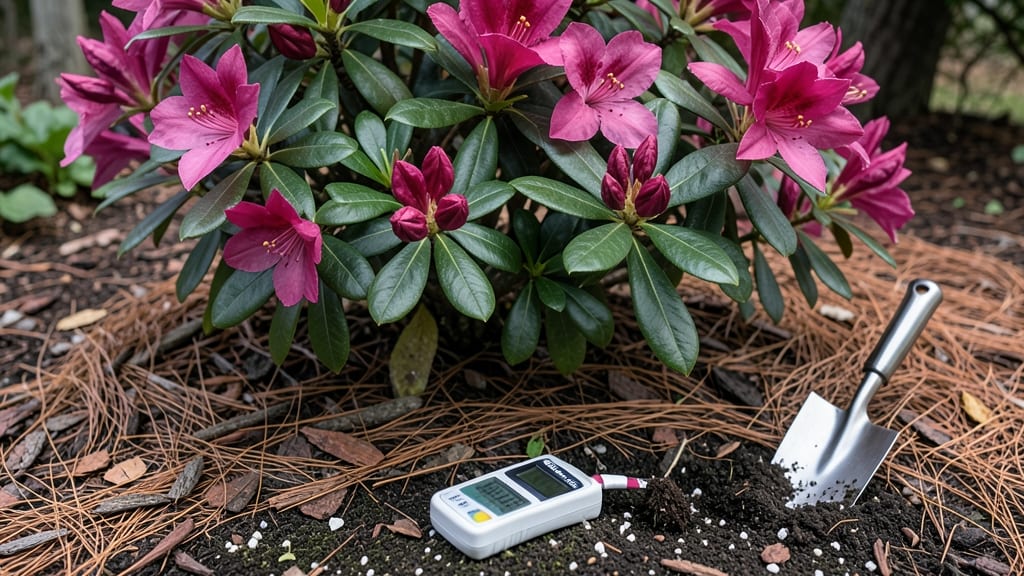
Azalea soil requirements demand a highly acidic mix with a pH between 4.5 and 5.5, rich in organic matter like peat moss or pine bark, and excellent drainage to prevent root rot while retaining moisture. Avoid alkaline soils or heavy clay.
Azaleas thrive in soil that mimics their natural woodland habitat, where acidity unlocks essential nutrients like iron and manganese. 🌿 The right mix—often 50% organic matter and 50% inorganic materials—keeps roots oxygenated while preventing the waterlogging that causes rot.
Unlike many plants, azaleas actually suffer when soil pH rises above 6.0, as nutrients become unavailable. I’ve found that container-grown azaleas need repotting every 2-3 years to refresh their soil mix, while in-ground plants benefit from annual top-dressing with acidic compost.
For best results, pair your soil mix with a drip irrigation system or rain gauge to maintain consistent moisture without oversaturating. Mulching with pine needles further lowers pH over time while suppressing weeds—a win-win for long-term care.
💡 In This Article
- Why Azaleas Need Acidic Soil Chemistry
- DIY Azalea Soil Mix Recipes for Containers and Gardens
Why azaleas need acidic soil chemistry
Azaleas evolved in acidic forest floors where decomposed pine needles and leaf litter create a naturally low pH environment. This acidity isn't just about preference—it's a biological necessity. At their ideal pH 4.5-5.5, azaleas can absorb essential micronutrients like iron and manganese that become chemically locked in alkaline soils.
The science lies in how hydrogen ions (H+) in acidic soil break down aluminum and iron compounds into soluble forms the plant can uptake through its roots.
Most garden soils sit between pH 6.0-7.5, which is too alkaline for azaleas. When pH rises above 6.0, iron and manganese precipitate out of solution as insoluble oxides, starving the plant even if these nutrients exist in the soil.
This is why azaleas often develop yellow leaves (iron deficiency) or stunted growth in regular garden soil. The roots also struggle to absorb phosphorus efficiently in alkaline conditions, further limiting growth. 🌱
Adding lime or composted wood chips—common soil amendments—can be disastrous for azaleas. Lime raises pH by neutralizing acidity, while wood chips break down into alkaline humus over time. Even "acid-loving" plants like blueberries and hydrangeas tolerate slightly higher pH ranges, but azaleas are far more sensitive.
Their root systems lack the specialized adaptations to extract nutrients from alkaline environments, making proper soil chemistry critical for survival.
What makes this particularly tricky is that azaleas' natural root systems are shallow and fibrous, designed to thrive in the top layer of acidic forest duff. This means they're highly responsive to soil surface conditions.
A 1-inch layer of pine bark mulch can lower soil pH by up to 0.5 points per year through natural decomposition, while also improving moisture retention. The key is maintaining this acidic environment year-round, as seasonal fluctuations can stress the plant.
For visual comparison, imagine a pH 5.0 soil as a sponge that readily releases nutrients, while pH 7.0 soil acts like a sealed container where nutrients remain trapped and inaccessible.
This chemical barrier explains why azaleas often fail to thrive in raised beds or containers using generic potting mix—even if the mix appears moist and fertile. The root zone chemistry is what truly determines their health and flowering potential.