
How To
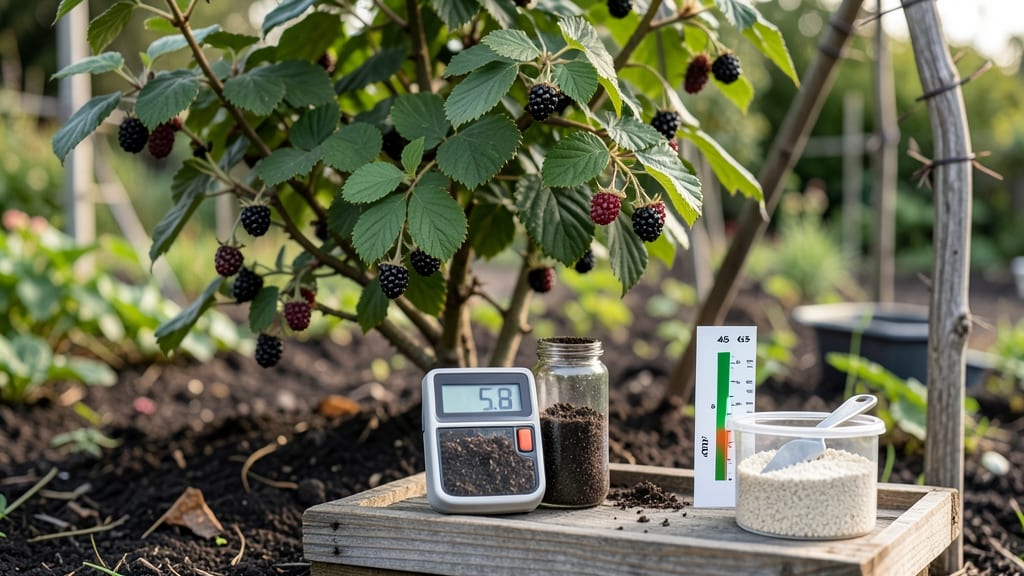
Growing thriving blackberry 🫐 bushes depends on one critical factor: keeping the soil pH in the acidic range of 5.0 to 6.5—too high or too low, and your plants will struggle.
Struggling to get your blackberry canes to thrive? The secret might be hiding in your soil’s pH—blackberries are finicky about acidity, and getting it wrong can mean the difference between a bountiful harvest and stunted growth.
Too alkaline, and your plants can’t absorb essential nutrients like iron and manganese, leading to yellow leaves and weak canes. Too acidic, and root health suffers, leaving your 🫐 bushes vulnerable to disease.
In this guide, I’ll walk you through how to test your soil, adjust the pH naturally, and keep your blackberries happy all season long—so you can enjoy those sweet, juicy berries every summer.
Optimal blackberry soil pH range: why acidic soil matters for growth
Blackberries thrive when their soil pH stays within a narrow acidic range of 5.0 to 6.5. This isn't just a technical detail—it's the foundation for nutrient uptake, cane strength, and fruit production.
When the pH drifts outside this range, your plants can't access essential nutrients like iron, manganese, and phosphorus, leading to stunted growth or poor yields. Even if you're giving your blackberries plenty of water and sunlight, the wrong pH can sabotage their health.
Think of soil pH as the lock and key for nutrient availability. At a pH of 5.5, for example, blackberries can absorb 80% of available iron—but drop to pH 7.0, and that number plummets to just 10%.
This explains why your plants might show signs of deficiency even when the soil looks fertile. The good news? Adjusting pH is simpler than you might think, and I'll walk you through it step by step.
| Factor | Ideal Range | Signs of Imbalance | Solution |
|---|---|---|---|
| Soil pH | 5.0 - 6.5 | Yellow leaves, stunted growth, poor fruiting | Test with kit, amend with sulfur or lime |
| Iron Availability | High at pH 5.5 | Interveinal chlorosis (yellow between veins) | Lower pH with elemental sulfur |
| Phosphorus Uptake | Optimal at pH 6.0-6.5 | Purple stems, delayed flowering | Add bone meal or compost |
| Manganese Access | Peak at pH 5.0-5.5 | Brown spots on leaves | Increase acidity with peat moss |
| Calcium/Magnesium | Stable at pH 6.0-6.5 | Blossom end rot, weak canes | Add dolomitic lime cautiously |
One of the first signs your blackberries are struggling with pH is interveinal chlorosis—when leaves turn yellow between the veins while keeping green veins. This classic symptom often appears when soil pH is too high, locking out iron.
I've seen this in my own garden when I planted blackberries in soil that had been amended with too much lime for tomatoes. The fix? A simple soil test revealed pH 7.2, and after adding elemental sulfur and compost, the new growth turned vibrant green within weeks.
Another red flag is poor fruiting, even when your plants look healthy. Blackberries need a slightly acidic environment to set fruit properly. If your canes are loaded with flowers but producing few berries, your soil might be too alkaline.
The same goes for stunted growth—when canes fail to reach their expected height (6-15 feet for standard varieties), it's often a pH-related nutrient deficiency holding them back.
Testing your soil pH is easier than you'd think. You can use a DIY test kit (about $10) or send a sample to your local cooperative extension service for a professional analysis. For home testing, I recommend the LaMotte Soil pH Test Kit—it gives accurate results in minutes.
Simply mix soil with distilled water, wait 5 minutes, then compare the color to the chart. If your reading falls outside the 5.0-6.5 range, it's time to adjust.
Adjusting pH naturally is where many gardeners get creative. To lower pH (make soil more acidic), I've had great success with elemental sulfur (1-2 pounds per 100 sq ft) or peat moss (2-3 inches mixed into the topsoil).
For raising pH (making soil less acidic), wood ash (1/2 cup per plant) works well, but use it sparingly—too much can make the soil too alkaline. Always test your soil again after 2-3 months to see how your amendments are working.
Remember, blackberries aren't the only plants that prefer acidic soil—blueberries, azaleas, and rhododendrons share similar needs. This is why many gardeners create dedicated acidic soil beds for these plants. The key is consistency: blackberries won't tolerate sudden pH swings.
Aim to keep your soil within 0.5 pH points of your target range year-round. This means regular testing, especially after heavy rains or when you amend your garden beds.
One common mistake I see is assuming that compost alone will fix pH issues. While compost improves soil structure and adds nutrients, it doesn't significantly alter pH. For true pH adjustment, you need targeted amendments like sulfur or lime.
Another pitfall is over-amending—adding too much sulfur can make your soil dangerously acidic, harming beneficial microbes and plant roots alike.
If you're growing blackberries in containers or raised beds, pH management becomes even more critical since you have complete control over the soil mix. I recommend using a pre-mixed acidic
How to test and adjust blackberry soil pH for maximum yield
Blackberries thrive when their soil pH is just right—too acidic or alkaline, and you’ll see stunted growth, poor fruiting, or yellowing leaves. The ideal pH range for blackberries is 5.0–6.5, and achieving this requires testing and careful adjustments.
Don’t worry if your soil isn’t perfect yet; with the right tools and amendments, you can create the perfect acidic environment for your canes to flourish.
Testing your soil’s pH is the first step. You can use a DIY soil test kit (affordable and easy) or send a sample to a lab for precise results. I recommend starting with a kit—it’s quick and gives you immediate feedback.
Once you know your current pH, you can adjust it organically using materials like peat moss, sulfur, or wood ash. The key is patience and precision; over-amending can throw off your soil’s balance just as much as doing nothing.
- Test your soil using a DIY kit or lab test to confirm the current pH level.
- For pH below 5.0, add lime or wood ash to raise acidity.
- For pH above 6.5, mix in sulfur or peat moss to lower pH.
- Apply amendments evenly around the root zone, then water deeply to activate.
- Retest soil every 3–6 months to monitor changes and adjust as needed.
If your soil is too acidic (below 5.0), you’ll need to raise the pH slightly. The easiest way is to add pelletized lime or wood ash. Sprinkle it around the base of your blackberry plants and work it into the top 6 inches of soil.
Avoid overdoing it—too much lime can make your soil too alkaline. For a soil pH above 6.5, organic sulfur or peat moss will help lower it. These amendments take time to work, so plan ahead and retest after a few weeks.
One common mistake gardeners make is ignoring soil texture while adjusting pH. Sandy soil drains too quickly, while clay holds moisture and amendments too tightly.
If your soil is heavy clay, mix in compost or sand to improve drainage before amending pH. For sandy soil, add organic matter like compost or coconut coir to help retain moisture and nutrients.
Think of your soil like a sponge—it needs the right balance of air, water, and nutrients to support your blackberries.
Long-term soil management is just as important as quick fixes. After adjusting your soil’s pH, mulch around your blackberry plants with pine needles or composted leaves to maintain acidity naturally. This also suppresses weeds and retains moisture.
Every few months, add a thin layer of compost to replenish nutrients and keep the soil structure healthy. Remember, blackberries are heavy feeders, so consistent care pays off in bigger, sweeter berries.
Don’t let pH stress hold back your blackberry harvest. With a little testing and the right amendments, you can create the perfect acidic environment for your plants to thrive. Start today—your future blackberry bounty depends on it! 🫐