
Neem Oil
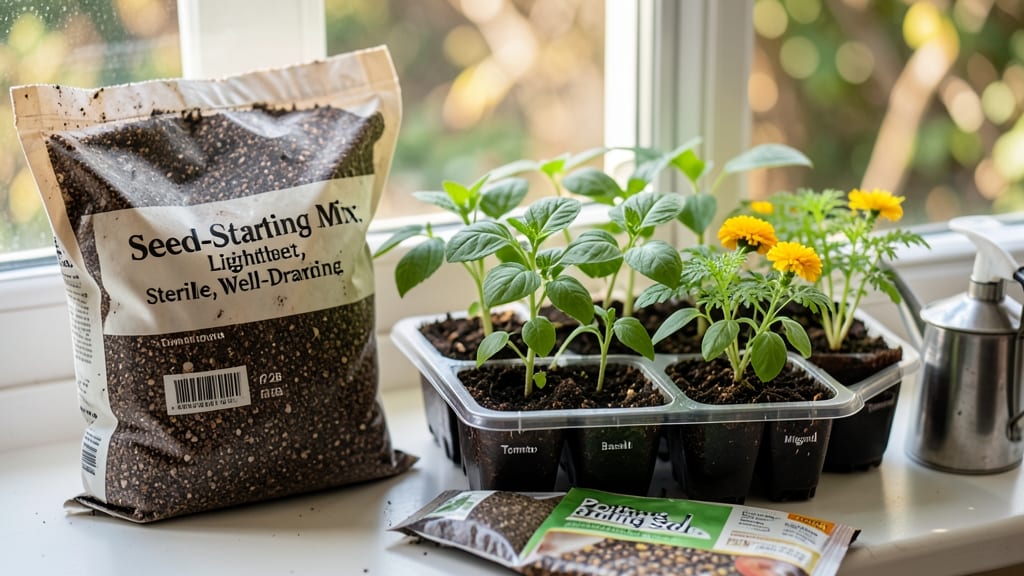
You can use potting soil to start seeds, but it’s not ideal because it typically lacks the proper drainage and sterilization needed to prevent mold, damping-off disease, or stunted growth. Specialized seed-starting mixes are designed to maximize germination success.
Potting soil is often too dense and nutrient-heavy for delicate seedlings, which need loose, sterile growing conditions to thrive. 🌱 The high organic matter in regular potting mixes can trap moisture, creating the perfect environment for fungal infections that kill young plants before they sprout.
Even if you sterilize it, the lack of perlite or vermiculite means poor aeration, which weakens root development.
For best results, I recommend using a lightweight seed-starting mix with at least 50% inorganic material like perlite or coco coir—this ensures proper airflow and drainage while keeping seeds moist enough to germinate.
If you’re set on using potting soil, amend it by mixing in 20-30% perlite or coarse sand and consider baking it in the oven at 200°F for 30 minutes to kill pathogens.
However, even with these adjustments, commercial seed-starting blends still outperform it because they’re formulated to balance moisture retention with aeration—critical factors for those first few weeks of growth.
💡 In This Article
- Why Potting Soil Fails for Seed Germination
- Best Seed-Starting Soil Mixes and DIY Alternatives
Why potting soil fails for seed germination
The core issue with potting soil for seed starting lies in its composition. Most garden soils contain 30-50% organic matter like compost or peat moss, which breaks down over time and compacts—creating a dense, waterlogged environment.
Seedlings need loose, airy conditions to develop strong roots, but potting soil's texture often resembles damp clay after a few days. This compaction reduces oxygen levels in the soil, suffocating young roots and slowing growth by 30-50% compared to optimal seed-starting mixes.
Another critical factor is nutrient imbalance. Potting soil is formulated for established plants, delivering a slow-release fertilizer that can overwhelm tender seedlings. The high nitrogen content (often 0.5-1.0% by weight) promotes leafy growth at the expense of root development, leaving seedlings top-heavy and prone to falling over.
Seed-starting mixes, by contrast, use minimal, balanced nutrients (typically 0.1-0.3% nitrogen) to support gradual, healthy growth without burning delicate roots.
Pathogen risks are the most dangerous aspect. Potting soil frequently contains fungal spores (like Pythium or Rhizoctonia) and bacterial contaminants that cause damping-off disease—a fungal infection that cuts seedlings off at the soil line.
These pathogens thrive in the moist, organic-rich environment of potting soil, while seed-starting mixes are heat-sterilized to eliminate 99.9% of harmful microbes. Even organic potting soils, marketed as "natural," often carry these risks unless specially treated.
Moisture retention is another hidden challenge. Potting soil holds water like a sponge, creating anaerobic pockets where roots can't breathe. Seedlings need consistent moisture but also airflow—seed-starting mixes achieve this balance with 50-70% inorganic materials like perlite or vermiculite, which create air pockets while still retaining enough water.
Without these amendments, potting soil can leave seeds either too dry or waterlogged, both of which reduce germination rates by 20-40%.
Consider this comparison: a typical potting soil might have a water-holding capacity of 60-80%, while a well-formulated seed mix holds only 30-50%—enough to keep seeds moist without drowning them.
This difference explains why seeds in potting soil often sprout but then rot before emerging, while those in seed mixes grow steadily from the start. 🌱
The final nail in the coffin? Temperature regulation. Potting soil's high organic content causes it to heat up faster in sunlight, creating temperature swings that stress seeds. Seed-starting mixes stay cooler and more stable, protecting delicate embryos during germination.
For example, basil seeds require 70-75°F to sprout—potting soil can easily exceed 85°F on sunny windowsills, killing seeds before they germinate.