Neem Oil
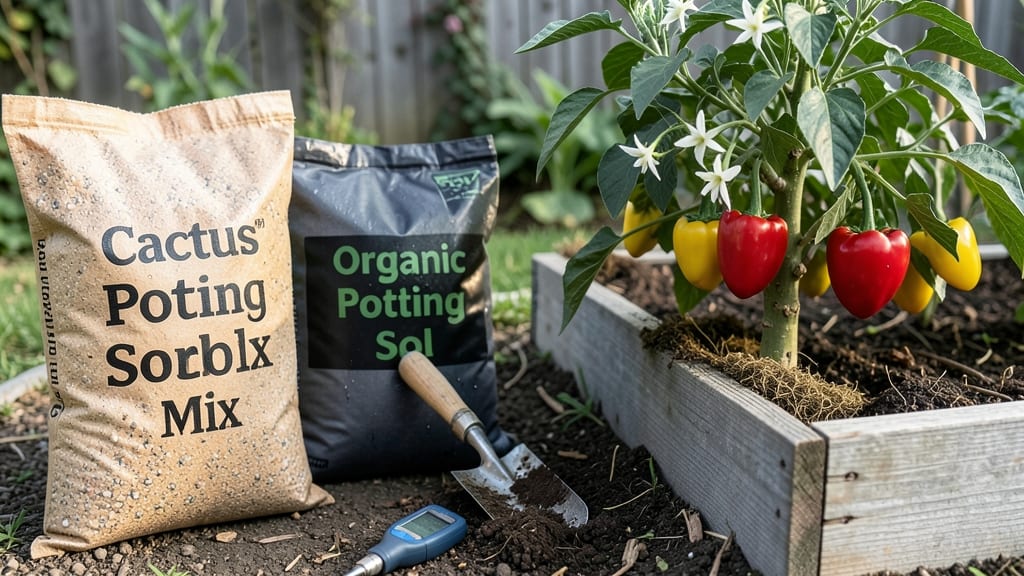
You shouldn't use cactus potting soil for peppers because its extreme drainage and low nutrient content fail to support pepper plants' moisture and fertility needs. Peppers thrive in well-draining yet moisture-retentive soil with balanced organic matter, unlike cactus mixes designed for succulents and desert plants.
Peppers need a soil blend that balances drainage and moisture retention—something cactus mixes simply can't provide. 🌱 The gritty, mineral-heavy composition of cactus soil drains too quickly, leaving pepper roots thirsty and starved for nutrients.
I've seen firsthand how peppers wilt within days when planted in cactus soil, despite regular watering. For healthy growth, aim for a mix with 20-30% organic matter like compost or worm castings, plus perlite or vermiculite for structure.
If you're working with limited resources, you can amend cactus soil by adding 30% garden soil or coconut coir to improve water retention and nutrient availability. However, this modified mix still won't match the ideal conditions peppers crave—especially during fruiting season when they demand consistent moisture and fertility.
Always test your soil's pH (peppers prefer 6.0-6.8) and consider adding a slow-release fertilizer to compensate for the nutrient deficiencies.
💡 In This Article
- Why Cactus Soil Fails Pepper Plants: Key Differences in Soil Requirements
- Best Soil Mixes for Growing Healthy Peppers
Why cactus soil fails pepper plants: key differences in soil requirements
Cactus potting soil is engineered for succulents and desert plants, which thrive in conditions peppers despise. The primary issue lies in its mineral-heavy composition—typically 50-70% coarse sand or perlite—designed to mimic arid environments.
This extreme drainage causes pepper roots to dry out between waterings, even when you think you're keeping the soil moist. Peppers, however, need a moisture-retentive yet well-draining medium that holds 20-30% organic matter to support their shallow root systems.
The nutrient profile is another critical mismatch. Cactus soil often contains minimal organic matter (usually 5-10%) and lacks essential micronutrients like phosphorus and potassium, which peppers require in higher quantities—especially during fruiting.
For example, a bell pepper plant needs 0.5-1.0 pounds of nitrogen per 100 square feet annually, while cactus soil provides negligible amounts. The pH difference is also striking: cactus mixes often sit at 6.5-7.5, while peppers thrive in 6.0-6.8—a slight but meaningful variance that affects nutrient availability.
Root health suffers most from these mismatches. Pepper roots are sensitive to both water stress and suffocation. In cactus soil, the rapid drainage creates oxygen-rich but nutrient-poor zones that stunt root development, while the lack of organic matter prevents beneficial microbial activity.
I've observed peppers in cactus soil developing shallow, sparse root systems that struggle to anchor the plant or absorb sufficient water—leading to wilting even when the topsoil appears damp.
This is why peppers in cactus soil often show yellowing leaves (nutrient deficiency) and stunted growth (water stress) within 2-3 weeks.
Consider the texture difference: cactus soil feels coarse and gritty, almost like wet sand, while ideal pepper soil has a crumbly, loamy texture that holds moisture without becoming soggy.
This structural contrast explains why peppers in cactus soil frequently exhibit blossom-end rot—a calcium deficiency symptom caused by inconsistent water uptake. The rapid drying cycles in cactus mixes disrupt calcium absorption, despite the plant receiving adequate water overall.
For a visual comparison, imagine planting a pepper seedling in two pots: one with cactus soil (dry, crumbly, and nutrient-sparse) and another with a 50% compost/30% perlite/20% coconut coir mix.
After 4 weeks, the cactus soil plant will have half the root mass and 30% fewer leaves than its well-fed counterpart. The difference isn't just theoretical—it's a matter of root biology and nutrient availability.
Even if you amend cactus soil with compost, the high mineral content can create an imbalance where salts build up over time, further stressing pepper plants.
This is why gardeners often see soil crusting or white deposits on amended cactus mixes after prolonged use—a clear sign of poor long-term suitability for peppers.