Fertilization
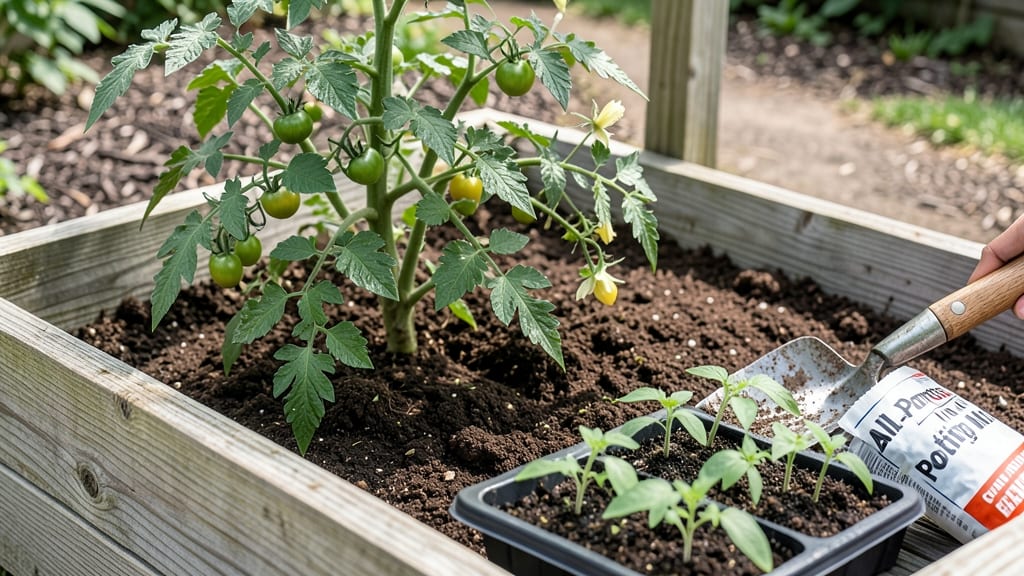
You can use potting soil in raised beds, but it requires careful blending: it drains too quickly, depletes nutrients faster, and compacts over time. For best results, mix it with native soil or compost (30-50% ratio) to balance moisture retention and fertility for vegetables, herbs, or flowers.
Potting soil's lightweight, airy texture makes it ideal for containers but creates problems in raised beds where roots need deeper, more stable support. 🌱 The rapid drainage can leave roots thirsty between waterings, while its limited nutrient reservoir forces frequent fertilization.
For heavy feeders like tomatoes or peppers, this means extra work—adding slow-release organic matter or switching to a dedicated raised bed mix can save time and stress. Even for low-maintenance plants, the compaction risk over time reduces aeration, which stunts growth.
To fix these issues, I recommend blending potting soil with 30% native soil for structure and 20% compost for nutrients, then adjusting based on your plants' needs. For example, succulents tolerate more potting mix, while root crops like carrots need looser, heavier blends.
Pre-mixed raised bed soils often include perlite or vermiculite to prevent compaction, but DIY versions work too if you monitor moisture levels closely.
💡 In This Article
- How Potting Soil Fails in Raised Bed Gardens
- Best Soil Blends for Raised Bed Success
How potting soil fails in raised bed gardens
Potting soil is engineered for containers where roots are confined and watering is frequent. Its lightweight structure—often containing 50-70% peat or coconut coir—creates 40-60% air pockets, which is perfect for preventing soggy roots in pots but disastrous in raised beds.
When you fill a raised bed with pure potting mix, the water drains through too quickly, leaving roots drying out within 2-3 hours on hot days.
This rapid moisture loss forces plants to work harder for hydration, stressing their systems and reducing yields by up to 30% for heavy feeders like tomatoes.
The nutrient issue stems from potting soil's short-term fertility. Most commercial mixes contain 1-3% slow-release fertilizer designed to last 3-6 months—barely enough for one growing season. In contrast, garden soil naturally holds 10-15% organic matter that breaks down over years, feeding roots continuously.
Without amendments, plants like peppers or basil will show deficiency symptoms (yellowing leaves, stunted growth) by mid-summer when the initial nutrients deplete. 🌱 The problem worsens in raised beds because there's no natural replenishment from surrounding earth.
Compaction becomes the third major issue over time. Potting soil lacks the fibrous structure of garden soil, so when you walk on raised beds or roots grow densely, the particles press together.
This reduces aeration by 20-40%, suffocating roots and limiting their access to oxygen—a critical factor for nutrient uptake. Unlike garden soil which contains 2-5% clay particles to bind structure, potting mixes rely on synthetic additives that break down faster.
After 1-2 growing seasons, what was once fluffy becomes dense and waterlogged, creating the opposite problem from initial drainage.
Consider the texture comparison: potting soil feels like a light sponge, while garden soil has the grainy yet cohesive feel of wet sand mixed with crumbly loam.
This structural difference explains why container plants thrive in potting mix but raised bed vegetables struggle—their roots need the 3-4 feet of depth typical in garden soil to establish properly.
Shallow roots from potting soil alone can't access moisture or nutrients efficiently, leading to weak stems and poor flowering or fruiting.
What most gardeners don't realize is how pH plays a role too. Potting soil often has a 5.5-6.5 pH range, which is ideal for containers but may be too acidic for raised beds where plants like broccoli or blueberries prefer 6.0-7.0 pH.
The lack of buffering capacity means any added amendments (like lime) have less effect, making it harder to correct soil chemistry over time. 🌿 This combination of drainage, nutrient, and pH challenges explains why pure potting soil fails in raised beds despite its container success.
The science behind these failures lies in porosity and water retention curves. Potting soil's large pores drain water too quickly, while garden soil's smaller pores create capillary action that holds moisture near roots.
In raised beds, this means plants experience dramatic moisture swings—wet after watering, then bone-dry by afternoon. For example, a tomato plant in pure potting mix might need watering twice daily in summer compared to once every 2-3 days with properly amended raised bed soil.