Fertilization
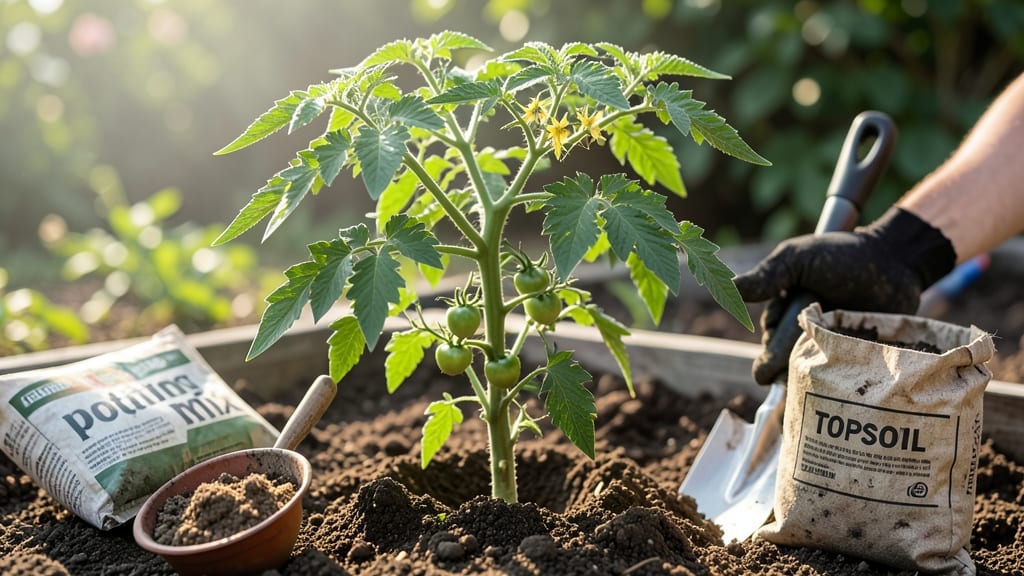
You can use potting soil in the ground, but only when properly amended: it lacks natural drainage and compaction resistance, which can suffocate roots and cause rot. Mix it with 70% native soil and organic matter to improve aeration and structure before planting.
Potting soil is designed for containers where excess water drains away quickly, but garden beds lack this escape route. 🌱 The lightweight, airy texture that works in pots becomes a problem outdoors—it compacts easily, traps moisture, and blocks oxygen flow to roots.
I’ve seen gardeners accidentally turn their flower beds into soggy, anaerobic zones that breed fungus and discourage beneficial microbes. The solution? Dilute it with your existing soil and add coarse amendments like perlite or coarse sand to mimic natural soil structure.
Think of it like baking a cake: too much flour (potting soil) makes it dense and dry, but adding eggs (organic matter) and butter (native soil) creates the perfect balance.
For most plants, a 30% potting soil to 70% native soil ratio works well, but heavy clay soils may need even less. Always test your mix by squeezing a handful—it should crumble easily when dry but hold moisture without becoming waterlogged.
💡 In This Article
- Why Potting Soil Fails in Garden Beds
- How to Safely Mix Potting Soil with Garden Soil
Why potting soil fails in garden beds
Potting soil is engineered for containers where water drains freely through the bottom, but garden beds lack this drainage system. The lightweight mix—typically 50-70% peat moss or coconut coir, 10-20% perlite/vermiculite, and 10-30% composted organic matter—becomes a liability outdoors.
Without proper drainage, excess moisture lingers, creating anaerobic (oxygen-deprived) zones where roots suffocate and pathogens thrive. 🌱 This is why plants in amended garden soil often wilt or develop root rot within weeks, despite appearing healthy at first.
The problem starts with compaction. Potting soil’s airy structure collapses under foot traffic or natural settling, reducing pore space by up to 40%. Compare this to native soil, which typically has 25-50% porosity—enough to allow water and oxygen movement.
When potting soil dominates, pore space can drop below 10%, turning the bed into a waterlogged sponge. Even drought-tolerant plants like lavender or rosemary struggle in these conditions, as their roots need constant airflow to thrive.
Nutrient imbalances also play a role. Potting soil is highly fertile—often enriched with slow-release fertilizers—and designed for short-term plant growth in pots. In garden beds, this overabundance can lead to salt buildup (from fertilizers) and nutrient leaching (when heavy rains wash away soluble compounds). The result?
Plants exhibit fertilizer burn (brown leaf tips) or deficiency symptoms (yellowing leaves) as the soil’s chemistry shifts unpredictably. 🌿 Unlike native soil, which develops a stable microbial ecosystem over years, potting soil disrupts this balance by introducing foreign microbes and organic matter that decompose too quickly.
Consider the case of a tomato plant in amended vs. unamended potting soil. In a pot, the same soil might produce a lush harvest because excess water drains away.
But in a garden bed, the same soil can cause the plant’s roots to rot within 3-4 weeks, even with regular watering. The difference? In the pot, roots have an escape route; in the ground, they’re trapped in a suffocating environment.
This is why gardeners often see mold growth or fungal diseases (like Pythium) when potting soil isn’t properly blended.
Another critical factor is soil structure. Potting soil lacks the clay-silt-sand triad found in native soil, which gives it stability and water-holding capacity. Without this structure, amended beds become too loose (leading to poor root anchorage) or too dense (after compaction).
For example, a 30% potting soil mix with 70% native clay soil might work for heavy feeders like corn, but the same mix in sandy soil could dry out too quickly. The key is matching the potting soil’s properties to your existing soil type.
Finally, potting soil’s low bulk density (lightweight) makes it prone to erosion and nutrient loss in wind or rain. Native soil, on the other hand, has a higher bulk density (typically 1.2-1.6 g/cm³), which helps it retain structure and nutrients.
When you mix potting soil into garden beds without amendments, you’re essentially creating a high-maintenance environment that requires constant monitoring—something most gardeners don’t account for. 💫