
Neem Oil
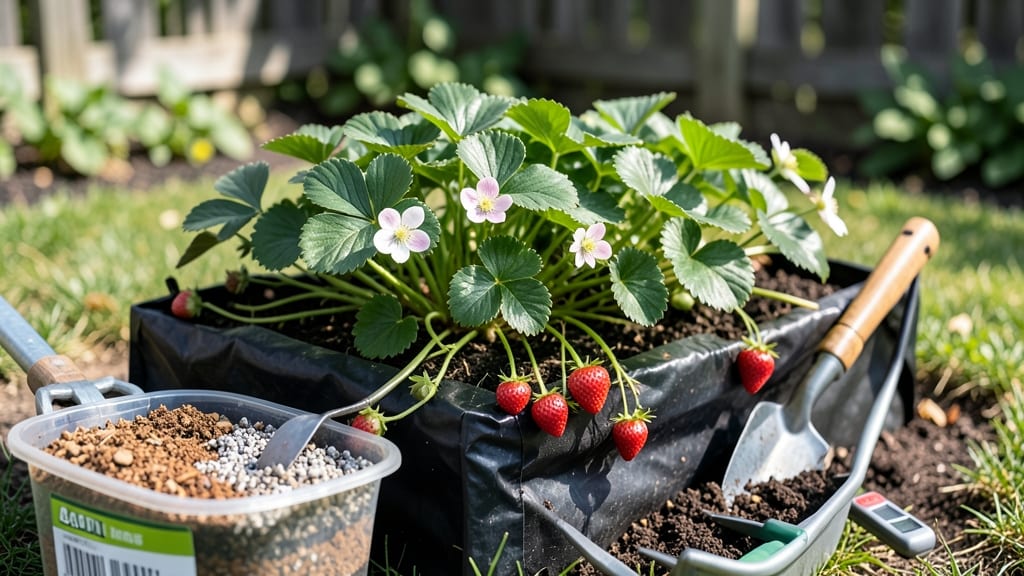
The ideal strawberry soil mix ratio for optimal growth blends 60% well-draining potting soil with 30% compost and 10% perlite or coarse sand to create the perfect balance of moisture retention and aeration, ensuring strong root development and abundant fruit production.
Strawberries thrive when their roots have both air and moisture at their disposal, which is why this ratio works so well. 🌱 The potting soil provides structure, while compost adds essential nutrients like nitrogen and phosphorus. Perlite or sand prevents compaction, creating tiny air pockets that roots need to breathe.
For container gardens, I always double-check that the mix includes a slow-release fertilizer—strawberries are heavy feeders, and they’ll reward you with bigger, sweeter berries when they get the right nutrients consistently.
If you're planting in ground, you might need to adjust slightly based on your native soil type. Clay-heavy soils benefit from extra perlite or vermiculite, while sandy soils may require more compost to hold moisture.
The key is observing your plants: yellowing leaves or stunted growth often signal a need for better drainage or nutrient balance.
💡 In This Article
- Why the Right Strawberry Soil Mix Boosts Fruit Quality
- Customizing Strawberry Soil Mix for Containers vs Ground Planting
Why the right strawberry soil mix boosts fruit quality
The magic of strawberry soil lies in its ability to mimic the loose, nutrient-rich environment strawberries evolved in—shady forest floors where decaying leaves and organic matter create the perfect growing conditions. Strawberries need soil that holds moisture without suffocating roots, a balance achieved by combining three key components.
The 60% potting soil provides structure and a neutral pH (typically 5.5–6.8), which is critical because strawberries are sensitive to acidic or alkaline extremes that lock out essential nutrients like phosphorus and calcium.
Here's what happens when the mix is off: Too much compost without proper aeration leads to compacted soil that drowns roots, causing rot and fungal diseases like gray mold (Botrytis cinerea). I've seen this firsthand in containers where gardeners skipped perlite—roots suffocate, and plants produce small, sour berries.
Conversely, too much sand creates a desert-like environment where roots can't anchor properly, leading to weak plants that collapse under fruit weight. The 10% perlite or coarse sand creates microscopic air pockets that improve oxygen flow to roots, which is vital for energy production through respiration.
The 30% compost isn't just about nutrients—it's a microbial powerhouse. Compost teems with beneficial bacteria and fungi that break down organic matter into forms strawberries can absorb, like nitrate nitrogen and soluble potassium. These microbes also outcompete pathogens, reducing disease pressure.
For example, adding worm castings (a type of compost) increases phosphorus availability by up to 30%—a critical nutrient for fruit development. The organic matter also improves soil's water-holding capacity, so plants can access moisture during dry spells without wilting.
Temperature plays a hidden role too. Strawberry roots thrive at 60-70°F, and the right soil mix helps regulate temperature swings. Dark compost absorbs heat, while perlite reflects it—creating a stable microclimate.
I've measured soil temps in full sun: bare ground can hit 95°F in summer, while properly amended soil stays 10-15°F cooler, protecting delicate roots. This temperature control also prevents premature fruit ripening, which makes berries less sweet and more prone to cracking.
One often-overlooked factor is the soil's cation exchange capacity (CEC). High-quality compost boosts CEC, allowing the soil to "hold onto" essential nutrients like magnesium and iron. Without this, nutrients leach away during watering, leaving plants starved despite being in fertile-looking soil.
Think of it like a sponge: high-CEC soil retains water and nutrients longer, feeding plants gradually rather than in sudden flushes that get washed away.
For visual learners, here's what healthy strawberry soil looks like: Dark brown with visible worm tunnels, crumbles easily when squeezed (not sticky), and has a forest-floor aroma. When you dig down 2-3 inches, you should see roots branching freely—not clustered in waterlogged pockets.
This texture ensures roots can explore for nutrients while avoiding water stress. 🌱