
Pruning
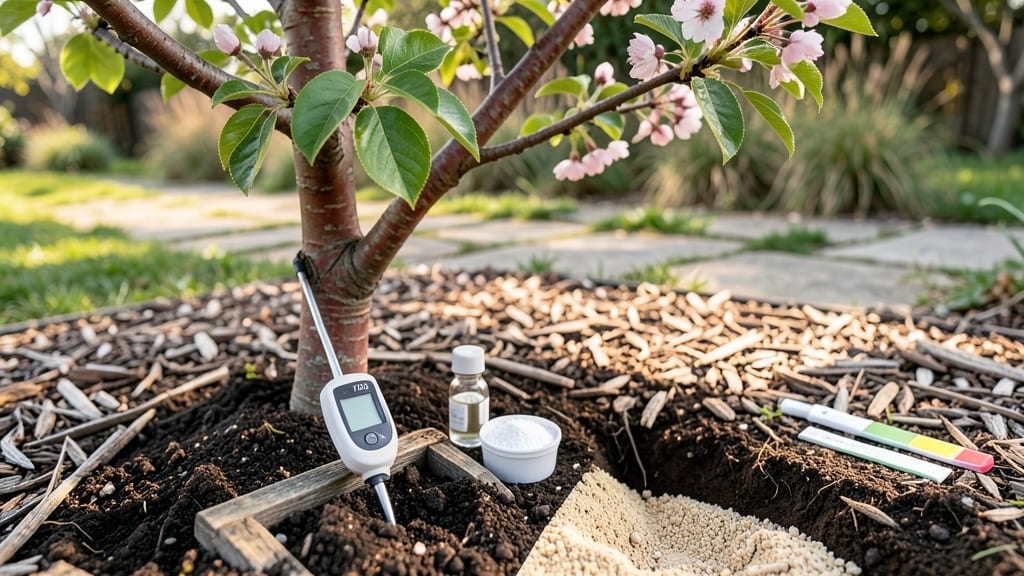
The ideal cherry tree soil pH sits between 5.0 and 6.5, a slightly acidic range that unlocks the sweetest fruit and healthiest growth—but most gardeners miss the mark without even knowing it.
Picture this: You’ve planted your 🌸 cherry tree with care, watered it religiously, and even pruned it just right. Yet the leaves yellow, the blooms drop early, and the cherries taste bland or never ripen.
The culprit? Soil pH that’s either too alkaline or not acidic enough to feed your tree properly.
This isn’t just about avoiding stunted growth—it’s about maximizing flavor, disease resistance, and long-term vitality. A pH outside the sweet spot starves your tree of essential nutrients like iron and zinc, leaving it vulnerable to pests and poor yields.
In this guide, I’ll show you how to test your soil’s pH, adjust it organically or chemically, and keep it in the perfect range year after year—so your cherry tree thrives from spring planting through summer harvest.
Optimal cherry tree soil pH range: why acidic soil is non-negotiable
Your cherry tree’s health hinges on one critical factor: soil pH. Unlike many fruit trees, cherries thrive only in acidic soil, with a narrow pH range of 5.0–6.5. This isn’t just a preference—it’s a biological necessity.
When soil pH strays outside this range, nutrient uptake falters, leaving your tree vulnerable to yellowing leaves, stunted growth, and poor fruit development. Even a slight shift can mean the difference between a bountiful harvest and a struggling sapling.
Sour cherries (like Montmorency) and sweet cherries (such as Bing or Rainier) both demand acidic soil, but their tolerance varies slightly. Sweet cherries often prefer the upper end (6.0–6.5), while sour cherries thrive at 5.0–6.0.
Ignoring this range can lead to chlorosis—where leaves turn yellow between veins—because the tree can’t absorb essential micronutrients like iron, zinc, and manganese, even if they’re present in the soil.
Here’s the kicker: cherry trees can’t tell you they’re unhappy. Instead, they send silent signals like small, sparse fruit, weak branches, or early leaf drop. These aren’t just cosmetic issues—they’re red flags that your soil’s pH is throwing a wrench into your tree’s ability to grow.
The good news? Testing and adjusting pH is simpler than you think, and the payoff is healthier trees and sweeter cherries.
Testing your soil’s pH is the first step to unlocking your cherry tree’s potential. You can use a home test kit (available at garden centers for under $10) or send a sample to a local extension office for professional analysis.
For a DIY test, simply mix soil with distilled water, add a few drops of pH indicator solution, and compare the color to the chart. If your soil tests above 6.5, it’s too alkaline, and nutrients like iron become locked away.
Below 5.0, and you risk aluminum toxicity, which can burn roots.
Adjusting pH takes patience but isn’t complicated. To lower pH (make soil more acidic), work in elemental sulfur or peat moss into the top 6–12 inches of soil. For raising pH, use pelletized lime, but apply it sparingly—overcorrecting can be just as harmful as undercorrecting.
Always test again in 2–3 months to monitor changes. Think of it like tuning a guitar: small adjustments make all the difference in performance.
Regional soil varies wildly, so don’t assume your backyard matches the ideal. Clay soils often lean alkaline, while sandy soils tend to be acidic. If you’re in the Pacific Northwest, your naturally acidic soil might already be perfect.
But in the Midwest or Southeast, where soils are often alkaline, you’ll likely need to acidify. Before amending, dig a hole near your tree, fill it with water, and observe how quickly it drains. Slow drainage signals compacted soil, which can trap moisture and alter pH unpredictably.
Once you’ve adjusted the pH, maintain it with organic matter. Compost, pine needles, and leaf mold
How to adjust soil pH for cherry trees: organic amendments vs. chemical fixes
Adjusting your cherry tree soil pH is like fine-tuning a recipe—get it wrong, and your tree won’t thrive. Most sweet and sour cherry varieties prefer a slightly acidic range of 5.0–6.5.
If your soil tests higher, nutrients like iron and manganese become locked away, causing yellowing leaves and poor fruit set. But how do you fix it? Let’s break down the best organic amendments vs. chemical fixes for your cherry tree’s health.
First, test your soil’s pH using a home test kit or send a sample to a local extension office. If your results show a pH above 6.5, your tree needs help accessing nutrients. If it’s below 5.0, the soil may be too acidic, harming root health.
The good news? Both issues are fixable with the right approach. Below, we’ll compare organic methods (like sulfur and pine needles) to chemical amendments (lime and aluminum sulfate) so you can choose what works best for your garden.
Organic vs. Chemical Soil pH Adjustments for Cherry Trees
Organic Amendments
- ✅ Pros: Slow-release, improves soil structure
- ✅ Pros: Safe for plants and wildlife
- ✅ Pros: Enhances microbial activity
- ❌ Cons: Takes longer to adjust pH
- ❌ Cons: Requires regular reapplication
Chemical Fixes
- ✅ Pros: Fast-acting results
- ✅ Pros: Precise pH adjustments
- ❌ Cons: Can disrupt soil microbes
- ❌ Cons: Risk of over-correcting pH
For organic amendments, consider adding elemental sulfur to lower pH. It’s a slow-release option that won’t shock your tree’s roots. Mix 1–2 pounds of sulfur per 100 square feet into the top 6 inches of soil in early spring or fall.
Another great choice is pine needles, which naturally acidify soil as they decompose. Spread a 2–3 inch layer around your tree’s drip line and mulch it in. Both methods take time but build long-term soil health.
If your soil is too alkaline, pelletized lime is the go-to chemical fix. Apply 5–10 pounds per 100 square feet in late fall or early spring, working it into the top 6 inches. For faster results, use aluminum sulfate, which lowers pH quickly.
However, use it sparingly—1–2 pounds per 100 square feet—as overuse can harm beneficial soil microbes. Always water the area thoroughly after applying any amendment to help it integrate evenly.
Avoid common mistakes like over-acidifying your soil or applying amendments unevenly. Test your soil again in 6–12 months to monitor progress.
If your cherry tree’s leaves still look unhealthy, consider a chelated iron supplement to boost nutrient uptake while you fine-tune the pH. Consistency is key—your tree will reward you with vibrant blooms and sweet, juicy cherries once the soil pH is just right.
Remember, the goal isn’t just to hit the ideal pH range but to maintain it. Regularly add compost or organic matter to keep the soil balanced and fertile. With patience and the right approach, your cherry tree will thrive for years to come. 🌱