
Tools
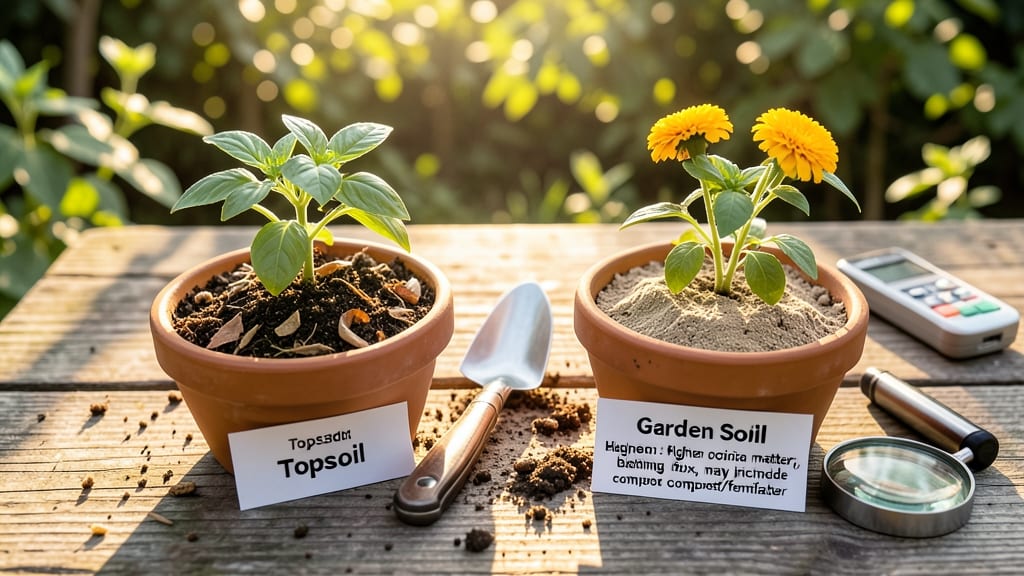
Understanding the difference between topsoil and garden soil can mean the difference between a thriving garden and a struggling one. 🌱 I've learned the hard way that not all soil is created equal—what works for filling a hole might starve your plants of nutrients they desperately need.
Topsoil is the basic building block of any garden, stripped of most nutrients and organic matter. It's what you'd find naturally at the surface of a lawn or field, and it's perfect for leveling beds or filling large planting holes.
But if that's all you use, your plants will fight for every scrap of food in the soil. Garden soil, on the other hand, is a nutrient-rich blend designed to help plants grow strong from day one.
It's already mixed with compost and fertilizers, so your seedlings get the head start they need. This is the stuff you want when starting a new flower bed or planting vegetables that demand rich soil.
The key difference comes down to texture and nutrients: topsoil is coarse and empty, while garden soil is fine and fertile. Use topsoil for structural projects, and garden soil for anything you want to grow.
The first product explained
Meet Miracle-Gro Garden Soil 🌱, the ultimate all-in-one solution for gardeners who want to skip the guesswork and dive straight into planting success!
This premium garden soil is specially formulated to provide the perfect balance of nutrients, moisture retention, and aeration—making it ideal for both beginners and seasoned green thumbs. Whether you're nurturing flowers, veggies, or shrubs, this soil is designed to give your plants the head start they deserve.
📏 Key Specs & Features
- Composition: Blend of composted organic matter, peat moss, and perlite for optimal drainage and nutrient-rich growth.
- Nutrient Boost: Enriched with slow-release fertilizer to feed plants for up to 3 months.
- Moisture Control: Retains water efficiently while preventing soggy roots—no more overwatering headaches!
- pH Balanced: Neutral pH (around 6.5) to support a wide variety of plants.
- Eco-Friendly: Made with 70% recycled materials, reducing waste and promoting sustainability.
- Coverage: One 1.5 cubic foot bag covers 12 sq. ft. at a 1-inch depth.
🎯 Who Is This For?
This garden soil is a game-changer for:
- 🌿 New gardeners who want hassle-free planting without soil science degrees.
- 🥬 Vegetable gardeners looking to maximize yields with nutrient-dense soil.
- 🌸 Flower enthusiasts aiming for vibrant, long-lasting blooms.
- 🏡 Urban gardeners with limited space (great for raised beds and containers!).
- 🌎 Eco-conscious plant lovers who prioritize sustainable gardening practices.
💰 Price Point & Value
Priced at $12.99 per 1.5 cubic foot bag, Miracle-Gro Garden Soil offers exceptional value. While it’s a slight investment upfront, the long-term benefits—like healthier plants, reduced fertilizer costs, and fewer failed crops—make it a worthwhile choice.
Plus, it’s widely available at home improvement stores, garden centers, and online retailers, so stocking up is a breeze!
Pro Tip: 💡 For even better results, mix this soil with a small amount of compost to further enhance its nutrient profile!
The second product explained
If you're looking for a versatile, nutrient-rich option that bridges the gap between pure topsoil and specialized garden blends, Miracle-Gro Garden Soil is a fantastic choice! 🌱 This premium product is designed to help your plants thrive right from the start, making it a favorite among both beginner and experienced gardeners.
Key Specs & Features
- Composition: A blend of composted organic matter, peat moss, and essential nutrients (including nitrogen, phosphorus, and potassium) for balanced growth.
- Texture: Lightweight yet moisture-retentive, ideal for containers, raised beds, and in-ground planting.
- Organic Matter: Contains 30% organic content, promoting long-term soil health and microbial activity.
- pH Level: Slightly acidic to neutral (pH 6.0–7.0), suitable for most vegetables, flowers, and shrubs.
- Coverage: 1 cubic foot covers ~10 sq. ft. when amended to 3 inches deep.
- Eco-Friendly: Made with renewable resources and designed to reduce waste.
Who Should Use It?
This soil is perfect for:
- 🌿 Container gardening (pots, hanging baskets, and window boxes).
- 🌻 Seed starting—gives seedlings a nutrient boost without being too dense.
- 🥬 Vegetable and herb gardens (tomatoes, peppers, lettuce, and herbs love it!).
- 🌺 Flower beds and perennials—encourages vibrant blooms and healthy roots.
- 🏡 Homeowners new to gardening who want a hassle-free, high-performance soil.
Price & Value
Priced at $4.99–$6.99 per 1.5 cubic foot bag (varies by retailer), Miracle-Gro Garden Soil offers excellent value for its quality and ease of use. While it’s slightly more expensive than basic topsoil, its nutrient density and convenience make it a cost-effective choice for long-term plant success.
Plus, many gardeners find they need fewer amendments (like compost or fertilizer) when using this soil!
Pro Tip: 💡 For even better results, mix this soil with 10–20% perlite or vermiculite to improve drainage in containers.
Head-to-head comparison
Now that we’ve explored the basics of topsoil and garden soil, let’s dive into a side-by-side comparison to help you decide which one fits your gardening needs best.
Whether you’re a seasoned pro or a beginner with a green thumb, understanding these differences will make your planting projects a breeze! 🌱✨
📊 Performance: What They Bring to Your Plants
When it comes to how each soil type supports plant growth, the differences are clear-cut.
- Topsoil:
- 🌱 Best for leveling and filling: Topsoil is like the foundation of your garden—it’s great for creating raised beds, filling in low spots, or preparing new planting areas. It provides a solid base but lacks the organic richness plants crave.
- 🌿 Moderate nutrient content: While it contains some organic matter, it’s not as nutrient-dense as garden soil. Think of it as a "blank canvas" that needs amendments (like compost) to become truly fertile.
- 💧 Drainage: Generally drains well, which is ideal for root vegetables like carrots or potatoes that dislike soggy conditions.
- Garden Soil:
- 🌿 Ideal for planting: This is the MVP of planting soils! It’s already blended with compost, peat moss, or other organic materials, giving your plants a nutrient-rich environment right out of the bag.
- 🍃 Supports microbial life: The added organic matter encourages beneficial bacteria and fungi, which break down nutrients into forms plants can easily absorb.
- 💧 Moisture retention: Holds water better than topsoil, making it perfect for thirsty plants like tomatoes or flowers that need consistent hydration.
🏷️ Features: Composition and Texture
If you’ve ever wondered what’s actually in the bag, this breakdown will give you the scoop!
| Topsoil | Garden Soil | |
|---|---|---|
| Primary Ingredients | Mineral particles (sand, silt, clay) with minimal organic matter (typically 5-10%) | Mineral particles plus organic amendments like compost, peat moss, or aged manure (20-40% organic matter) |
| Texture | Can be coarse or fine, depending on the mineral composition (often sandy or loamy) | Softer and crumbly, with a higher proportion of fine organic particles for better aeration |
| pH Level | Varies widely (often neutral to slightly acidic, depending on source) | Usually amended to be more balanced (often slightly acidic to neutral, but some blends are tailored for specific plants) |
| Color | Brown or reddish-brown (mineral-heavy) | Darker brown or black (due to high organic content) |
💰 Price: Your Wallet Will Thank You for Knowing This
Budget-friendly gardening starts with understanding the cost differences. Here’s the lowdown:
- Topsoil:
- 💸 More affordable: Typically costs $10–$30 per cubic yard (or $0.50–$1.50 per 2-cubic-foot bag). It’s the budget-friendly choice for large projects like landscaping or filling in areas.
- 📦 Bulk discounts: Buying in bulk (e.g., by the truckload) can drop the price even lower, making it ideal for commercial or large-scale gardening.
- Garden Soil:
- 💸 Pricier but worth it: Usually costs $20–$50 per cubic yard (or $2–$5 per 2-cubic-foot bag). The higher price reflects its nutrient-rich composition and convenience.
- 🌿 Smaller quantities needed: Because it’s so effective, you’ll use less of it compared to topsoil, which can balance out the cost for small gardens or containers.
Pro Tip: 💡 If you’re on a tight budget, consider mixing topsoil with compost or aged manure to create a DIY garden soil blend. It’s a cost-effective way to get the best of both worlds!
🏗️ Durability: How Long They Last
Not all soil is created equal when it comes to longevity. Here’s how each holds up over time:
- Topsoil:
- ⏳ Long-term stability: Once spread and compacted, topsoil maintains its structure well, especially in raised beds or landscaping projects. It won’t break down like organic matter.
- 🔄 But... It doesn’t replenish nutrients on its own. Over time, you’ll need to add compost or fertilizer to keep plants thriving.
- Garden Soil:
- ⏳ Short-term fertility: The organic matter in garden soil will decompose over time (usually within 1–3 years, depending on how much you use and the climate).
- 🌱 Renewable: You can refresh it by adding more compost or organic amendments to extend its fertility.
- 💡 Pro Tip: For containers or small gardens, garden soil can be "reused" by mixing in fresh compost each season to keep it productive.
🌍 Best Uses: When to Pick Which
Still unsure which soil to choose? Here’s a quick guide to match your project:
| Topsoil | Garden Soil | |||||||||||||||
|---|---|---|---|---|---|---|---|---|---|---|---|---|---|---|---|---|
| Landscaping | ✅ Perfect for leveling yards, creating slopes, or filling in low areas | ❌ Not ideal—too expensive for large-scale projects | ||||||||||||||
| Raised Beds | ✅ Use as a base layer, then mix with compost | ✅ Great for topping the bed after topsoil is in place | ||||||||||||||
| Vegetable Gardens | ❌ Needs amendments to be effective | ✅ Ideal for direct planting—nutrients are already there! | ||||||||||||||
| Flowers and Shrubs | ❌ May require extra fertilizer | ✅ Perfect for potted plants or in-ground planting | ||||||||||||||
| Lawns |
Which one should you choose?So, which soil is the right fit for your green thumb goals? The answer depends on your project, budget, and plant needs. Let’s break it down so you can make the best choice with confidence! 🌱 🌿 Choose Topsoil If...
🌻 Choose Garden Soil If...
💡 Pro Tip for Hybrid SolutionsWhy not blend them? For raised beds or containers, mix two-thirds topsoil with one-third garden soil to balance drainage and nutrients. This combo works wonders for most plants while keeping costs reasonable. 🚜 Final Checklist Before You Buy
Still unsure? Start small! Buy a bag of each and test them in different areas of your garden. Observe how plants respond—your green thumb will thank you. Happy digging! 🌟 |