
Trees
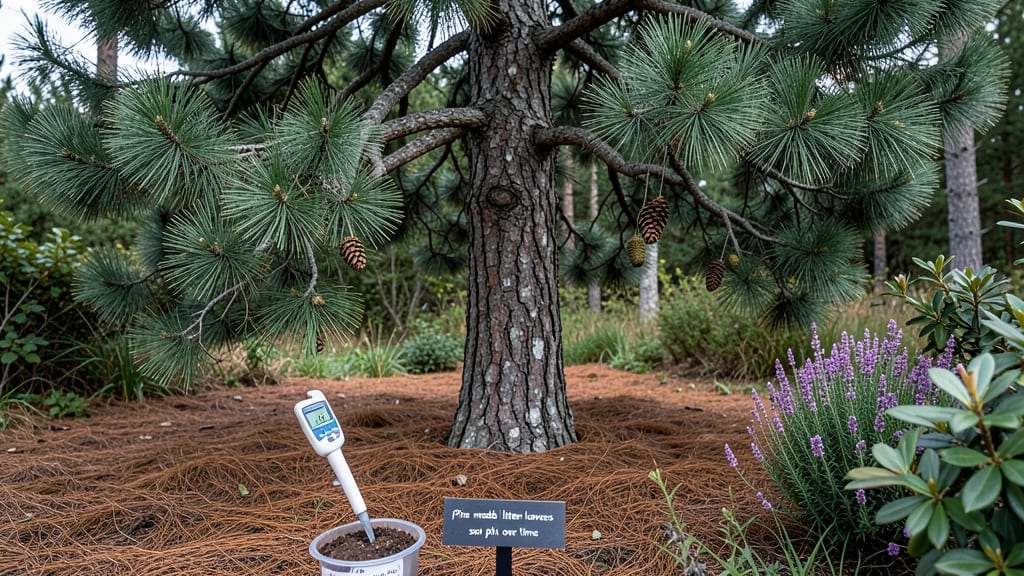
Pine trees do make soil acidic by releasing organic acids from decomposing needles and roots, which lowers soil pH over time—often creating ideal conditions for acid-loving plants like blueberries and rhododendrons but challenging others.
This happens because pine needles contain high levels of tannins and resins that break down into acidic compounds as they decompose. 🌲 The process is natural—pine roots also excrete organic acids that further acidify the soil, often dropping pH levels between 4.5 and 6.0 over time.
While this benefits acid-loving plants, it can stress out vegetables and flowering plants that prefer neutral or alkaline soil.
What's interesting is how this acidification affects the entire ecosystem. The soil chemistry shifts not just from the needles but also from the pine's natural litter layer, which can take years to decompose fully.
This slow-release acidity makes pine forests self-sustaining for certain plant species but requires careful management if you're trying to grow a diverse garden underneath.
💡 In This Article
- How Pine Needles and Roots Acidify Soil
- Managing Pine Tree Soil for Mixed Gardens
How pine needles and roots acidify soil
Pine trees create acidic soil primarily through two biochemical processes: needle decomposition and root exudation. When pine needles fall, they form a thick, slow-decomposing layer called "duff." These needles contain high concentrations of tannins and resins—compounds that break down into humic and fulvic acids during decomposition.
These organic acids lower soil pH by releasing hydrogen ions (H+) into the soil matrix, similar to how vinegar acidifies water.
The process accelerates in moist conditions, where microbial activity thrives. Studies show that under pine canopies, soil pH can drop from a neutral 7.0 to acidic levels between 4.5 and 5.5 over 5-10 years.
This contrasts sharply with hardwood trees like oaks, whose leaves decompose into less acidic humus, maintaining pH around 6.0-7.0. The difference is stark when you compare a pine forest's 4.5 pH soil to a mixed woodland's 6.5 pH—a 2.0 pH unit gap that dramatically alters plant growth.
Pine roots contribute further through a process called "rhizosphere acidification." Roots excrete organic acids like citric and oxalic acid to mobilize nutrients like phosphorus and iron. These acids create a 1-2 inch acidic zone around roots where pH can drop to 3.5-4.5.
This localized acidity helps pines absorb nutrients efficiently but creates a hostile environment for many garden plants. The scent of fresh pine needles—resinous and sharp—is a sensory clue to this chemical activity at work.
Microbial communities play a supporting role. Fungi and bacteria in pine forests thrive in acidic conditions, breaking down organic matter more slowly than in neutral soils. This creates a nutrient-rich but slow-release system perfect for acid-loving plants like blueberries (pH 4.5-5.5) and azaleas (pH 5.0-6.0).
The trade-off? Most vegetables and flowering plants struggle in these conditions, which is why pine forests naturally support fewer plant species than mixed forests.
What's fascinating is how this acidification creates a feedback loop. The acidic soil slows decomposition, allowing more needles to accumulate, which further lowers pH. This self-reinforcing cycle explains why pine forests maintain their acidic soil for centuries without human intervention.
The visual contrast between a lush pine forest understory and a struggling vegetable garden nearby demonstrates this effect clearly.