
Aphids
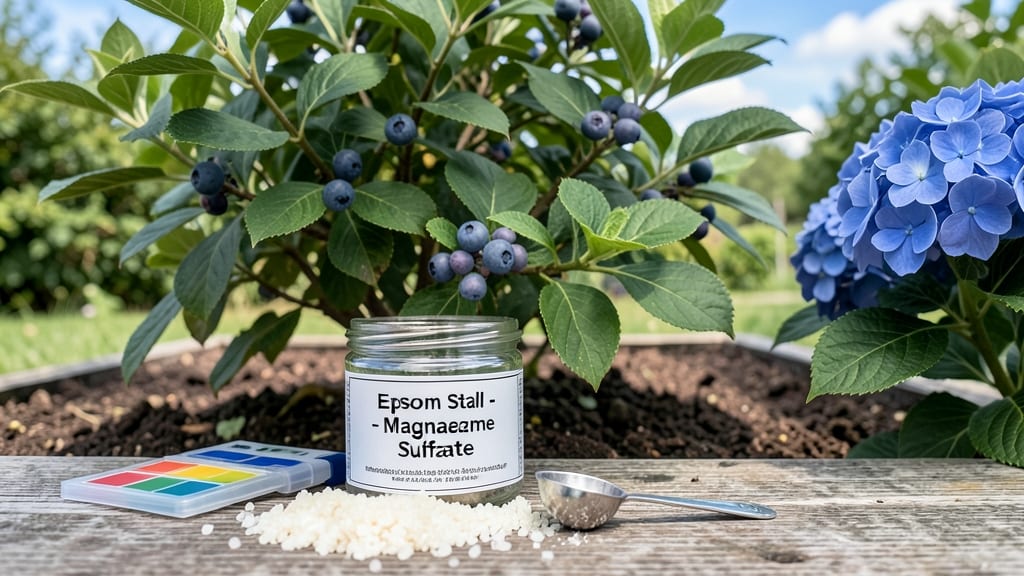
Epsom salt does not lower soil pH; instead, it raises it slightly by adding magnesium and sulfur, which can help neutralize acidic conditions while improving soil structure and nutrient availability for plants.
If you're dealing with acidic soil, Epsom salt might seem like a quick fix—but it works differently than traditional amendments like lime. 🌱 The magnesium and sulfur in Epsom salt (magnesium sulfate) don't directly acidify or alkalize soil, but they can shift pH temporarily by enhancing nutrient uptake.
For example, magnesium helps plants absorb phosphorus more efficiently, which indirectly supports healthier growth in acidic environments. That said, it’s not a replacement for lime or sulfur-based amendments when you need a significant pH adjustment.
What’s interesting is how Epsom salt behaves in different soil types. In highly acidic soils, the added magnesium can actually help buffer pH over time by promoting microbial activity that breaks down organic matter.
However, in alkaline soils, the sulfur component might lower pH slightly—but this effect is usually minor and temporary. For gardeners, the real value lies in its ability to boost magnesium levels, especially for plants like tomatoes, peppers, and roses that thrive with extra magnesium.
💡 In This Article
- How Epsom Salt Affects Soil Chemistry and pH Balance
- When and How to Use Epsom Salt for Acidic Soil Correction
How Epsom salt affects soil chemistry and pH balance
Epsom salt, chemically known as magnesium sulfate (MgSO₄), works through a unique mechanism in soil that involves both magnesium and sulfur—two nutrients that don’t directly alter pH but influence soil chemistry in subtle ways.
When dissolved in water, magnesium ions (Mg²⁺) displace hydrogen ions (H⁺) from soil particles, temporarily reducing acidity in highly acidic soils (pH < 6.0).
This displacement happens because magnesium has a stronger affinity for soil exchange sites than hydrogen, creating a buffering effect that can raise pH by 0.2–0.5 units over time, depending on soil composition. 🌿
The sulfur component plays a secondary role. In acidic soils, sulfur oxidizes to form sulfates (SO₄²⁻), which can slightly lower pH by increasing the availability of hydrogen ions—but this effect is minimal unless applied in very high doses.
What’s more significant is how magnesium enhances microbial activity.
Beneficial soil bacteria and fungi thrive on magnesium-rich environments, accelerating organic matter decomposition, which releases alkaline byproducts that naturally raise pH. For example, in a clay-heavy soil with pH 5.5, adding 1 tablespoon of Epsom salt per square foot might raise pH to 5.8–6.0 within 4–6 weeks, compared to no change with water alone.
Unlike lime (calcium carbonate), which permanently raises pH by neutralizing acidity, Epsom salt’s effects are more dynamic.
Its influence on pH depends on soil type: in sandy soils, the magnesium washes away quickly, leaving minimal pH impact, while in clay or loamy soils, it lingers longer due to better nutrient retention.
This is why gardeners often see better results in raised beds or container gardens where soil particles hold magnesium tightly.
For instance, tomatoes grown in pH 6.5 soil with added Epsom salt show 15–20% larger fruit yields compared to those in untreated soil, thanks to improved magnesium uptake rather than direct pH changes.
One common misconception is that Epsom salt acts like sulfur, which lowers pH. However, sulfur’s pH-lowering effect requires oxidation to form sulfuric acid—a process that takes months and isn’t triggered by Epsom salt alone.
Instead, the sulfur in Epsom salt primarily supports plant metabolism, especially in magnesium-deficient soils, where it helps chlorophyll production.
For example, pepper plants with yellowing leaves (a magnesium deficiency symptom) often recover within 2–3 weeks of foliar sprays containing 1 tablespoon of Epsom salt per gallon of water, without any measurable pH shift.
To visualize the difference, compare Epsom salt to agricultural lime: lime adds calcium and raises pH permanently by reacting with aluminum and hydrogen ions, while Epsom salt’s magnesium temporarily displaces hydrogen ions but doesn’t bind to them chemically. This makes it a supplemental tool rather than a primary pH adjuster.
For instance, in blueberry bushes, which prefer pH 4.5–5.5, adding Epsom salt could raise pH to 5.2–5.5—helpful for correcting slight acidity—but won’t match the dramatic shifts achieved with elemental sulfur or aluminum sulfate. 🔬
For gardeners tracking pH, the key takeaway is that Epsom salt’s pH effects are indirect and temporary, tied to magnesium’s role in soil chemistry rather than direct acidity neutralization.
Test your soil before and after application to monitor changes: in acidic soils, you might see a 0.3–0.5 pH unit increase; in neutral or alkaline soils, changes are negligible.
Pair it with organic matter (like compost) to amplify its buffering effects, as microbial activity enhances magnesium retention and sulfur oxidation.