
How To
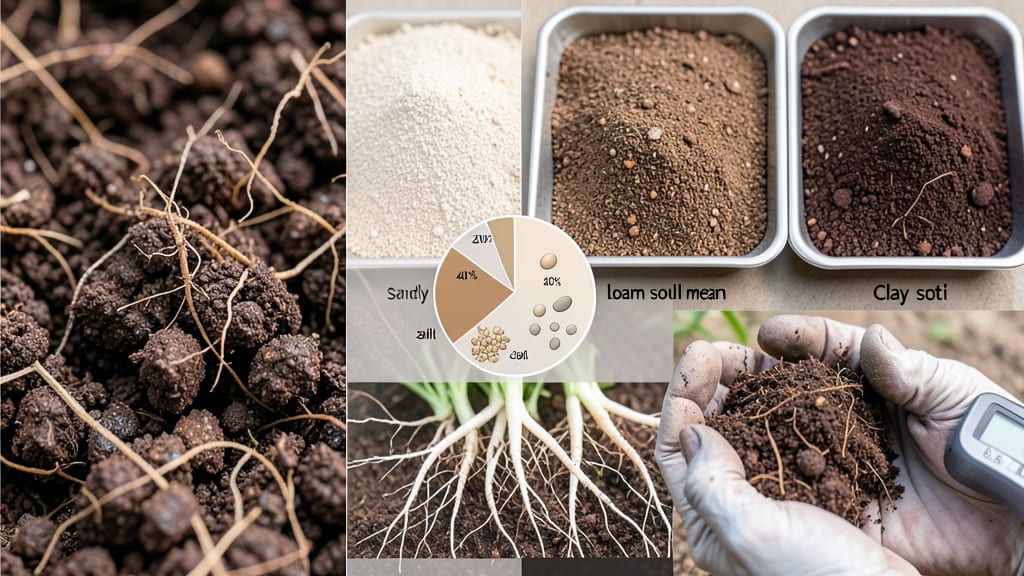
Loam soil means a balanced mix of sand, silt, and clay—ideal for plant growth because it combines drainage, aeration, and nutrient retention in one perfect package.
Loam soil gets its reputation as the gardener's dream because of how it balances three key components: sand for drainage, silt for moisture retention, and clay for nutrient storage. 🌱 The 40-40-20 ratio isn't just arbitrary—it creates that signature crumbly texture that roots love.
Unlike pure sand (which drains too fast) or heavy clay (which suffocates roots), loam gives plants the perfect environment to thrive. This is why professional growers often aim to create loam-like conditions, even when starting with less-than-ideal native soil.
What makes loam truly special is how it adapts to different plants. Vegetables like tomatoes and peppers love its moisture balance, while perennials benefit from its long-term nutrient availability. The secret lies in those particle sizes working together—sand prevents compaction, silt holds water near roots, and clay binds essential minerals.
It's not just about the numbers, though; the organic matter mixed in (like decomposed plant material) further enhances its fertility. That's why even the best loam benefits from regular compost additions!
💡 In This Article
- The Science Behind Loam Soil Composition
- How to Test and Improve Your Garden’s Loam Soil
The science behind loam soil composition
Loam soil achieves its perfect balance through precise particle ratios that create a physical structure plants adore. The 40% sand component provides the largest particles (0.05-2mm), creating air pockets that prevent compaction while allowing excess water to drain quickly.
Without this drainage, roots would suffocate—just look at how clay-heavy soils often develop that brick-like hardness when wet. Meanwhile, the 40% silt (0.002-0.05mm) acts like microscopic sponges, holding water and nutrients right where roots can access them.
This is why loam can retain 50-60% of its weight in water without becoming waterlogged.
The remaining 20% clay (<0.002mm) might seem small, but these tiny plates create a vast surface area—up to 1,000 square meters per gram—that binds essential nutrients like potassium and magnesium. This nutrient-capturing ability explains why loam often appears darker than sandy soils.
What's fascinating is how these particles interact: the clay coats sand grains, while silt fills the gaps, creating that signature crumbly structure that breaks apart easily when squeezed.
Compare this to pure clay soil, which might hold nutrients but suffocates roots due to poor aeration, or sandy soil that drains too fast, leaching nutrients away.
This particle interplay directly affects root penetration. In loam, roots can spread easily through the 10-30% pore space (the air-water channels), while in compacted clay soils, roots often struggle to grow deeper than 6 inches.
The science gets even more interesting when you consider how organic matter—like decomposed leaves or compost—further enhances loam's structure. These materials act as glue between mineral particles, creating stable aggregates that resist erosion.
That's why even "poor" loam benefits dramatically from 2-5% organic matter, transforming it into the fertile medium gardeners covet.
Temperature also plays a subtle but important role. Loam's balanced structure helps maintain more stable soil temperatures—typically 5-10°F cooler in summer and 5-10°F warmer in winter compared to pure sand. This stability creates ideal conditions for microbial activity, which breaks down organic matter into plant-available nutrients.
The microbial population in healthy loam can reach 100 million bacteria per gram of soil, compared to just 10,000 in sandy soil. This microbial ecosystem is what gives loam its reputation for rapid plant recovery after disturbances.
What most gardeners don't realize is how loam's composition changes with depth. The surface 6-12 inches often contains more organic matter (giving it that dark color), while deeper layers may have slightly more clay for structural support.
This vertical variation explains why deep-rooted plants like fruit trees thrive in loam—they get both immediate nutrient access and long-term stability. The key to maintaining this balance is understanding how each component contributes: sand for drainage, silt for moisture, and clay for nutrients, all working in perfect harmony. 🌱
Consider this comparison: a sandy loam (60% sand) drains faster but may need more frequent watering, while a clay loam (30% clay) holds moisture longer but requires more organic matter to prevent compaction. The ideal loam falls right in the middle, offering the best of both worlds.
This is why professional growers often blend native soils with amendments to achieve that perfect 40-40-20 ratio, creating the foundation for thriving gardens. The science isn't just about numbers—it's about creating the right environment where plants can focus on growing rather than struggling to survive.