
Tools
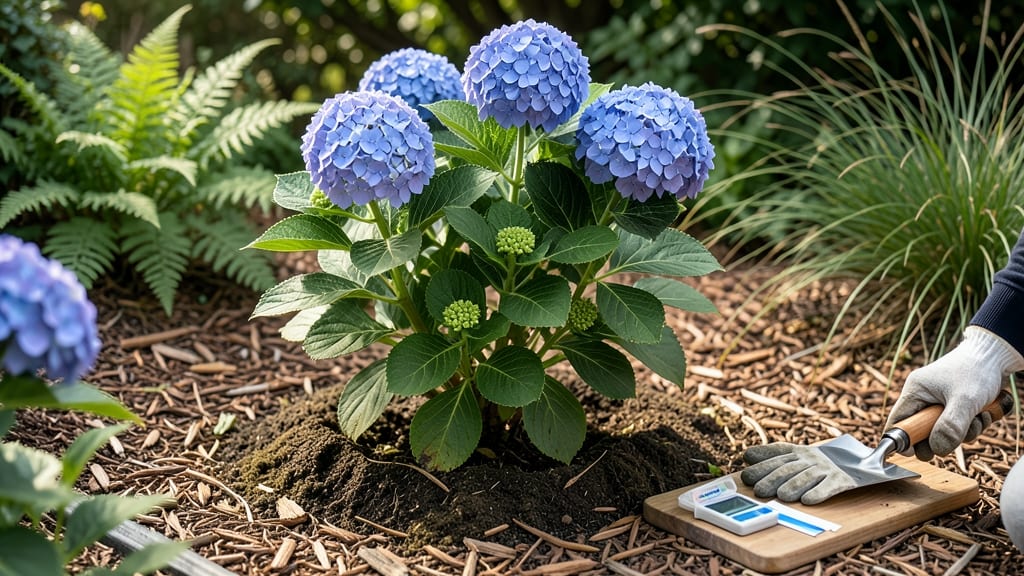
Your hydrangeas deserve soil that delivers vibrant blooms—not the sad, pale flowers you get from generic garden soil. 🌸 The secret lies in creating an acid-infused loam that mimics their natural woodland habitat, where the pH and organic matter work together like magic.
Start with a mix that’s 60% topsoil, 30% peat moss or pine bark, and 10% perlite for drainage. Hydrangeas crave slightly acidic soil (pH 5.2–6.0) for those signature blue or pink blooms, but most garden soil leans alkaline.
A simple pH test kit will tell you what adjustments you need—sulfur lowers pH, while lime raises it. Once your soil is dialed in, add aged compost or worm castings to feed the roots without overwhelming them. The result? Blooms so lush they’ll make your neighbors ask for your secret.
This mix works for both in-ground plantings and containers, giving you flexibility for any space. For best results, test your soil every 2–3 years—hydrangeas are picky, but they reward patience with showstopping color that lasts all summer. Here’s how to get it right the first time.
📚 In This Guide
- What you need
- Instructions
- Tips and common mistakes
- Wrapping up and next steps
What you need
- ● Peat moss or coconut coir – 2 parts (holds moisture, adds acidity)
- ● Garden loam or topsoil – 1 part (provides structure and nutrients)
- ● Perlite or coarse sand – 1 part (improves drainage, prevents compaction)
- ● Sphagnum peat or pine bark fines – 1 part (boosts acidity, retains moisture)
- ○ Sulfur or aluminum sulfate – Optional but helpful (adjusts pH to 5.0–6.0)
- ● Compost or well-rotted manure – ½ part (adds organic matter and nutrients)
- ● Slow-release fertilizer (10-10-10 or acid-loving blend) – Follow package instructions
- ● Garden gloves – Protect your hands from sharp materials and soil
- ● Garden trowel or spade – For mixing and amending soil in place
- ● Wheelbarrow or large bucket – To blend materials easily (aim for 5+ gallons per hydrangea)
- ● pH test kit – Highly recommended to monitor acidity levels
- ● Watering can or hose – For hydrating the mix before planting
- ○ Mulch (pine needles or bark) – Optional to maintain soil acidity over time
Step-by-Step guide to creating the perfect hydrangea soil mix
Here’s how I blend nutrient-rich, acid-infused loam for hydrangeas that burst with color every season.
🌱 Step 1: Gather the Base Materials for Acidic Drainage
Start with 50% high-quality garden soil—this anchors the mix and provides essential minerals. I use a blend of topsoil and composted leaf mold for organic matter that retains moisture while allowing roots to breathe. Sift out any large clumps or debris to create a fine, workable texture. If your native soil is heavy clay, mix in 25% coarse sand or perlite to improve drainage—hydrangeas hate soggy roots.
Next, add 25% peat moss or coconut coir—this holds moisture and lowers the pH naturally. I prefer coconut coir because it’s sustainable and less prone to compacting over time. Spread the materials evenly in a wheelbarrow or large container, then fluff them together with a garden fork to aerate the mix before adding amendments.
💧 Step 2: Acidify and Fertilize for Blue or Pink Blooms
Hydrangeas thrive in soil with a pH of 5.0–6.0 for blues or 6.0–7.0 for pinks. To lower pH, work in 1 cup of sulfur per 5 gallons of mix—this breaks down over time to create the ideal acidic environment. For a quick boost, add 1 tablespoon of aluminum sulfate per gallon (this also intensifies blue blooms). Mix thoroughly with a shovel, then sprinkle 1/2 cup of bone meal for phosphorus—hydrangeas crave this nutrient for strong root and flower development.
For ongoing fertility, blend in 1/2 cup of organic compost or 1/4 cup of worm castings per 5 gallons. These provide slow-release nutrients that keep plants thriving without burning roots. Avoid fresh manure—it can raise soil pH too quickly and disrupt the delicate balance hydrangeas need.
☀️ Step 3: Test and Adjust for Optimal Conditions
Before planting, test the mix’s moisture retention by squeezing a handful—it should hold together but not drip water. If it feels too dry, add 10% more peat moss or compost; if it’s too dense, incorporate 5% additional perlite or coarse sand. I like to dig a 6-inch-deep hole, fill it with the mix, and water it thoroughly. Wait 24 hours—if water pools on top, the drainage needs improvement.
For a final pH check, use a soil test kit (available at garden centers). If the pH is too high, add another 1/2 cup of sulfur per 5 gallons and remix. If it’s too low, sprinkle 1/4 cup of garden lime and retest in a week. Hydrangeas are finicky about pH, so precision here means the difference between vibrant blooms and sparse foliage.
✂️ Step 4: Plant and Maintain the Acidic Loam
Dig a hole twice as wide as the hydrangea’s root ball but no deeper. Gently loosen the roots if they’re circling, then place the plant so the top of the root ball sits 1 inch below soil level—this encourages strong root growth. Backfill with your custom mix, tamping lightly to eliminate air pockets. Water deeply to settle the soil and encourage root contact.
Mulch the surface with 2–3 inches of pine bark or shredded leaves to preserve moisture and slowly acidify the soil over time. I avoid wood chips near the base—they can rob nitrogen as they break down. Replenish the mulch annually, and retest soil pH every 2–3 years to ensure it stays in the ideal range for your desired bloom color.
Tips & tricks for perfect hydrangea soil mix
Here's what I've learned after years of growing hydrangeas with vibrant blooms—these tricks ensure your soil mix stays optimal for years.
Soil Texture Matters: In Step 1, when combining your 50% garden soil with 25% peat moss or coconut coir, aim for a texture that resembles "crumbly cake batter." This balance ensures proper aeration while retaining moisture. If your mix feels too dense after adding amendments, incorporate an extra 5% perlite—this prevents compaction that can suffocate roots. I've found that hydrangeas in overly dense soil often show yellowing leaves despite proper pH levels.
pH Precision Pays Off: The 5.0–6.0 range for blue blooms and 6.0–7.0 for pinks isn't just arbitrary—it's where aluminum becomes available for blue flowers. For maximum color intensity, test your final mix with a soil test kit before planting. I've seen dramatic color shifts after adjusting pH by just 0.3 points. Remember that aluminum sulfate works faster than sulfur, so use it sparingly if you're aiming for immediate results.
Drainage Test is Non-Negotiable: That 24-hour drainage test in Step 3 isn't just a suggestion—it's critical. After filling your 6-inch-deep hole and watering thoroughly, if water pools after 24 hours, add another 5% perlite or coarse sand. I once planted a hydrangea in mix that failed this test, and within weeks, the roots began to rot despite perfect pH levels. This simple test prevents costly mistakes.
Mulch Selection Strategy: When choosing your 2–3 inches of mulch, pine bark is my top recommendation because it slowly releases organic acids that maintain soil pH. Shredded leaves work too, but avoid cedar chips—they can inhibit root growth. I replenish my mulch annually in spring, which coincides with the plant's active growth period and helps maintain consistent soil conditions throughout the season.
Pro Tips for Garden Soil For Hydrangeas
- Here's what I've learned after years of growing hydrangeas with vibrant blooms—these tricks ensure your soil mix stay...
- Soil Texture Matters: In Step 1, when combining your 50% garden soil with 25% peat moss or coconut coir, aim for a te...
- pH Precision Pays Off: The 5.0–6.0 range for blue blooms and 6.0–7.0 for pinks isn't just arbitrary—it's where alumin...
Frequently asked questions
Got questions about crafting the perfect garden soil for hydrangeas?
You’re in the right place! Here are answers to the most common queries—because happy hydrangeas start with happy roots.
What’s the ideal pH range for hydrangea soil?
Hydrangeas thrive in acidic soil with a pH between 5.0 and 6.0. For blue blooms, aim for 5.0–5.5; pink flowers prefer 6.0–6.5. Test your soil with a kit—it’s the easiest way to tweak acidity with sulfur or peat moss!
When is the best time to amend my garden soil for hydrangeas?
The early spring (before new growth) or fall (6–8 weeks before frost) are ideal. Avoid amending in summer heat—it stresses plants. Pro tip: Work compost or peat moss into the top 12 inches of soil for deep hydration and nutrient access.
Can I use regular garden soil for hydrangeas?
Not without adjustments! Regular soil is often too alkaline or compacted. Mix in 20–30% peat moss, pine bark fines, or compost to boost acidity and drainage. For heavy clay? Add perlite or sand to prevent root rot.
Why are my hydrangea leaves yellowing despite acidic soil?
Yellow leaves can signal overwatering, nutrient deficiency (like iron), or poor drainage. Check for:
- Soggy soil: Hydrangeas hate "wet feet"—improve drainage with gravel.
- Iron chlorosis: Boost iron with chelated iron supplements or composted leaves.
- Fungal issues: Space plants for airflow and mulch with pine needles.
Are there organic alternatives to peat moss for acid-loving soil?
Swap peat moss with:
- Pine bark fines (great for structure + acidity)
- Composted leaves or pine needles (slow-release acidity)
- Coconut coir (sustainable, holds moisture well)
Mix 1 part amendment to 3 parts native soil for balance.
Wrapping up and next steps
Creating the perfect garden soil for hydrangeas is all about balancing acidity, drainage, and nutrients—so your blooms stay bold and beautiful all season! 🌸 With the right mix of peat moss, pine bark, and compost, you’re setting your hydrangeas up for success.
Now that you’ve got the know-how, grab your gloves and get ready to transform your garden into a lush, vibrant paradise.
Your next step? Test your soil’s pH (aim for 5.2–5.5) and amend as needed. Then, watch those hydrangeas thrive—happy gardening! 🌱