
Vegetables
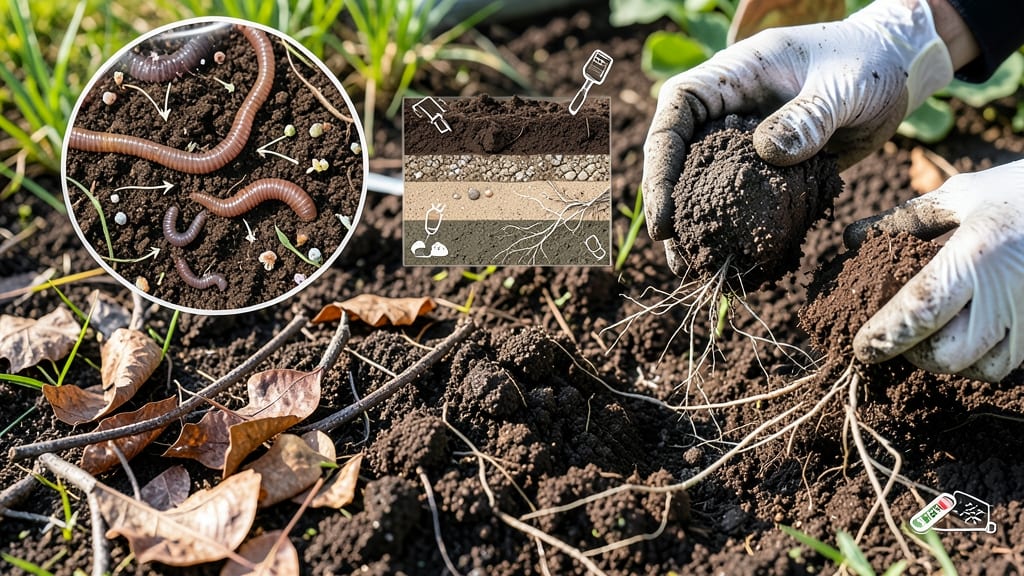
Topsoil is made through centuries of natural processes where rocks break down, organic material decomposes, and biological activity from roots and microbes creates nutrient-rich layers perfect for growing plants.
This slow transformation starts with parent material—rocks and minerals—that crumble through freeze-thaw cycles and chemical reactions. 🌱 Organic matter like fallen leaves and dead plants then mixes in, breaking down into humus with help from soil microbes and earthworms.
The result? A living, crumbly layer packed with essential nutrients that support everything from backyard gardens to vast farmlands.
What's fascinating is how climate plays a role: wetter regions form soil faster due to more decomposition, while drier areas take longer. Microbes act like tiny chefs, turning complex organic compounds into plant-accessible nutrients. Without this natural process, we'd have barren landscapes instead of fertile ground for growing food.
💡 In This Article
- Natural Factors Driving Topsoil Formation
- How to Enhance Topsoil Quality in Gardens
Natural factors driving topsoil formation
Topsoil creation begins with parent material—the bedrock or sediment beneath the surface—that undergoes physical weathering from freeze-thaw cycles, wind, and water erosion. For example, granite breaks down into smaller particles over thousands of years, while volcanic ash provides mineral-rich starting points.
These fragments then mix with organic matter like decomposed leaves, which microbes and fungi transform into humus—a dark, spongy substance packed with nutrients. 🌱
The process accelerates in temperate climates where moisture and moderate temperatures speed up decomposition. In tropical regions, rapid organic breakdown creates thick topsoil in centuries, while arid areas may take millennia.
Microbes play a starring role: bacteria like Pseudomonas and fungi such as Aspergillus break down complex compounds into simpler forms plants can absorb, releasing nutrients like nitrogen and phosphorus.
Biological activity further enriches the soil. Earthworms aerate the mix by tunneling, while plant roots secrete enzymes that dissolve minerals. This creates a living ecosystem where each component—minerals, microbes, and organic debris—works together.
Without this interplay, we'd have sterile mineral layers instead of fertile ground capable of sustaining crops or forests.
One surprising detail: acidic conditions (common in pine forests) slow nutrient release, while alkaline soils (like those in grasslands) promote faster mineral breakdown. The pH balance affects which microbes thrive, directly influencing how quickly topsoil forms.
For instance, legume roots form symbiotic relationships with nitrogen-fixing bacteria, adding another layer of fertility to the mix.
Consider this: A single inch of topsoil can take 500-1,000 years to form naturally. This explains why conservationists urge protecting existing soil—it's a non-renewable resource on human timescales.
The interplay of geology, biology, and climate creates the foundation for all terrestrial life, from towering redwoods to your backyard tomato plants. 🌿
What most people overlook is how disturbances like plowing or construction disrupt this delicate balance. When topsoil erodes, it takes centuries to replenish—highlighting why sustainable farming and land management are critical.
The natural process is a slow dance between destruction and creation, where every crack in a rock or fallen leaf contributes to the final product.