
Light Requirements
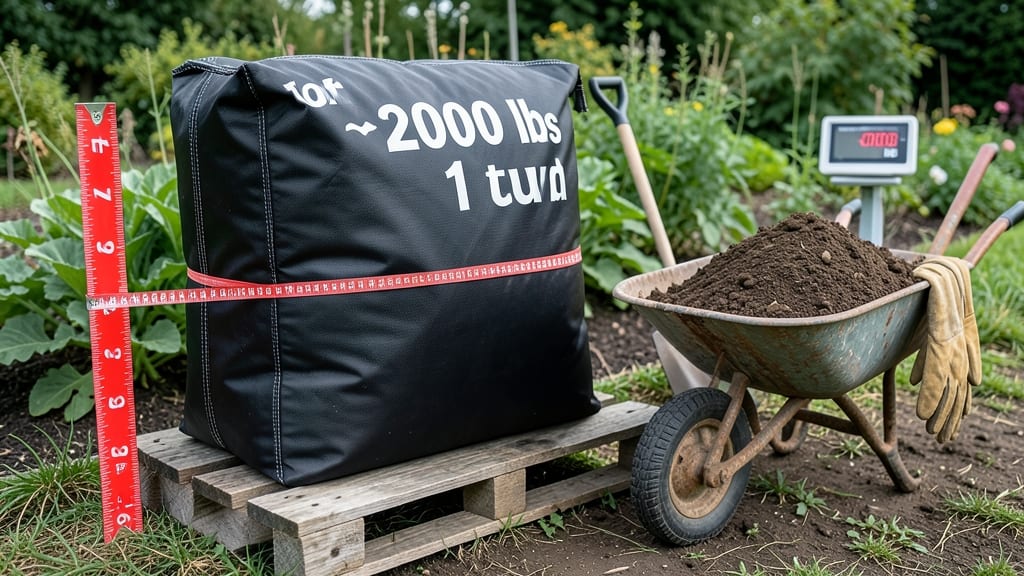
To determine how much 1 cubic yard of topsoil weighs, account for 1,800 to 2,200 pounds in dry conditions, but expect 2,500+ pounds when saturated with moisture or rich in organic matter—always confirm supplier specs before purchasing for landscaping projects.
Understanding topsoil weight is crucial because moisture plays a huge role—wet soil can weigh nearly 30% more than dry. 💧 For example, sandy topsoil stays lighter (closer to 1,800 lbs) while clay-heavy mixes approach 2,200 lbs when dry, but both can balloon with rain.
I always recommend calling your supplier to ask about their current moisture levels, as this affects both delivery costs and how much you'll actually receive per cubic yard.
This variation matters especially for large projects: a 10-cubic-yard order could swing between 18,000-22,000 lbs dry or 25,000+ lbs wet. That's why professional landscapers carry moisture meters—it directly impacts how many truckloads you need to rent or buy.
For home gardeners, ordering 10-15% extra gives you buffer room against unexpected weight increases.
💡 In This Article
- Factors That Change Topsoil Weight per Cubic Yard
- Practical Weight Estimates for Gardening Projects
Factors that change topsoil weight per cubic yard
Topsoil weight varies dramatically because it's not a uniform material—think of it like a dynamic ecosystem rather than a static substance. The primary driver is moisture content, which can add 20-30% more weight when saturated.
For example, a cubic yard of sandy topsoil might weigh 1,800 lbs dry but swell to 2,300 lbs after a heavy rain. Clay-based topsoil, which holds more water, can jump from 2,200 lbs dry to 2,800+ lbs when wet due to its higher water retention capacity. 💧
Organic matter plays a secondary but critical role—each 1% increase in organic content (like decomposed leaves or compost) can add 50-100 lbs per cubic yard. This is why garden soil often feels lighter but weighs more than construction-grade topsoil, which is stripped of organics.
The science behind this lies in bulk density: organic matter creates air pockets that reduce compaction, while minerals like sand or clay pack tightly, increasing weight. A lab test of typical garden soil shows bulk densities ranging from 60-80 lbs per cubic foot (1,800-2,400 lbs per cubic yard).
Compaction is another hidden factor—vibrations from delivery trucks can increase density by 10-15%, making freshly delivered soil heavier than when loose in the ground. For instance, a pallet of topsoil might weigh 1,900 lbs when stacked but settle to 2,100 lbs after spreading.
This explains why suppliers often underestimate weight in marketing—what they measure in loose piles doesn't account for real-world compaction during use. 🏗️
Soil composition creates predictable patterns: sandy loam (40% sand, 40% silt, 20% clay) typically weighs 1,900-2,000 lbs/cu yd dry, while clay loam (20% sand, 30% silt, 50% clay) can exceed 2,200 lbs.
The key difference lies in particle size—clay particles are 100x smaller than sand grains, packing more tightly. Even a 5% clay increase can add 100 lbs/cu yd to the weight.
For precise calculations, soil scientists use the formula: Weight = Bulk Density × Volume, where bulk density accounts for all these variables.
Temperature also sneaks into the equation—warmer soil holds slightly less moisture due to evaporation, making it 50-100 lbs lighter per cubic yard in summer compared to spring. This seasonal variation explains why winter deliveries often feel "heavier" for the same volume.
For example, a 20-cubic-yard order in December might tip the scales at 42,000 lbs (2,100 lbs/cu yd), while the same order in July could weigh 39,000 lbs (1,950 lbs/cu yd). 🌡️
What most people overlook is how salinity and mineral content affect weight—soils rich in calcium carbonate (like limestone) can add 150-200 lbs/cu yd compared to organic-rich soils. For instance, topsoil from volcanic regions often weighs 2,300-2,500 lbs/cu yd dry due to heavier mineral deposits.
This regional variation is why local suppliers' weights differ from national averages—always ask for a moisture-adjusted weight certificate for large orders.