
Light Requirements
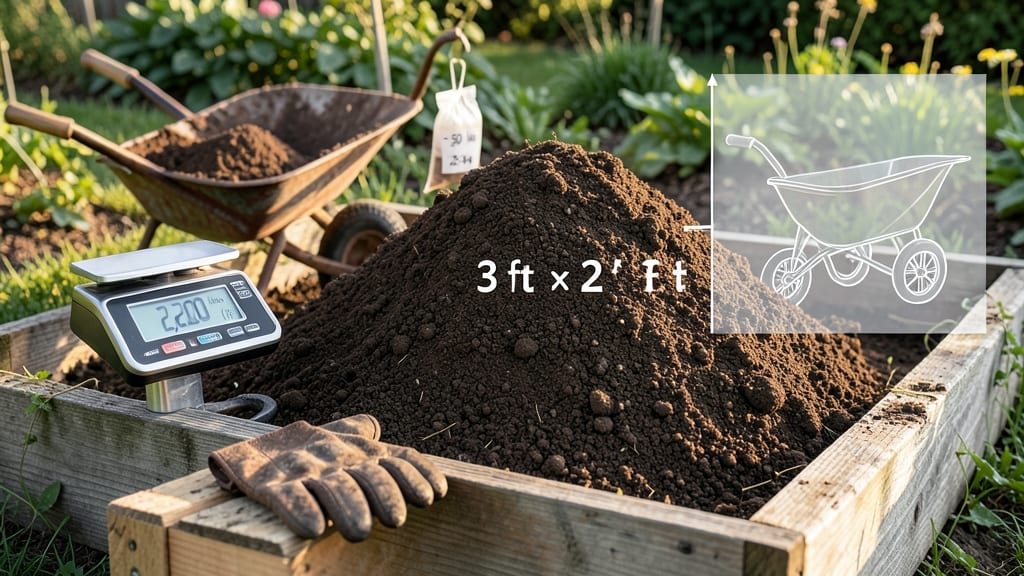
To determine how much one cubic yard of topsoil weighs, expect 2,000 to 2,800 pounds based on moisture levels and soil type. Dry, sandy soil sits at the lighter end, while heavier clay or moist soil can push beyond 2,800 pounds. Always verify with suppliers for precise project needs.
Understanding topsoil weight is crucial for landscaping projects, especially when planning deliveries or truck loads. 🔥 The moisture content plays a huge role—wet soil can weigh up to 30% more than dry soil of the same volume.
For example, a bag of dry topsoil might list 40 pounds, but when saturated, that same bag could weigh closer to 50 pounds. I always recommend testing soil moisture before ordering large quantities to avoid surprises during delivery.
Different soil compositions also affect weight significantly. Sandy soil is naturally lighter due to its loose particles, while clay-heavy soil packs more densely, increasing the overall weight. Loamy soil, often considered ideal for gardening, typically falls in the mid-range of 2,200 to 2,600 pounds per cubic yard.
Knowing your soil type helps estimate more accurately for projects like garden beds or lawn topdressing.
💡 In This Article
- Factors Affecting Topsoil Weight by Type and Moisture
- Calculating Topsoil Weight for Landscaping Projects
Factors affecting topsoil weight by type and moisture
Soil weight varies dramatically based on its particle composition and moisture levels. The three primary soil types—sand, silt, and clay—each have distinct densities due to their particle sizes. Sandy soil, with its large, loosely packed grains, typically weighs 100-120 pounds per cubic foot (about 2,000-2,400 pounds per cubic yard).
Clay soil, with its tiny, tightly packed particles, can reach 130-150 pounds per cubic foot (or 2,600-3,000 pounds per cubic yard), making it significantly heavier. Loamy soil, the ideal gardening mix, usually falls between 110-130 pounds per cubic foot (around 2,200-2,600 pounds per cubic yard).
The moisture content can shift these weights by 20-30% or more. Water fills the spaces between soil particles, adding significant bulk. For instance, dry sandy soil at 100 pounds per cubic foot might swell to 130 pounds per cubic foot when saturated—an increase of 30% in weight.
This is why spring deliveries often feel heavier than summer ones, as soils naturally retain more moisture after rain. 💧 Organic matter also plays a role; compost-rich topsoil often weighs slightly less than mineral-heavy soil due to its porous structure, but it retains moisture better, increasing weight variability.
Temperature and compaction further influence weight. Cooler soils hold moisture longer, increasing density, while warm, dry conditions reduce weight. For example, a freshly tilled garden bed in summer might weigh 2,200 pounds per cubic yard, but after a heavy rain, that same volume could exceed 2,800 pounds.
Compaction from foot traffic or machinery can also squeeze out air pockets, making soil denser and heavier. This is why professional landscapers often recommend testing soil weight on-site rather than relying solely on supplier estimates.
Understanding these variables helps avoid costly mistakes. A common error is assuming all topsoil weighs the same—ordering based on volume alone can lead to delivery trucks struggling with overloaded payloads.
For example, a 10-cubic-yard order of clay soil could weigh 26,000-30,000 pounds, while sandy soil of the same volume might only hit 20,000-24,000 pounds. Always confirm with suppliers whether their weight estimates account for moisture or assume dry conditions.
Here’s a quick reference for common soil types and their weight ranges:
- Sandy soil: 2,000–2,400 lbs/cubic yard (dry), up to 2,800 lbs when wet
- Loamy soil: 2,200–2,600 lbs/cubic yard (balanced moisture)
- Clay soil: 2,600–3,000 lbs/cubic yard (dense and heavy)
- Organic-rich soil: 1,800–2,400 lbs/cubic yard (lighter but moisture-retentive)
For precise planning, consider using a moisture meter or consulting local agricultural extensions—they often provide soil density data tailored to your region. This level of detail ensures your project stays on track without unexpected weight surprises. 🔥