
Light Requirements
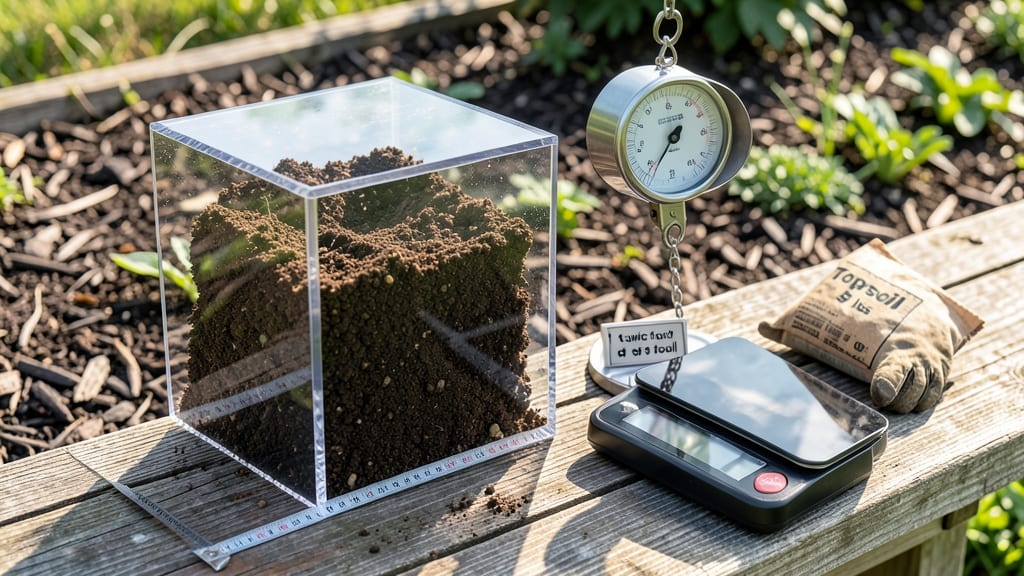
To determine how much 1 cubic foot of topsoil weighs, expect a range of 40 to 60 pounds, depending on moisture levels, organic content, and how tightly packed it is. Dry, loose soil will weigh closer to 40 lbs, while damp or compacted soil can exceed 60 lbs.
Understanding topsoil weight is crucial for projects like raised garden beds or lawn topdressing.
The moisture level plays a huge role—wet soil can weigh up to 30% more than dry soil due to water absorption. Organic matter, such as decomposed leaves or compost, also increases weight by adding bulk without significantly altering volume.
For accurate planning, I always test a small sample: fill a 1-gallon container (about 0.13 cubic feet) with soil, weigh it, then multiply by 8 to estimate the cubic foot weight. This method works better than guessing, especially for large projects. 🔥
Compaction matters too—foot traffic or machinery can squeeze soil particles together, reducing air pockets and increasing density. For example, a freshly tilled garden might have 45-lb soil, while the same soil after a heavy rain could jump to 55 lbs.
Always account for these variables when calculating how much soil you'll need for your project.
💡 In This Article
- Factors Affecting Topsoil Weight per Cubic Foot
- Practical Topsoil Weight Estimates for Gardening Projects
Factors affecting topsoil weight per cubic foot
Topsoil weight varies dramatically because it's not just dirt—it's a complex mix of minerals, organic matter, water, and air.
The mineral fraction (sand, silt, clay) forms the bulk of the weight, but these particles pack differently based on size. Clay soils, with their tiny, tightly packed particles, can reach 80+ lbs per cubic foot when wet, while sandy soils, with larger air gaps, might only hit 50 lbs.
The key here is porosity: clay holds water like a sponge, adding significant weight, while sand drains quickly and stays lighter.
Moisture content is the wild card—water can add 20-30% more weight to dry soil.
For example, a 1 cubic foot sample of dry loam soil (60% minerals, 30% air, 10% organic matter) might weigh 50 lbs, but after a rain, that same volume could swell to 65 lbs as water fills the pores.
This is why gardeners often see soil piles shrink after rain—the water forces particles closer together, reducing volume while increasing density. 💧
Organic matter plays a sneaky role too. Compost or decomposed plant material adds bulk without much weight—think of it like packing popcorn kernels versus solid blocks.
A soil with 20% organic content might weigh 10-15% less than mineral-heavy soil for the same volume, but it holds moisture better, creating a feedback loop where water retention increases weight fluctuations. This is why peat-based soils feel lighter when dry but can become surprisingly heavy when saturated.
Compaction is the final piece of the puzzle. Foot traffic, machinery, or even heavy rainfall can compress soil, squeezing out air and water.
A 1 cubic foot sample of freshly tilled garden soil might weigh 45 lbs, but after a few years of foot traffic, that same volume could reach 60+ lbs. The difference?
Air pockets—loose soil has 30-50% air space, while compacted soil might drop to 10-20% air, making it denser and heavier.
Here's a quick comparison to visualize the range:
- Dry, sandy soil: 40-50 lbs (high porosity, low moisture retention)
- Loam (balanced mix): 50-60 lbs (ideal for gardening, moderate compaction)
- Wet clay soil: 70-90 lbs (high water content, tight particle packing)
- Organic-rich (compost-heavy): 35-55 lbs (lighter but retains moisture better)
For precise calculations, I recommend testing your local soil. Grab a 1-gallon bucket (0.13 cubic feet), fill it with soil, and weigh it—then multiply by 8 to estimate the cubic foot weight. This method accounts for your specific soil's unique composition, which can vary even within the same region. 🌱