
Light Requirements
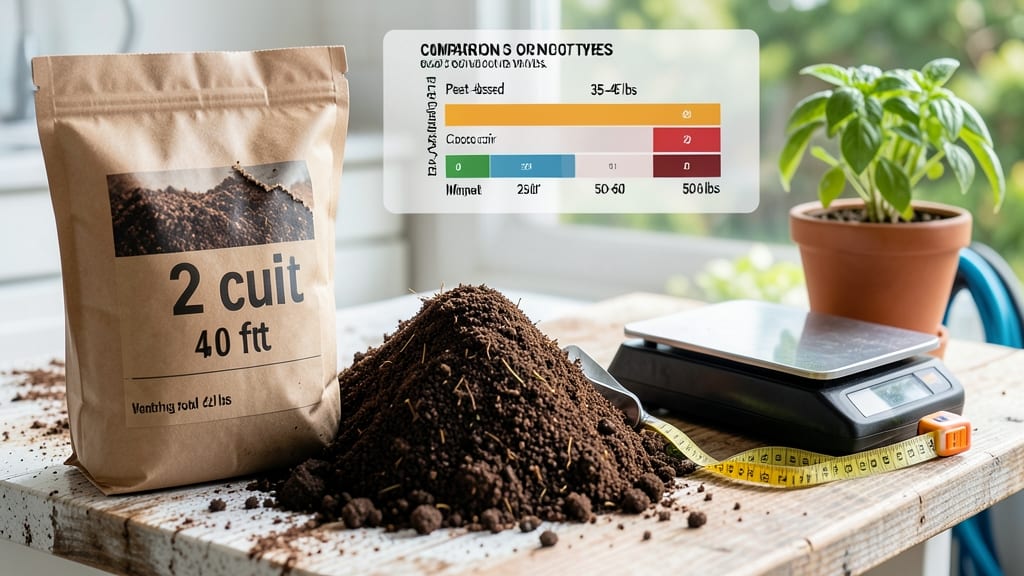
Two cubic feet of potting soil typically weighs 30 to 60 pounds, depending on the mix type—lighter blends like peat-based soils fall on the lower end, while heavier mineral-rich or compost-heavy mixes approach the upper range.
Understanding potting soil weight helps you pick the right mix for your gardening needs. 🌱 The big difference comes from what's in the soil: organic materials like peat moss or coconut coir create lighter mixes, while mineral additives such as perlite or sand can make the same volume significantly heavier.
For example, a standard 10-inch pot holds about 1 cubic foot—so a 2-cubic-foot bag would fill two of those containers, but the weight varies dramatically based on composition. When selecting soil, consider both the plant's needs and your container's durability to avoid overloading.
Heavier mixes often provide better moisture retention and nutrient density, which benefits larger plants or those with deep root systems. 💫 On the other hand, lighter mixes are ideal for smaller containers or when you need to move pots frequently.
Always check the label for weight specifications if you're working with large quantities or heavy containers.
💡 In This Article
- Potting Soil Weight Variations by Composition
- Choosing Soil Weight for Containers and Gardening Needs
Potting soil weight variations by composition
The weight of potting soil varies dramatically because of its ingredients. Organic materials like peat moss or coconut coir create lighter mixes—think of peat moss as nature's sponge, holding air and water while weighing just 8-12 pounds per cubic foot when dry.
Mineral additives like perlite or vermiculite add bulk without much weight, but sand or compost can nearly double the density. For example, a mix with 50% compost and 30% perlite might weigh 45-50 pounds per 2 cubic feet, while a peat-heavy blend stays closer to 30-35 pounds. 🔥
Moisture content plays a huge role too. Dry potting soil can weigh 20-40% less than when fully hydrated—water adds 8.34 pounds per gallon, so a 2-cubic-foot bag (about 16 gallons) could gain 133 pounds if completely saturated! This is why bag labels often specify "dry weight" or "as sold."
The porosity of ingredients matters too: perlite's air pockets reduce weight, while dense materials like lava rock increase it. For instance, a volcanic rock-heavy mix might reach 55-60 pounds per 2 cubic feet while remaining well-draining.
Here's how common ingredients break down by weight per cubic foot (dry):
- Peat moss: 8-12 lbs (lightest organic option)
- Coconut coir: 10-15 lbs (slightly denser than peat)
- Compost: 20-30 lbs (heavy due to decomposed organic matter)
- Perlite: 5-10 lbs (adds volume without weight)
- Vermiculite: 10-15 lbs (moderate weight for moisture retention)
- Sand: 80-100 lbs (heaviest common additive)
The science behind this involves particle density and porosity. Organic materials have high surface area but low bulk density, while minerals like sand pack tightly.
A 50/50 mix of compost and perlite would weigh about 35 pounds per 2 cubic feet, but swapping perlite for sand could push it to 50 pounds. This explains why seed-starting mixes (lightweight) feel different from container mixes (heavier). 💫
For gardeners, this means your 2-cubic-foot bag could feel like carrying a 5-gallon bucket of water (40 lbs) or a heavy backpack (60 lbs) depending on composition.
Always check the label—some premium mixes specify weight ranges, while generic bags often don't. The difference isn't just about lifting; it affects how your plants grow, as heavier mixes retain moisture longer but may compact over time.