
Light Requirements
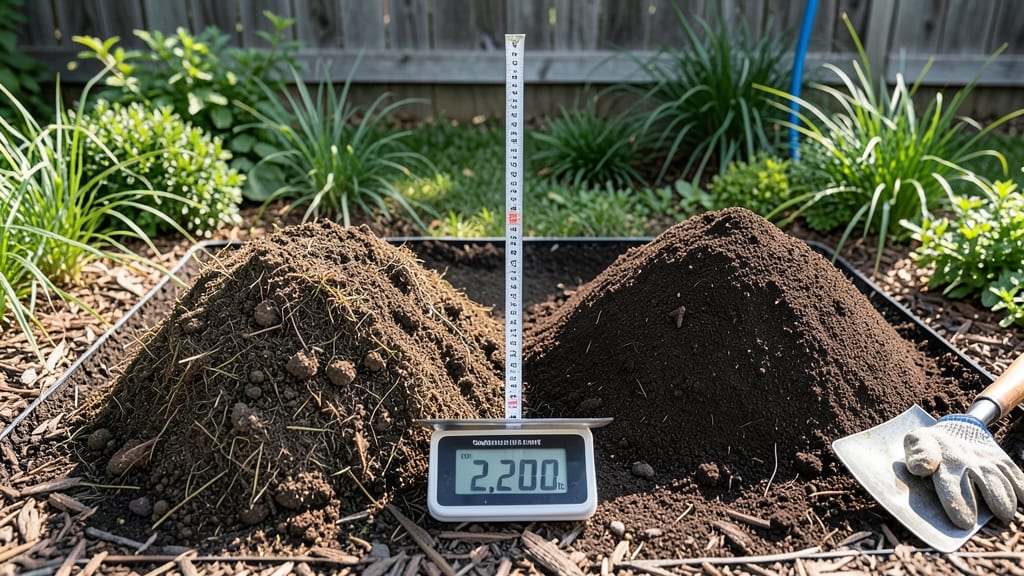
A cubic yard of topsoil typically weighs 2,000 to 2,400 pounds, though this varies by moisture content, organic matter, and compaction—drier soil weighs less, while wet or clay-heavy topsoil can exceed 2,700 pounds. Always verify with your supplier for precise measurements before ordering or transporting.
A cubic yard of topsoil's weight shifts dramatically based on how damp it is—wet soil can pack in up to 30% more weight than dry. 🌧️ The organic matter in topsoil (like decomposed leaves or compost) also adds bulk, while clay-heavy soil is denser than sandy mixes.
I always check the moisture level before ordering: if the ground feels soggy, I ask for 10-15% less volume to avoid overloading my truck or forklift.
For practical use, this weight range explains why many gardeners split deliveries into two trips—a single cubic yard is heavy enough to strain small vehicles. Clay soils, in particular, can push weights toward 2,700 pounds when saturated, so I recommend testing a small batch first.
Understanding these variables helps avoid costly mistakes during landscaping projects.
💡 In This Article
- Factors That Affect Topsoil Weight per Cubic Yard
- Practical Tips for Estimating and Handling Topsoil Weight
Factors that affect topsoil weight per cubic yard
Moisture content is the single biggest factor influencing topsoil weight. When soil is saturated, water fills the spaces between particles, increasing weight by up to 30% compared to dry conditions.
For example, a cubic yard of dry sandy loam might weigh 2,200 pounds, but after a heavy rain, that same volume could swell to 2,800 pounds. The reason? Water's density (62.4 pounds per cubic foot) adds significant mass while occupying minimal space in the soil matrix.
Organic matter plays a secondary but crucial role—decomposed leaves, compost, and plant residues add bulk without substantial weight. A soil sample with 5% organic content by volume can weigh 10-15% less than pure mineral soil because organic particles are less dense.
Conversely, clay soils with minimal organic material become denser, with weights approaching 2,700 pounds per cubic yard when compacted. The texture difference is dramatic: clay feels heavy and sticky, while sandy soil with high organic content stays loose and lighter.
Compaction from machinery or foot traffic further alters weight by reducing pore space between particles. A freshly tilled field's topsoil might weigh 2,000 pounds per cubic yard, but after being driven over repeatedly, the same volume could reach 2,500 pounds.
This happens because compaction forces air and water out, packing particles tighter. For gardeners, this means pre-wetting soil before moving it can reduce compaction during transport, making handling easier.
Seasonal variations create another layer of complexity. Spring soils often contain 15-20% more moisture than summer samples, directly impacting weight. I've seen deliveries where winter-frozen soil weighed 2,300 pounds in spring but dropped to 1,900 pounds after drying over summer months.
This seasonal swing explains why suppliers sometimes adjust volume estimates—what fits in a truck in winter may overflow in summer.
For precise planning, consider these soil types by weight range:
- Sandy loam: 1,800-2,200 pounds (low organic, high porosity)
- Loamy soil: 2,000-2,400 pounds (balanced organic/mineral)
- Clay-heavy: 2,400-2,700 pounds (dense, low porosity)
- Peat-based: 1,500-1,900 pounds (high organic, lightweight)
Understanding these factors helps avoid surprises during projects. For instance, if you're planning a raised bed, calculating based on dry-weight estimates could leave you short—always account for potential moisture variations. The key is testing a small batch first to determine your specific soil's density before committing to large orders. 🌱