
Light Requirements
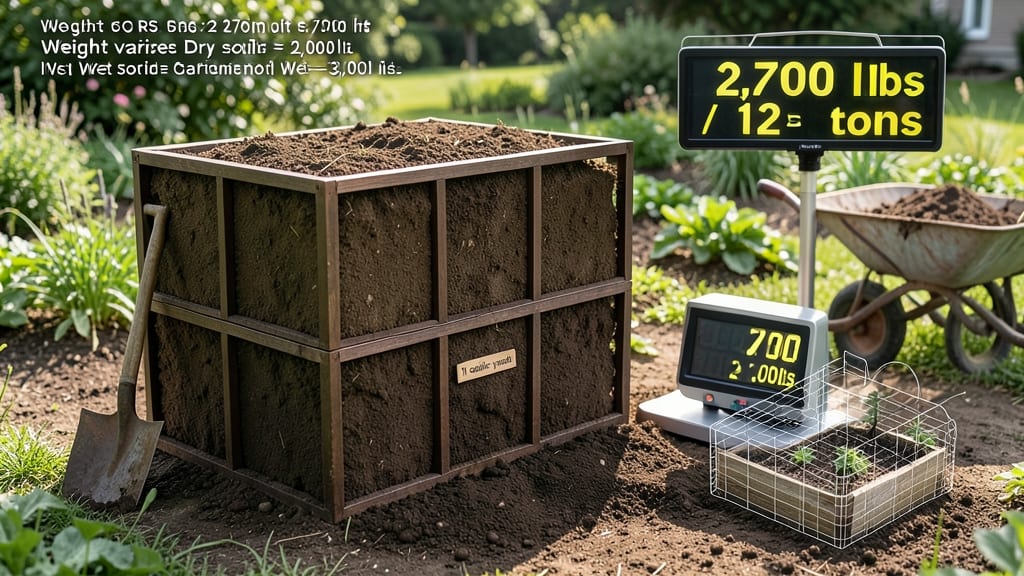
How much a cubic yard of soil weighs depends on its moisture level, with dry soil ranging from 2,000 to 3,000 pounds and saturated soil reaching 3,000 to 4,000 pounds due to water absorption and composition differences like clay or organic content.
A cubic yard of soil's weight shifts dramatically based on its moisture content and composition. 💫 Dry, sandy soil often sits on the lighter end at around 2,000 pounds, while heavier clay soils can approach 3,000 pounds when completely dry.
When saturated, that same cubic yard can swell to 4,000 pounds or more—this extra weight comes from water filling the tiny spaces between soil particles. For practical purposes, I always plan for the heavier end when calculating loads for landscaping projects, especially after rain when soil absorbs moisture.
Understanding these variations helps with everything from wheelbarrow capacity to truck load limits. For example, a standard 4x8-foot garden bed filled with 12 inches of soil requires about 1.33 cubic yards—that's roughly 3,300 pounds when dry, but could double if wet.
Always check your equipment's weight limits before moving large quantities!
💡 In This Article
- Factors Affecting Soil Weight per Cubic Yard
- Practical Weight Calculations for Gardening Projects
Factors affecting soil weight per cubic yard
Soil weight varies dramatically because it's not just dirt—it's a complex mix of minerals, water, air, and organic matter.
The particle size plays a huge role: sandy soils have larger particles with more air pockets, weighing around 2,400 pounds per cubic yard when dry, while clay soils pack tightly with smaller particles, tipping the scales closer to 3,000 pounds. The key difference?
Clay holds water like a sponge, adding significant weight when wet.
Moisture content is the biggest wild card—water can account for 20-30% of soil weight in saturated conditions. For example, a cubic yard of loam (a balanced mix) might weigh 2,700 pounds dry but swell to 3,800 pounds after heavy rain.
Organic matter, like decomposed leaves or compost, also affects weight—it's lighter than minerals but holds more water, creating a heavier wet soil. Even 10% organic content can increase weight by 100-200 pounds per cubic yard when saturated.
Compaction matters too—foot traffic or machinery can reduce air pockets by 20-30%, making the same volume weigh 5-10% more. Regional differences explain why Midwest clay soils often exceed 3,500 pounds per cubic yard when wet, while coastal sandy soils might stay under 2,500 pounds even when damp.
This variation is why landscapers always test soil conditions before estimating weights for projects.
Here's what's actually happening at the microscopic level: Water molecules adhere to soil particles through hydrogen bonding, creating a cohesive mass. In clay soils, these bonds form a gel-like structure that resists compression, while sandy soils drain quickly, maintaining lower weight.
The porosity (space between particles) determines how much water soil can absorb—clay has 30-50% porosity, while sand has only 25-40% but drains faster.
For practical purposes, I recommend testing your soil's moisture content before major projects. Dig a small hole, squeeze a handful—if it holds shape when wet but crumbles dry, you're dealing with loam.
If it feels sticky and dense, it's clay. Sandy soil will fall apart easily. This simple test helps you adjust weight estimates before moving heavy loads.
One surprising factor is temperature—cold soils hold more water because ice crystals form in pore spaces, increasing weight temporarily. In winter, a cubic yard might weigh 500 pounds more than in summer due to frozen moisture. Always account for seasonal variations when planning heavy lifting or storage.