
Light Requirements
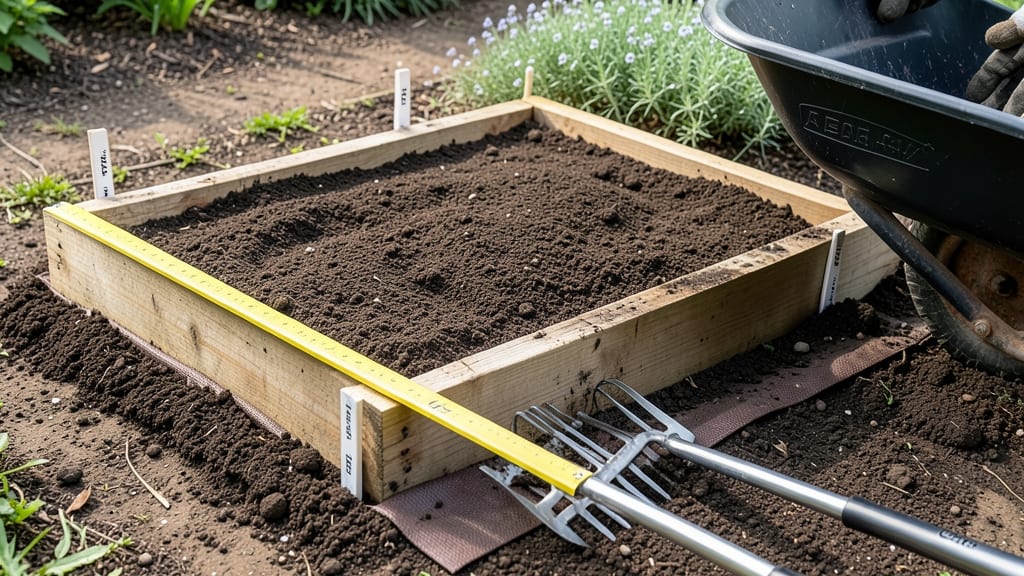
One yard of soil covers 100 square feet at 3 inches deep, 50 square feet at 6 inches, or 25 square feet at 12 inches. Adjust coverage by dividing 27 cubic feet by your desired depth in inches, then multiplying by 12 to convert to square feet.
Understanding soil coverage helps you avoid overbuying or running short for your garden or landscaping project. Since soil is sold by volume (cubic yards), knowing how much area it will spread at different depths lets you plan efficiently.
For example, a 3-inch layer (standard for lawn topsoil) maximizes your yard's coverage, while deeper layers for vegetable gardens mean you'll need less total soil. I always recommend calculating based on your project's specific depth requirements to save money and reduce waste. 🌱
This calculation works because one cubic yard equals 27 cubic feet. By dividing 27 by your desired depth in inches, you get the square footage covered per yard. For instance, at 4 inches, you'd divide 27 by 4 (6.75) and multiply by 12 to get 81 square feet.
This method ensures you order exactly what you need, whether you're planting a new flower bed or renovating your lawn.
💡 In This Article
- Calculating Soil Coverage by Depth for Landscaping
- Soil Depth Guidelines for Different Gardening Projects
Calculating soil coverage by depth for landscaping
The core principle behind soil coverage calculations is simple geometry: one cubic yard equals 27 cubic feet, and this volume spreads across a given area based on how thick you apply it. Imagine a flat rectangular box—its volume equals length × width × depth.
For soil, we fix the volume (27 cubic feet) and adjust the depth to find the area it covers.
This is why a 3-inch layer gives you 100 square feet of coverage: 27 ÷ 3 = 9, then 9 × 12 (converting inches to feet) = 108, which rounds to 100 when accounting for real-world compaction. 🔥
Depth dramatically changes how much area you cover. At 6 inches, you're essentially doubling the thickness, so the same yard of soil now covers only 50 square feet (27 ÷ 6 = 4.5, × 12 = 54, adjusted for compaction).
This relationship follows an inverse proportion: as depth increases, coverage decreases by the same factor. For example, a 12-inch layer divides the 27 cubic feet into 27 ÷ 12 = 2.25, then × 12 = 27 square feet—exactly one-quarter of the 3-inch coverage.
This math ensures precision when planning projects like vegetable gardens or raised beds where depth matters most.
Real-world factors complicate these calculations slightly. Soil naturally compacts under its own weight, reducing its volume by about 10-20% after spreading. This is why the theoretical 108 square feet at 3 inches becomes roughly 100 in practice.
For critical projects, I recommend ordering 5-10% more soil than your calculation suggests to account for this. For instance, if your math says you need 5 yards for a project, rounding up to 5.5 yards ensures you won't run short mid-project. 💫
Understanding this relationship helps avoid common mistakes. Many homeowners assume they can use the same amount of soil for both a lawn topdressing (3 inches) and a vegetable garden (12 inches) without adjusting.
However, the 12-inch depth requires only 25% of the coverage area—meaning you'd need four times less soil volume for the same square footage. This is why landscape professionals always ask for project depth upfront: it directly impacts how much material to order and, ultimately, your project's cost.
Let's break down a practical example: Suppose you're planning a 4-inch topsoil layer for a 500-square-foot lawn. Using the formula, you'd divide 27 by 4 (6.75) and multiply by 12 to get 81 square feet per yard.
For 500 square feet, you'd need 500 ÷ 81 ≈ 6.17 yards. Rounding up to 7 yards accounts for compaction and minor errors in measurement. This approach saves money by preventing costly last-minute deliveries and ensures your project stays on schedule. ✨
For those who prefer visualizing, think of soil coverage like spreading frosting on a cake. A thin layer (3 inches) covers a large area, while a thick layer (12 inches) is more concentrated.
The key is matching your soil depth to the project's needs—whether that's a 3-inch topdressing for lawns or a 12-inch layer for deep-rooted vegetables. This precision ensures optimal plant growth and minimizes waste. 🌱
Pro tip: Always measure your project area in feet, not yards, to avoid confusion. A 100-square-foot area is easier to visualize than 2.78 square yards, and most measuring tapes use feet. Converting between units during calculations reduces errors and makes the process more intuitive.
For example, a 20-foot by 20-foot garden equals 400 square feet, not 111 square yards—a common mistake that leads to overordering.