
Light Requirements
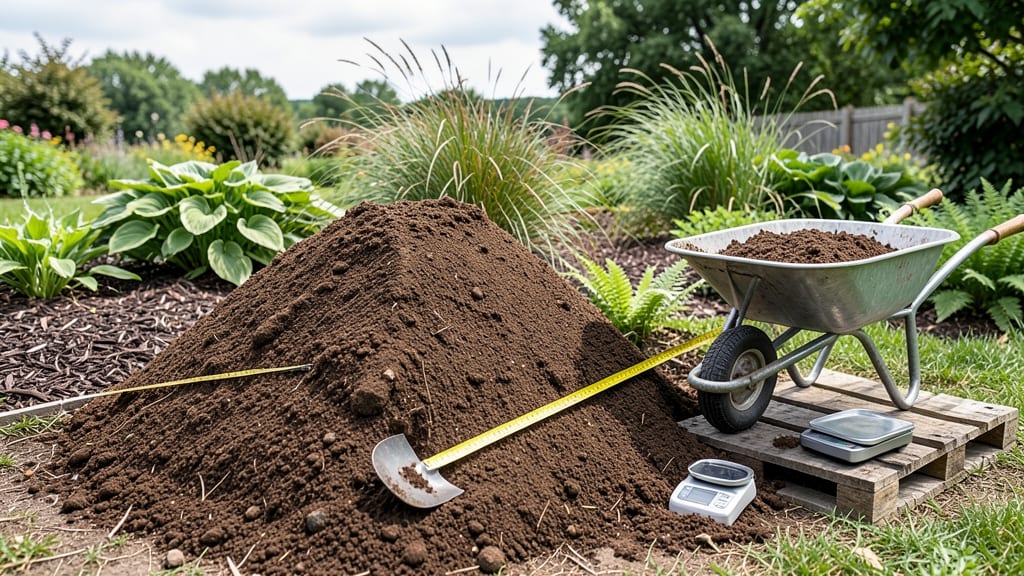
Determining how much one yard of topsoil weighs reveals it typically ranges from 1,500 to 2,200 pounds, influenced heavily by moisture levels, organic content, and soil composition—clay-heavy soils can push past 2,500 pounds when saturated.
Understanding topsoil weight isn't just about the numbers—it's about how these factors interact in real-world conditions.
For example, a dry, sandy loam might weigh closer to 1,500 pounds per yard, while a moist, clay-rich topsoil could reach 2,500 pounds when fully saturated. 🔥 This variation explains why gardeners often see price fluctuations based on soil type and moisture content.
The key takeaway is that weight isn't fixed; it changes with seasonal conditions and soil composition, which is why many suppliers recommend weighing samples before bulk purchases for large projects.
This weight difference also impacts practical applications like raised garden beds or lawn top-dressing. A 10-foot by 10-foot area filled 6 inches deep requires roughly 3 cubic yards of soil—weighing between 4,500 and 6,600 pounds.
That's why renting a heavy-duty trailer or hiring a forklift becomes necessary for larger projects, rather than relying on standard pickup trucks which typically handle 1,500 pounds max safely.
💡 In This Article
- Factors Affecting Topsoil Weight per Cubic Yard
- Estimating Topsoil Weight for Garden Projects
Factors affecting topsoil weight per cubic yard
Topsoil weight varies dramatically because it's not a uniform material—think of it as a dynamic ecosystem where moisture, organic matter, and particle size all play starring roles.
The primary driver is moisture content: dry soil can weigh as little as 1,500 pounds per cubic yard, while saturated clay-heavy soil may exceed 2,500 pounds.
This happens because water adds roughly 62.4 pounds per cubic foot—about 1,750 pounds per cubic yard—when fully absorbed. 💫 For perspective, a 10% moisture increase can add 200 pounds to your yard of soil.
The particle composition creates another layer of variation. Sandy soils have larger particles with more air pockets, weighing around 1,500-1,800 pounds per yard, while clay soils with their tightly packed particles can reach 2,200-2,500 pounds.
Loamy soils—ideal for gardening—typically fall in the 1,800-2,000 pound range due to their balanced mix of sand, silt, and clay. The organic matter percentage also matters: every 1% increase in organic content can reduce weight by 5-10 pounds per yard because organic material is less dense than mineral particles.
Compaction plays a sneaky role too. When soil is tilled or trafficked, particles pack tighter, reducing air space and increasing weight. A 20% compaction increase (common in heavily walked garden paths) can add 300-400 pounds to your cubic yard.
This is why freshly tilled soil often feels lighter to move—until it settles and compacts over time. 🔥 Understanding these factors helps explain why a supplier's "yard" of topsoil might feel deceptively light when dry but become a heavy burden when wet.
Real-world examples highlight these differences dramatically. A sandy beach topsoil might weigh 1,600 pounds when dry but only 1,800 pounds when damp. In contrast, a clay-rich riverbank soil could start at 2,000 pounds dry and balloon to 2,600 pounds after heavy rain.
These variations are why professional landscapers always specify soil type and moisture conditions when quoting projects—it directly impacts transportation costs and equipment needs.
For gardeners working with raised beds, this means your 8-foot by 4-foot bed filled 12 inches deep (about 1.75 cubic yards) could weigh anywhere from 2,600 to 4,400 pounds depending on soil type.
That's why many builders use galvanized steel frames rather than wood—wooden frames can't always support that kind of weight without sagging or breaking. The structural implications alone make soil weight a critical consideration for any serious gardening project.
What most people don't realize is how seasonal changes amplify these variations. Spring thaw can add 30-50% more weight to clay soils compared to summer conditions, while summer drought might reduce sandy soil weight by 15-20%.
This seasonal swing explains why some garden centers offer weight-based pricing tiers rather than fixed rates per cubic yard—it accounts for these natural fluctuations that affect both handling and delivery costs. 💛