
Light Requirements
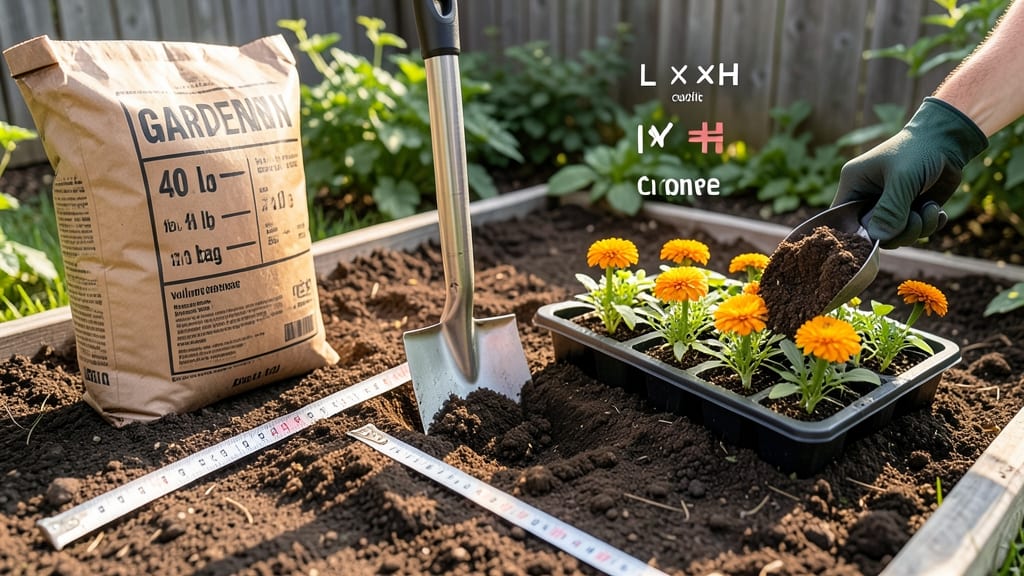
Calculating garden soil needs saves you money and prevents last-minute store runs. 🌱 I learned the hard way—buying too little means patchwork, and too much? Heavy bags you’ll never use. The secret lies in cubic feet and pounds, not guesswork.
Start with your bed’s area (length × width) and depth (usually 6–12 inches). A 4x8-foot raised bed at 6 inches deep needs 16 cubic feet of soil—about 1.25 cubic yards (or 8–10 bags of 2-cubic-foot soil). Multiply these numbers to match your project’s size.
You’ll end up with a precise order, no wasted trips, and soil that fits perfectly. Pro tip: Loose soil (like compost) weighs less than dense topsoil—check bag labels for pounds per cubic foot to adjust quantities. This method works for flower beds, veggie patches, or even container gardens.
Grab a tape measure and calculator—we’ll break it down step by step.
📚 In This Guide
- What you need
- Instructions
- Tips and common mistakes
- Wrapping up and next steps
What you need
- ● Garden soil: Quantity depends on your project (see our cubic feet to pounds guide for specifics). For a 10’ x 10’ raised bed (12” deep), you’ll need about 12 cubic feet (~1,500 lbs) of soil.
- ● Measuring tape: For accuracy in calculating bed dimensions.
- ● Shovel or spade: A 12”-14” flat-edged shovel works best for spreading soil evenly.
- ● Wheelbarrow or garden cart: A 3-cubic-foot capacity makes hauling soil a breeze.
- ● Garden gloves: Heavy-duty, waterproof to protect your hands.
- ● Level or straight board: Ensures your soil bed is even for optimal drainage.
- ● Soil testing kit: Check pH and nutrient levels before amending.
- ● Compost or organic matter: Mix in 20-30% compost to improve soil health.
- ● Landscape fabric: Line beds to suppress weeds (if not using in-ground planting).
- ● Soil calculator app: Quickly compute cubic feet/pounds on the go.
- ● Knee pads: For comfort during long prep sessions!
How to calculate soil volume for your garden beds
Figuring out how much soil you need is half the battle—get this right and your planting goes smoothly.
📏 Step 1: Measure Your Garden Bed Dimensions
Start by measuring the length, width, and depth of each garden bed in feet. For example, a rectangular raised bed that's 4 feet long × 2 feet wide × 1 foot deep gives you the basic shape. Multiply these numbers together to find the volume in cubic feet—this is your starting point. If your bed has irregular shapes, break it into rectangles and calculate each section separately.
I always double-check my measurements by walking the perimeter with a tape measure. A common mistake is eyeballing depth—dig down 1 foot (or your planned depth) and verify with a straight-edged tool. This ensures you account for root space, not just surface area.
📊 Step 2: Convert Cubic Feet to Cubic Yards
Most soil is sold by the cubic yard, so convert your cubic feet total. Divide your total cubic feet by 27 (since 1 cubic yard = 27 cubic feet). For a 4×2×1-foot bed, that’s 8 cubic feet, which equals 0.3 cubic yards—round up to 0.33 cubic yards to account for settling.
Here’s the thing—soil settles when watered, so I always add 10% extra to my calculations. A 10×10-foot bed filled 1 foot deep (100 cubic feet) becomes 3.7 cubic yards after conversion and rounding. Pro tip: Use an online cubic feet calculator to avoid math errors—just plug in your dimensions.
⚖️ Step 3: Estimate Soil Weight for Delivery
Garden soil typically weighs 2,200–2,400 pounds per cubic yard, depending on moisture and organic matter. Multiply your cubic yards by 2,300 pounds (a safe midpoint) to estimate delivery needs. For 0.33 cubic yards, that’s roughly 759 pounds—most trucks handle this easily, but call ahead for large orders.
If you’re mixing soil types (e.g., topsoil + compost), calculate each separately. A 50/50 blend of 0.5 cubic yards would be 1,150 pounds total (575 lbs per type). Weighing bags at the store helps verify—1 cubic foot of soil weighs ~40–50 pounds, so a 2-cubic-foot bag should tip the scales at 80–100 pounds.
🌱 Step 4: Adjust for Amendments or Specialty Soil
If your soil mix includes heavy amendments like compost or sand, account for their volume. For example, a 10% compost blend in a 1-cubic-yard bed means 0.1 cubic yards of compost plus 0.9 cubic yards of topsoil. Pre-mixed bags (like "garden blend") simplify this—just follow the bag’s cubic-foot yield on the label.
For containers or small projects, use pounds instead. A 5-gallon bucket holds ~0.15 cubic feet of soil, weighing 15–20 pounds when moist. I keep a few buckets handy for touch-ups—nothing worse than running out mid-project.
✂️ Step 5: Order or Purchase with Confidence
Now you’re ready to buy. For bulk deliveries, specify your cubic yards and weight estimate. Retail bags often list yield per bag (e.g., "covers 100 sq ft at 2 inches deep"), so match your needs. A 40-pound bag typically covers 0.5 cubic feet—multiply by your total cubic feet to find how many bags you need.
Real talk: Overestimate by 5–10% to avoid shortages. I once ordered 2.5 cubic yards for a 2×4×1-foot bed and had leftovers—better than scrambling for more mid-planting. Label extra soil and store it in a dry, shaded spot for future projects.
Tips & tricks for calculating garden soil needs
Precision is everything when estimating garden soil—these tricks will help you avoid costly mistakes and ensure your planting project goes smoothly.
Measurement Accuracy: Use a rigid ruler or straight-edged tool to verify your bed's depth at multiple points. I’ve seen beds where one side is 1 foot deep while the other is only 8 inches—this discrepancy throws off your entire calculation. For irregular shapes, divide the bed into geometric sections (rectangles, circles) and calculate each separately before summing.
Conversion Shortcut: Remember that 1 cubic yard equals 27 cubic feet, but I’ve found this mental math trick helpful: 1 cubic foot equals about 0.037 cubic yards. For quick estimates, multiply your cubic feet by 0.037 to get cubic yards instantly. For example, 50 cubic feet becomes 1.85 cubic yards—round up to 1.9 for safety.
Soil Density Reality: Never assume all soil weighs the same. Topsoil averages 2,300 pounds per cubic yard, but compost blends can weigh 1,500 pounds or less. When mixing types, calculate each component separately—this prevents overestimating or underestimating your total weight by hundreds of pounds.
Bag Yield Verification: Retail bags often list coverage (e.g., "covers 100 sq ft at 2 inches deep"), but this assumes perfect packing. A 40-pound bag typically covers 0.5 cubic feet when loosely packed, but only 0.35 cubic feet when compacted. Weigh a few bags at the store to verify their actual yield—this prevents running out mid-project.
Pro Tips for How Much Garden Soil Do I Need
- Precision is everything when estimating garden soil—these tricks will help you avoid costly mistakes and ensure your planting project goes smoothly.
- Measurement Accuracy: Use a rigid ruler or straight-edged tool to verify your bed's depth at multiple points.
- Conversion Shortcut: Remember that 1 cubic yard equals 27 cubic feet, but I’ve found this mental math trick helpful: 1 cubic foot equals about 0.037 cubic yards.
Frequently asked questions
How do I calculate soil volume for irregularly shaped gardens?
Break your garden into smaller, regular sections (rectangles or squares) and calculate each separately. Add the volumes together for the total. For example, divide a curved border into a rectangle minus a semicircle. Use a measuring tape and a calculator for accuracy!
Can I use garden soil at any time of year?
While you can use garden soil year-round, the best time is during the growing season (spring to fall). Avoid heavy rains or freezing temperatures, as they can compact or freeze the soil, making it harder to work with. Plan your project for mild weather for best results!
Is there a cheaper alternative to buying bags of garden soil?
Yes! Consider composting your kitchen and yard waste to create nutrient-rich soil for free. You can also check with local tree services—they often give away free wood chips or mulch. Just ensure any alternative is well-aged and free of weeds or pests.
How do I convert cubic feet of soil to pounds for shipping?
Most garden soils weigh about 40-50 lbs per cubic foot when dry. For shipping estimates, multiply your total cubic feet by 45 lbs (a safe average). Always check the product label for exact weight, as moisture content can vary. Overestimate if shipping heavy loads!
What should I do if my soil keeps compacting after spreading?
Compacted soil can be fixed by aerating it with a garden fork or tiller. Mix in organic matter like compost or peat moss to improve drainage and structure. Avoid walking on freshly laid soil, and consider a light layer of mulch to protect it from heavy rain.
Wrapping up and next steps
Now that you’ve got the know-how to calculate garden soil needs—whether by cubic feet, pounds, or project size—you’re ready to tackle your gardening goals with confidence! 🌱 Remember, a little planning goes a long way, so measure twice and dig once for the best results.
Your next step? Grab that shovel, break ground, and watch your garden thrive! Happy planting!