
Light Requirements
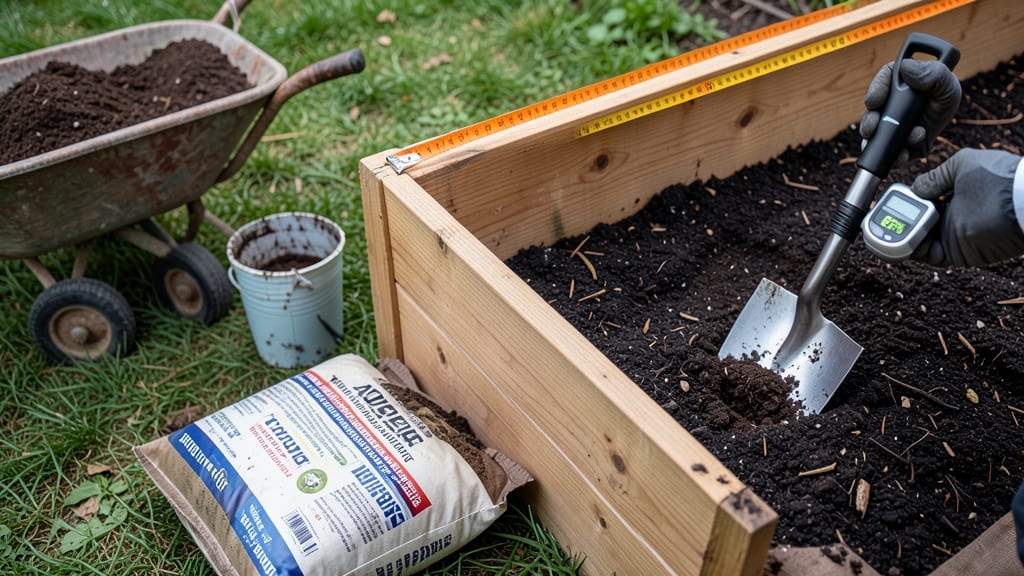
To fill a raised bed with soil, calculate 1 cubic foot of soil per square foot of bed depth—for instance, a 4’x8’ bed filled to 12” depth requires 32 cubic feet of soil. Heavy feeders like tomatoes need 2–4” extra depth for root growth, while herbs and greens do well in standard 6–12” layers.
Determining the right soil volume starts with your bed's dimensions and the plants you're growing. A 4’x8’ bed at 12” depth is a classic example, but smaller beds or deeper layers change the math—always multiply length × width × depth (in feet) to get cubic feet.
For instance, a 3’x6’ bed at 10” depth needs just 15 cubic feet of soil. Root depth matters most: deep-rooted plants like asparagus or fruit trees require at least 18–24” of soil, while shallow-rooted lettuce or strawberries thrive in 6–12” layers. 🌱
Beyond volume, soil quality is just as critical. A mix of 60% topsoil, 30% compost, and 10% perlite or sand works for most vegetables, but heavy clay soils need extra sand for drainage, while sandy soils benefit from added organic matter.
I always recommend testing your soil before filling—this helps avoid common pitfalls like compaction or poor moisture retention. For example, in arid climates, adding coconut coir helps retain moisture, while in wetter areas, extra perlite prevents waterlogging.
💡 In This Article
- Calculating Soil Volume by Raised Bed Dimensions and Plant Needs
- Best Soil Mixes for Raised Beds by Plant Type and Climate
Calculating soil volume by raised bed dimensions and plant needs
The core principle behind soil volume calculations is simple geometry: multiply your bed's length by width by depth (all converted to feet) to get cubic feet. For example, a 4-foot by 8-foot bed filled 1 foot deep needs 32 cubic feet of soil (4 × 8 × 1 = 32).
But most gardeners fill beds to 10-12 inches deep, which translates to 0.83-1 foot—so that same 4'x8' bed at 12" depth requires 32 cubic feet of soil. This formula works for any rectangular bed shape, whether it's a cozy 3'x6' or a spacious 6'x12'.
Plant roots drive the depth requirements. Deep-rooted vegetables like tomatoes, peppers, and carrots need 12-18 inches of soil to support their growth, while shallow-rooted herbs (basil, thyme) or greens (lettuce, spinach) thrive in just 6-12 inches.
The key is matching soil depth to root depth—tomatoes, for instance, can develop roots up to 3 feet deep if given the space, but most gardeners compromise at 12-18 inches for practicality. 🌿 This means your soil volume calculation should account for 2-4 extra inches when planting heavy feeders.
Here's where real-world adjustments come in: most pre-mixed raised bed soil bags are sold by volume (e.g., 1 cubic foot per bag), making it easy to scale.
A 4'x8'x12" bed would need 32 bags, but if you're planting potatoes (which need 12-18 inches of loose soil), you might add 4 extra bags for deeper layers. Pro tip: Always buy 5-10% more soil than calculated—settling and amendments will reduce your initial volume by about 10-15%.
Regional climate plays a hidden role too. In arid areas, adding 2-3 inches of extra depth helps retain moisture, while in rainy climates, deeper beds improve drainage.
For example, a 3'x6' bed in a wet climate might go from 15 cubic feet (10" depth) to 18 cubic feet (12" depth) to prevent waterlogging. The extra cost upfront saves headaches later—compacted or waterlogged soil stunts plant growth far more than a few extra bags of soil.
Let’s break down common bed sizes for quick reference:
- 4'x8' bed: 12" depth = 32 cubic feet | 18" depth = 48 cubic feet
- 3'x6' bed: 10" depth = 15 cubic feet | 12" depth = 18 cubic feet
- 2'x4' bed: 6" depth = 4 cubic feet | 12" depth = 8 cubic feet
For irregularly shaped beds (like circles or ovals), divide the area into rectangles, calculate each section separately, then sum the totals. This method ensures accuracy without complex math—just break it down into manageable chunks. 🔢