
Orchid Care
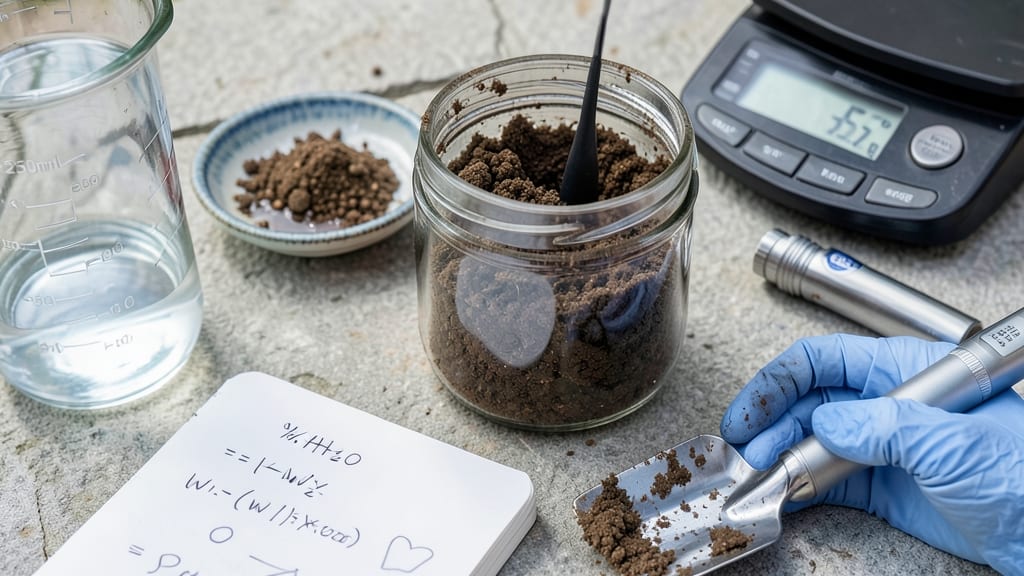
Orchids demand precision—too much or too little water spells disaster. 🌱 Calculating soil water content isn't guesswork; it's a science that keeps your plants thriving without drowning their roots. The right method (tensiometer, moisture meter, or even a simple finger test) transforms watering from a gamble into a foolproof routine.
Start with the right tools: a digital moisture meter for quick readings, a tensiometer for pressure-based accuracy, or the classic finger test for hands-on gardeners. Each method has its strengths—meters give instant data, tensiometers mimic root stress, and fingers reveal texture.
My orchids now bloom reliably because I water only when the top inch feels dry, not on a schedule.
Common mistakes throw off readings: compacted soil skews meters, and overwatering tricks fingers into thinking roots are thirsty. Troubleshoot by checking soil type—orchid mixes drain faster than garden soil—and adjusting your threshold. A consistent routine (same time, same depth) turns data into actionable care.
Master this, and you'll prevent root rot, stretch out watering intervals, and grow orchids that thrive year-round. The precision pays off in stronger plants and fewer lost blooms. Let's get started with the right approach for your setup.
📚 In This Guide
- What you need
- Instructions
- Tips and common mistakes
- Wrapping up and next steps
What you need
- ● Gather these essential materials and tools to accurately measure soil water content for your orchids—precision is key! 🌱✨
- ● Pro tip: 💡 Use sterilized containers to avoid contamination, especially if repurposing labware!
Precision steps to measure soil water content for orchid care
Orchids thrive when their root environment stays perfectly balanced—too dry, and they wilt; too wet, and they rot. Here’s how to check moisture levels with accuracy every time.
💧 Step 1: Gather the Right Tools for Testing
You’ll need a moisture meter (digital for precision) and a small trowel to dig gently near the orchid’s roots. I prefer a meter with a 0-100% scale—this lets me track changes over time without guesswork. If you don’t have one, a wooden skewer or chopstick works in a pinch, though it’s less reliable.
Insert the meter’s probes 1-2 inches deep into the soil mix, avoiding the pot’s edges where moisture can pool unevenly. For chopsticks, push it in until resistance increases—this signals you’ve hit the root zone. Twist it out and observe the color: a light brown means dry, while dark brown or wet residue means overwatered.
⏰ Step 2: Time Your Checks for Consistency
Test moisture once weekly for established orchids, or every 2-3 days for newly repotted plants. I always check mid-morning when evaporation is minimal—this gives me the most accurate baseline. Avoid testing right after watering; wait 4-6 hours to let excess moisture redistribute naturally.
Write down readings in a notebook or phone app. Over time, you’ll spot patterns: my Phalaenopsis hits 40-50% moisture at this time, while my Cattleya prefers 30-40%. This helps me adjust my watering schedule before problems arise.
🌱 Step 3: Interpret Readings for Orchid-Specific Needs
Orchids hate soggy roots but also refuse to thrive in bone-dry mixes. Aim for 30-60% moisture depending on the species—most epiphytic orchids (like Vandas or Dendrobiums) prefer the drier end (30-40%), while terrestrial orchids (Paphiopedilums) tolerate slightly higher levels (50-60%).
If your meter reads below 20%, water immediately. If it’s above 70%, hold off until it drops to 50%—orchid roots need air to breathe. I’ve learned the hard way that consistency matters more than absolute numbers: small, frequent adjustments keep roots happy long-term.
🪴 Step 4: Adjust Watering Based on Seasonal Shifts
Summer heat increases evaporation, so I check moisture daily during peak temperatures and water when readings dip below 35%. In winter, when my home stays at 65°F, the mix holds moisture longer—I only water when it hits 45%. Use a humidity tray under pots to mimic tropical conditions without overwatering.
Pay attention to the pot’s weight: a dry pot feels light as a feather, while a properly hydrated one has substantial heft. This tactile check backs up your meter readings—over time, you’ll develop an instinct for when to water without relying solely on tools.
✂️ Step 5: Troubleshoot Inconsistent Readings
If your meter shows wild swings (e.g., 10% one day, 80% the next), your orchid’s mix may lack perlite or bark chunks for aeration. Repot into a chunkier medium to improve drainage. For false high readings, ensure the meter’s probes aren’t touching the pot’s plastic—this skews results upward.
Yellowing leaves often signal overwatering, while wrinkled pseudobulbs mean underwatering. If you’re unsure, dig up a root: silver-green roots are healthy, black roots are rotting, and brown, dry roots need moisture. Adjust your schedule based on what you find.
Tips & tricks for precision soil water measurement in orchids
Mastering moisture checks isn't just about tools—it's about timing, technique, and understanding your orchid's unique needs. Here's what I've learned after years of trial and error.
Tool Calibration: Before every use, test your moisture meter in a known environment. Stick the probes in a cup of water (should read 100%) and dry sand (should read 0%). My meter once gave me false readings because the batteries were dying—I only caught it after this simple test. For chopstick tests, compare results to your meter's readings at least once a week to maintain accuracy.
Root Zone Focus: In Step 1, when inserting your meter or chopstick, aim for the middle third of the pot—this is where most roots cluster. I've found that edge readings can be misleading because moisture often pools near the pot walls. For larger pots, take multiple readings at different depths and average them for the most accurate picture of your orchid's overall moisture state.
Seasonal Adjustment Strategy: The 4-6 hour waiting period after watering in Step 2 is crucial, but don't make it a rigid rule. In summer when humidity drops below 40%, extend this to 8-10 hours to prevent surface moisture from skewing your readings. I keep a small whiteboard by my orchids tracking humidity levels—this helps me anticipate when to adjust my testing windows.
Visual Cross-Checking: Combine your meter readings with these visual cues: healthy orchid leaves should be firm but pliable—like a ripe avocado. If they feel limp, your meter is likely showing below 20%. For pseudobulbs, gently press one—it should spring back slowly. This tactile check serves as a valuable backup when you're between testing sessions.
Pro Tips for Calculate Soil Water Content
- Mastering moisture checks isn't just about tools—it's about timing, technique, and understanding your orchid's unique needs.
- Tool Calibration: Before every use, test your moisture meter in a known environment.
- Root Zone Focus: In Step 1, when inserting your meter or chopstick, aim for the middle third of the pot—this is where most roots cluster.
Frequently asked questions
Got questions about measuring soil water content for your orchids? You’re not alone! Here are some of the most common concerns—and straightforward answers—to help you master this skill like a pro.
Why does my soil water content reading seem inconsistent?
Inconsistencies often stem from uneven moisture distribution or soil compaction. Stir the soil thoroughly before sampling, and avoid testing near roots or dried-out edges. If readings still vary, check your device calibration or try multiple samples from different spots in the pot.
How often should I check soil water content for orchids?
For most orchids, aim to test every 3–5 days during active growth (spring/summer) and every 7–10 days in dormancy (fall/winter). Overwatering is riskier than underwatering, so prioritize consistency over strict schedules—adjust based on your orchid’s specific needs (e.g., Phalaenopsis vs. Cattleya).
Can I use a regular moisture meter for orchids, or do I need something special?
Most capacitance-based or tension-based meters work for orchids, but avoid cheap resistive probes—they can damage roots. Look for meters with adjustable depth settings (1–3 inches) and a low-water alert. For precision, a lab-grade refractometer (for sap analysis) or a digital tensiometer is ideal for advanced growers.
What if my meter says “dry” but the soil looks wet?
This usually means compaction or high salinity is blocking water absorption. Gently aerate the soil with a chopstick, flush it with reverse osmosis water, and retest. If the issue persists, repot your orchid into a chunkier mix (e.g., bark + perlite) to improve drainage and airflow.
Is it safe to check soil water content right after watering?
No—wait 24–48 hours after watering to get an accurate reading. Fresh water can skew capacitance meters, while tension meters may show artificially high values. For the most reliable results, test just before your next watering session (e.g., when the meter reads ~30–50% moisture for most orchids).
How do I troubleshoot a broken or inaccurate meter?
Start with these fixes:
- Clean the probes with isopropyl alcohol to remove mineral buildup.
- Recalibrate the meter using distilled water (should read 100% moisture).
- Replace batteries or check for loose connections.
- If all else fails, test with a backup method, like the finger test (stick your finger 1 inch deep—if it feels damp, hold off on watering).
Wrapping up and next steps
Mastering soil water content is a game-changer for orchid health—your newfound precision ensures thriving roots and blooms! 🌱 By following these methods, from the oven-dry technique to using a moisture meter, you’ve equipped yourself with science-backed tools to nurture your orchids like a pro.
Ready to take it further? Experiment with different substrates (like bark blends or sphagnum moss) to see how they affect moisture retention—your orchids will thank you!