
Container Gardens
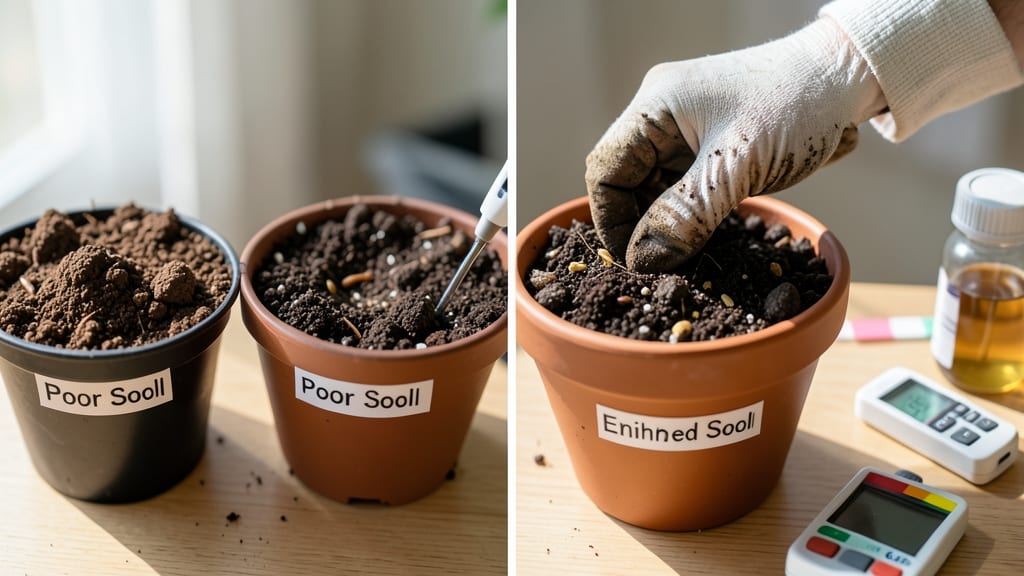
Creating the best garden soil in pots starts with a 60-20-20 ratio: 60% organic matter (compost or coconut coir), 20% perlite/vermiculite for airflow, and 20% coarse sand or pumice to prevent compaction, which keeps roots oxygenated and prevents waterlogging.
This ratio works because container plants need more aeration than in-ground ones—their roots can't spread freely, so they rely on your soil mix to provide both moisture retention and drainage. 🌱 Organic matter feeds microbes that break down nutrients, while perlite creates air pockets for root respiration.
For heavy feeders like tomatoes, I boost the compost to 70% and add worm castings, while succulents thrive with 50% sand and just 10% organic matter. The key is matching the mix to your plant's natural habitat needs.
Many gardeners mistakenly use regular garden soil in pots, which compacts easily and suffocates roots. The gritty components (sand/pumice) are non-negotiable—they mimic the mineral content plants would find in nature.
Pro tip: Sterilize your mix by baking it at 200°F for 30 minutes to kill pathogens before planting. This prevents mold issues that can stunt growth in confined root zones.
💡 In This Article
- Why Soil Mix Composition Matters in Container Gardening
- Customizing Soil Mixes for Different Plant Types in Pots
Why soil mix composition matters in container gardening
Container gardening creates a closed ecosystem where roots have no escape from poor conditions. The 60% organic matter (compost, coconut coir, or peat moss) acts like a sponge—holding 30-50% more moisture than garden soil while feeding beneficial microbes that break down nutrients into plant-available forms.
Without this organic base, roots suffocate in dense, compacted soil that blocks oxygen flow, which is critical since roots need 10-15% air space for respiration.
The 20% aeration component (perlite or vermiculite) creates microscopic air pockets that mimic natural forest floor conditions. Perlite expands 20x its original size when heated, giving roots room to breathe while also preventing fungal growth by keeping moisture levels balanced.
Vermiculite, with its flaky texture, holds 3x its weight in water while still allowing oxygen circulation—ideal for moisture-sensitive plants like basil or lettuce. 🌱
Garden soil's heavy clay particles (up to 40% by weight) become a death trap in pots because they compact when wet, eliminating those vital air pockets. The 20% gritty component (coarse sand or pumice) solves this by preventing clumping while mimicking mineral-rich volcanic soil found in nature.
Pumice, with its porous structure, actually improves drainage 30% better than sand while adding trace minerals like potassium that garden soil lacks.
Here's what happens when you skip these components: Without organic matter, nutrients leach out within 4-6 weeks (vs. 3-6 months with proper mix). Missing aeration causes roots to double in size trying to reach oxygen, leading to root-bound plants.
The grit component prevents the "waterlogged death zone" where roots drown—critical since container plants dry out 2-3x faster than in-ground plants due to exposed sides.
Think of it like a three-legged stool: Organic matter provides nutrition, aeration agents ensure oxygen supply, and gritty components handle drainage. Remove any leg, and the whole system collapses.
For example, a tomato plant in garden soil alone will show yellowing leaves within 2 weeks from nitrogen starvation, while the same plant in a proper mix thrives with 40% more fruit production due to consistent moisture and nutrient availability.
The science gets even more interesting when you consider capillary action. The right mix creates micro-capillaries that wick water upward to roots while allowing excess to drain—preventing both drought stress and root rot.
This is why professional growers use 10-20% more perlite in summer mixes when evaporation rates climb 50% higher than spring conditions. 💫