
Watering
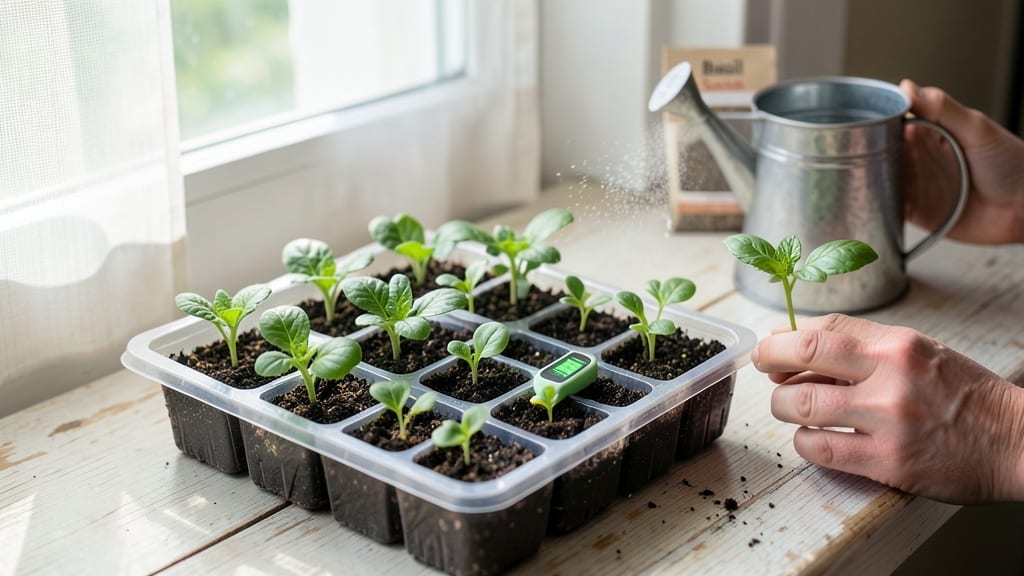
For seeds to germinate, soil should be damp enough to feel like a wrung-out sponge—too wet and they’ll drown, too dry and they’ll never wake up.
Struggling to get your seeds to sprout? The secret might be simpler than you think—soil moisture plays a critical role in germination, and getting it wrong can mean the difference between a thriving garden and wasted effort.
Think of it this way: seeds need just enough water to activate their growth, not a soggy swamp. A quick finger test—pushing your finger an inch into the soil and feeling slight resistance—tells you if you’ve got the balance right.
In this guide, I’ll walk you through the perfect moisture levels, how to adjust for different seed types, and the common mistakes that kill seeds before they even sprout. Let’s get those General Seeds 🌱 off to the best start!
The ideal soil moisture levels for seed germination (with the perfect test)
Getting your seeds to sprout can feel like a guessing game, but the truth is simpler than you might think. The key lies in maintaining the right soil moisture levels—not too dry, not too soggy.
Too little water and seeds stay dormant; too much and they rot before they even break the surface. I’ve learned through years of trial (and a few failed seed trays) that the perfect balance is what separates a thriving garden from a sad, empty one.
Seeds need consistent moisture to activate their enzymes and begin growth, but they also need oxygen to breathe. That’s why well-draining soil is just as important as watering.
Think of it like a damp sponge: firm enough to hold moisture, but not so wet that it squeezes out all the air. The solution? The squeeze test—a foolproof way to check moisture without overcomplicating things.
Here’s the science behind it: seeds require 50-70% moisture content in the soil to germinate. That means the soil should feel like a wrung-out sponge—damp to the touch but not dripping. Different seeds have different needs, but this range works for most vegetables, flowers, and herbs.
Let me show you exactly what that looks like with this simple comparison table. You’ll see the difference between too dry, perfect, and too wet soil at a glance.
Now that you know what to aim for, let’s talk about how to maintain it. The squeeze test is your best friend here. Simply take a handful of soil from your seed tray or pot and gently squeeze it.
If a few drops of water appear, you’re in the perfect zone. If nothing comes out, it’s time to water. And if water is dripping or pooling, you’ve gone too far.
One common mistake I see is assuming that more water equals better results. But overwatering kills seeds faster than underwatering. When soil stays too wet, it cuts off oxygen, leading to fungal growth and seed rot.
That’s why I always recommend using containers with drainage holes and mixing in a little perlite or vermiculite to improve aeration.
For fast-germinating seeds like radishes or lettuce, you’ll want to keep the soil consistently moist but not soggy. These seeds sprout quickly—often within days—so they need steady hydration.
On the other hand, slow-germinating seeds like peppers or tomatoes can handle slightly drier conditions once planted, but they still need that initial dampness to break dormancy.
Pro tip: Use a spray bottle for the first few days after planting. It gives you precise control over moisture levels and helps prevent disturbing the seeds. Once they’ve sprouted, you can switch to bottom-watering or a gentle watering can to avoid damaging delicate seedlings.
Remember, the goal is to mimic the natural conditions seeds experience in the wild. In nature, seeds germinate after rain but don’t stay underwater. They get just enough moisture to wake up and start growing, then dry out slightly until the next rain.
Your job is to replicate that cycle in your garden.
With the right moisture balance, you’ll see those first little sprouts breaking through the soil in no time. And once they do, you can gradually reduce watering—just enough to keep the soil lightly moist until the seedlings are strong enough to handle regular care. Happy planting! 🌱
Common mistakes that kill seeds before they sprout (and how to avoid them)
Even the most experienced gardeners sometimes struggle with seed germination, and the culprit is often soil moisture. Too much water can suffocate seeds, while too little leaves them dehydrated.
I’ve lost count of how many trays of seeds I’ve watched fail due to these simple mistakes—until I learned the right balance.
One of the biggest misconceptions is that seeds need to be soaking wet to germinate. In reality, most seeds prefer soil that feels like a wrung-out sponge.
The key is consistency: keeping moisture levels steady without creating waterlogged conditions. Let’s break down the most common mistakes and how to fix them.
⚠️ How Wet Should Soil Be for Seeds?
Ideal moisture: Soil should be damp 1-2 inches deep, like a wrung-out sponge. Press your finger in—if it feels cool and moist but not soggy, you’re golden. Overwatering creates anaerobic conditions that suffocate seeds, while underwatering prevents them from absorbing needed moisture.
Test it: Gently squeeze a handful of soil. If water drips out, it’s too wet. If it crumbles, add a light misting. Adjust based on your seed type—lettuce prefers slightly damper soil than beans.
Overwatering is a silent killer because it creates oxygen-deprived soil, which prevents seeds from breaking through their shells. I once watched an entire tray of marigold seeds rot because I kept them in a tray with standing water.
The fix? Use a spray bottle or watering can with a fine rose to deliver moisture gently, and always ensure your containers have drainage holes.
On the flip side, underwatering is just as deadly. Seeds need consistent moisture to activate enzymes that kickstart germination. If the soil dries out, seeds can become desiccated and fail to sprout.
For seeds like carrots or parsnips, which have tiny seeds, maintain even moisture by covering trays with plastic wrap until germination begins.
Soil compaction is another sneaky problem. When soil is packed down—whether from heavy watering or poor preparation—it blocks air and water from reaching seeds.
To avoid this, always loosen soil before planting and use a mix that’s light and aerated, like a blend of peat moss or coco coir with perlite. For container gardening, choose a well-draining potting mix designed for seeds.
Temperature and moisture work hand-in-hand. Seeds germinate best within a specific temperature range (usually 65-75°F), but if the soil is too cold or too hot, moisture levels become even more critical.
For example, pepper seeds need warm soil (around 80°F) and consistent moisture, while spinach prefers cooler soil (around 50-60°F) and stays damper. Use a seedling heat mat if your climate struggles with warm soil temperatures.
Here’s my foolproof tip: Monitor and adjust. Check soil moisture daily with your finger, and adjust your watering schedule based on the weather. If it’s hot and dry, water lightly more often.
If it’s cool and cloudy, reduce frequency. And remember, once seeds sprout, reduce watering slightly—too much moisture can cause damping-off disease, a fungal issue that kills seedlings at the soil line. 🌱