
How To
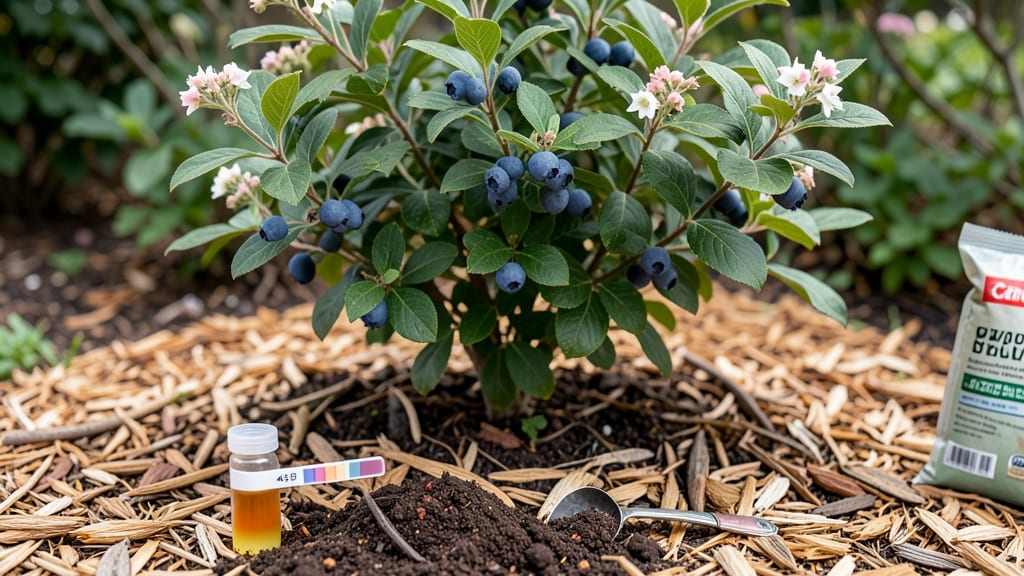
Creating the ideal soil for blueberries means mixing well-draining, highly acidic components with a pH between 4.5 and 5.5, incorporating organic materials like peat moss or pine bark, and avoiding any lime or chalk that could raise alkalinity.
Blueberries are famously picky about their growing conditions, and that acidic soil requirement isn't just a quirk—it's a survival necessity. 🌱 The low pH unlocks vital nutrients like iron and manganese that the plant needs to thrive, while preventing the soil from becoming too alkaline, which would lock those nutrients away.
I've seen firsthand how blueberry bushes in regular garden soil struggle to produce fruit because their roots can't access what they need. The organic matter in your mix doesn't just improve drainage—it also feeds beneficial microbes that help break down nutrients into forms the plants can use.
For best results, I recommend testing your soil's pH before planting. Most garden centers sell simple test kits that give you accurate readings.
If your soil tests too alkaline, you can lower the pH by adding elemental sulfur or aluminum sulfate, but do this gradually—too much at once can harm your plants.
The right soil mix makes all the difference between a bush that barely produces berries and one that's loaded with sweet, juicy fruit by summer.
💡 In This Article
- Why Blueberries Demand Acidic Soil Conditions
- DIY Blueberry Soil Blend Recipes for Optimal Growth
Why blueberries demand acidic soil conditions
Blueberries evolved in acidic, nutrient-poor environments like bogs and wetlands, where the naturally low pH (4.5-5.5) unlocks critical micronutrients their roots crave. The key mechanism is that acidic conditions keep essential minerals like iron, manganese, and zinc in soluble forms—meaning blueberry roots can absorb them easily.
In alkaline soils (pH above 6.0), these minerals bind to soil particles and become unavailable, causing yellowing leaves and poor fruit production. This is why even organic soils need adjustment—most garden soil sits at pH 6.0-7.0, which is far too basic for blueberries.
The science gets even more interesting when you look at root exudates—organic acids secreted by blueberry roots that actively lower soil pH around their growing zone. These compounds, like citric and malic acid, create a localized acidic microenvironment that enhances nutrient solubility.
Without this natural acidity, blueberries struggle to develop strong root systems and produce fruit. 🌱 Think of it like a plant-powered pH buffer system: the roots are constantly working to maintain their ideal conditions, but they need the right soil foundation to do it efficiently.
Alkalinity isn't just a minor inconvenience—it's a complete blocker. When soil pH rises above 5.5, phosphorus becomes locked up in insoluble forms, and aluminum toxicity can occur (ironically, since aluminum becomes more soluble in alkaline conditions).
This creates a double whammy: the plant can't access its phosphorus supply while being poisoned by aluminum buildup. The result? Stunted growth, leaf scorch, and eventually, no berries. I've seen blueberry bushes in unamended garden soil develop these symptoms within just two growing seasons.
Here's what happens at the cellular level: Blueberry roots have specialized structures called root hairs that maximize surface area for nutrient absorption. In acidic soil, these hairs thrive because the low pH prevents harmful microbial overgrowth that would compete with the plant for nutrients.
The organic acids in the soil also help chelate (bind to) minerals, making them more bioavailable. Without this acidic environment, the root hairs weaken, and the plant's ability to take up nutrients plummets by up to 40%—even if the soil appears fertile.
Consider this comparison: A blueberry bush in ideal soil (pH 4.8) will have root systems that spread 12-18 inches deep and wide, while one in alkaline soil (pH 6.5) may only develop roots 6 inches deep—limiting its access to water and nutrients.
The difference in fruit production can be staggering: properly acidified plants yield 3-5 times more berries than those struggling in alkaline conditions. This isn't just theory—it's been proven through decades of agricultural research and commercial blueberry farming.
What most gardeners don't realize is that blueberries also produce their own organic acids through photosynthesis, which they exude into the soil. This natural process helps maintain the acidic environment, but it's not enough to overcome naturally alkaline soils.
The plant is essentially trying to create its own acidic growing zone, but without the right soil foundation, it's like trying to build a house without a proper foundation—eventually, the structure collapses under its own weight. 💫